
Das beste E-Bike mit Tretunterstützung ist nicht automatisch das Modell mit dem größten Motor, der höchsten angegebenen Reichweite oder den meisten Unterstützungsstufen. Entscheidend ist, dass das Fahrrad natürlich auf Ihre Pedalbewegung reagiert, zu Ihrem Körper passt, Ihre übliche Strecke mit Akkureserve schafft und sich nach dem Kauf warten lässt.
Für viele Fahrer in den USA ist ein gut abgestimmtes Pendler-E-Bike mit Drehmomentsensor ein sinnvoller Einstieg. Ein leichtes E-Bike mit Mittelmotor kann besser passen, wenn Fitness und ein klassisches Fahrradgefühl im Vordergrund stehen. Falt-, Cargo-, Fatbike- und Hochkapazitätsmodelle lösen jeweils andere Aufgaben.

Welches E-Bike mit Tretunterstützung am besten ist, hängt davon ab, wie Sie fahren. Für den täglichen Arbeitsweg sollten Sie auf passende Ergonomie, sanfte Unterstützung, hydraulische Bremsen, eine praxisgerechte Akkureserve und Service vor Ort achten. Für Fitness kann ein leichteres E-Bike mit Mittelmotor eher wie ein herkömmliches Fahrrad wirken. Bei Cargo-Einsätzen oder schwereren Fahrern sind Zuladung, Bremsleistung, Laufräder und Rahmenpassform wichtiger als die maximale Motorleistung.
Wählen Sie ein Fahrrad, das Sie sicher kontrollieren, lagern, warten und legal fahren können. Behandeln Sie die beworbene Reichweite als Best-Case-Schätzung und prüfen Sie vor dem Kauf die genaue Klasse und Konfiguration.
Die besten E-Bikes mit Tretunterstützung 2026
| Modell | Am besten geeignet für | System der Tretunterstützung | Warum es heraussticht | Wichtigster Kompromiss |
|---|---|---|---|---|
| Aventon Level 3 Step-Through | Tägliches Pendeln | Drehmomentsensor mit wählbarem Fahrverhalten | Pendler-Ausstattung, anpassbares Ansprechverhalten, veröffentlichte Reichweite bis 70 Meilen, Gesamtgewichtslimit 300 lb | Etwa 67 lb schwer; Treppen und Fahrradträger müssen daher eingeplant werden |
| Specialized Turbo Vado SL 2 4.0 EQ | Fitness und natürliches Fahrradgefühl | Mittelmotor-System, das die Eigenleistung des Fahrers verstärkt | Ab etwa 20 kg, effizientes Pedalieren, EQ-Ausstattung für den Pendelalltag | Premium-Preisniveau und weniger Fokus auf Fahren per Gasgriff |
| Lectric XP4 | Preis-Leistung bei Faltbarkeit und gemischter Nutzung | Drehmomentsensor | Faltbarer Rahmen, hydraulische Bremsen, 500-W- oder 750-W-Optionen, optionaler Langstreckenakku | Im Vergleich zu einem leichten Faltrad weiterhin sperrig |
| Aventon Pace 4 Step-Through | Komfort, entspanntes Fahren und viele ältere Fahrer | Umschaltbarer Drehmoment-/Trittfrequenzsensor | Niedriger Einstieg, aufrechte Sitzposition, mehrere Größen, veröffentlichtes Gewicht von 58,2 lb | Die Starrgabel ist auf rauen Wegen weniger komfortabel |
| Aventon Abound LR | Familie und Lastentransport | Umschaltbarer Drehmoment-/Trittfrequenzsensor | Langer Heckgepäckträger, 750-W-Motor, 440 lb Gesamttragfähigkeit, Cargo-Zubehörsystem | Schwer und lang; der benötigte Stauraum ist wichtig |
| Velotric Nomad 2X | All-Terrain-Komfort | Umschaltbare Drehmoment- und Trittfrequenzmodi | Vollständige Luftfederung, Fatbike-Reifen, konfigurierbare Modi der Klassen 1/2/3 | Mehr Gewicht und Rollwiderstand als bei einem City-Pendler-E-Bike |
| Wallke H7 Ultra 55Ah Single Motor | Tiefeinsteiger mit hoher Akkukapazität und für schwerere Fahrer | Drehmomentsensor | 48-V-55-Ah-Akku, 400 lb Tragfähigkeit, 20 × 4-Zoll-Reifen, Tiefeinsteigerrahmen | Sehr schwer; Transport, Lagerung und lokale Einstufung müssen geprüft werden |
Aventon Level 3 Step-Through: eine praktische Wahl für den täglichen Arbeitsweg
Das Level 3 Step-Through ist eine vielseitige Lösung für Fahrer, die kurze Autofahrten ersetzen möchten, ohne jede Pendelstrecke zum Workout zu machen. Sein beidseitiger Drehmomentsensor am Tretlager reagiert auf den Pedaldruck, während die Einstellungen zur Fahrabstimmung eine Anpassung von Unterstützung und Pedalansprache ermöglichen.
Laut Hersteller verfügt es über einen dauerhaft 500 W leistenden Hinterradnabenmotor, einen 733-Wh-Akku, hydraulische Scheibenbremsen, ein Fahrradgewicht von 67 lb, ein Gesamtgewichtslimit von 300 lb und eine geschätzte Reichweite von bis zu 70 Meilen unter günstigen Bedingungen.
Aventon verkauft inzwischen auch die neuere Level-4-Serie. Wir haben das Level 3 in dieser Auswahl belassen, weil es weiterhin als Pendleroption angeboten wird und Käufer ansprechen kann, die die zusätzliche Leistung oder Ausstattung der neueren Modelle nicht benötigen. Vergleichen Sie vor der Entscheidung die aktuelle Verfügbarkeit und Preisgestaltung.
Warum es funktioniert
- Natürliches Anfahren im Verkehr.
- Heckgepäckträger und Schutzbleche unterstützen den Alltagseinsatz.
- Der Tiefeinsteigerrahmen erleichtert das Auf- und Absteigen.
- Integrierte Sicherheitsfunktionen eignen sich für das Abstellen in der Stadt.
Was zu beachten ist
- Für viele Treppenhäuser in Mehrfamilienhäusern ist es zu schwer.
- Die veröffentlichte Maximalreichweite setzt geringe Unterstützung und günstige Bedingungen voraus.
- Das Gesamtlimit von 300 lb umfasst Fahrer und Gepäck.
Specialized Turbo Vado SL 2 4.0 EQ: am besten für Fitness und natürliches Pedalieren
Manche Fahrer möchten Unterstützung an Steigungen, aber dennoch ein befriedigendes Fahrradgefühl, wenn der Motor reduziert oder ausgeschaltet ist. Das Turbo Vado SL 2 wurde genau dafür entwickelt. Sein Mittelmotor bringt die Leistung über den Kurbelbereich ein, und das Fahrrad ist deutlich leichter als viele Pendler-E-Bikes mit Nabenmotor.
Die Version 4.0 EQ wird mit einem Gewicht ab etwa 20 kg angegeben und enthält pendlerorientierte Ausstattung. Specialized beschreibt das SL-1.2-System als 320-W-Antrieb, der die Eigenleistung des Fahrers auf natürliche Weise verstärken soll.
Warum es funktioniert
- Fühlt sich eher wie ein konventionelles sportliches Fahrrad an.
- Lässt sich leichter manövrieren und tragen als die meisten Fatbike-E-Bikes.
- Gut geeignet für Training, schnelles Pendeln und längere Fahrten auf Asphalt.
Was zu beachten ist
- Premium-Preisklasse.
- Nicht die richtige Wahl für Fahrer, die einen motorradähnlichen Leistungsschub wünschen.
- Die Reichweite wird als Fahrzeit beschrieben; Strecke und Unterstützungsstufe bleiben daher entscheidend.
Lectric XP4: bestes faltbares E-Bike mit Tretunterstützung fürs Geld
Das XP4 löst ein häufiges Problem günstiger Falt-E-Bikes: abrupt einsetzende Unterstützung auf Basis der Trittfrequenz. Sein Drehmomentsensor passt die Leistung an die Fahrerleistung an. Der Rahmen lässt sich zur Aufbewahrung falten, und Käufer können zwischen verschiedenen Motor- und Akkukonfigurationen wählen.
Die Langstreckenversion mit 750 W wird mit einem 48-V-17,5-Ah-Akku, einer angegebenen Reichweite von bis zu 85 Meilen unter günstigen Testbedingungen, 20 × 3-Zoll-Reifen und hydraulischen Bremsen gelistet. Das elektrische System und der Akku werden außerdem mit UL-Zertifizierungen beworben.
Warum es funktioniert
- Sinnvolle Kombination aus Preis, Transportfähigkeit und Ausstattung.
- Drehmomentbasierte Unterstützung wirkt bei niedriger Geschwindigkeit kontrollierter.
- Lässt sich für Garage, Wohnmobil und manche Fahrzeug-Stauräume falten.
Was zu beachten ist
- „Faltbar“ bedeutet nicht automatisch, dass das Fahrrad leicht zu tragen ist.
- Vergleichen Sie vor dem Kauf die Faltmaße mit Ihrem Kofferraum.
- Wählen Sie nicht den größten Akku, wenn Sie das zusätzliche Gewicht und die zusätzliche Reichweite nicht benötigen.
Wenn Sie genauer prüfen möchten, ob ein Faltmodell zu Ihrem Stauraum passt, lesen Sie unseren Ratgeber dazu, ob sich ein faltbares E-Bike lohnt.
Aventon Pace 4 Step-Through: am besten für Komfort und leichtes Aufsteigen
Das Pace 4 ist eine bessere Antwort als die pauschale Bezeichnung „E-Bike für Frauen“. Passform, Überstandshöhe, Reichweite zum Lenker und Fahrradgewicht sind wichtiger als geschlechtsspezifisches Marketing.
Es nutzt einen 500-W-Nabenmotor, einen Drehmomentsensor und einen umschaltbaren Modus nach Trittfrequenz. Die Herstellerangaben nennen zwei Rahmengrößen, einen Fahrergrößenbereich von 4 Fuß 11 Zoll bis 6 Fuß 1 Zoll, ein Fahrradgewicht von 58,2 lb und ein Gesamtlimit von 300 lb.
Warum es funktioniert
- Der niedrige Rahmen macht Anfahren und Anhalten weniger einschüchternd.
- Die aufrechte Position eignet sich für entspannte Fahrten in der Nachbarschaft.
- Durch den Sensorwechsel können Fahrer zwischen trainingsorientierter und entspannter Unterstützung wählen.
Was zu beachten ist
- Ein Tiefeinsteigerrahmen garantiert noch keine passende Ergonomie.
- Die Starrgabel ist hauptsächlich für glattere Oberflächen gedacht.
- Fahrer mit eingeschränktem Gleichgewicht sollten das Handling bei niedriger Geschwindigkeit trotzdem testen.
Aventon Abound LR: bestes Cargo-E-Bike mit Tretunterstützung
Wer einen Kinderanhänger ziehen, Einkäufe transportieren oder Passagiere mitnehmen möchte, sollte nicht allein nach Motorleistung wählen. Rahmensteifigkeit, Bremsen, Zubehörkompatibilität, Standsicherheit beim Parken und die Gesamttragfähigkeit sind wichtiger.
Das Abound LR kombiniert einen 750-W-Motor, einen langen Heckgepäckträger, 440 lb Gesamttragfähigkeit, Federgabel, gefederte Sattelstütze und umschaltbare Drehmoment-/Trittfrequenzunterstützung. In der Standardkonfiguration ist es ein Modell der Klasse 2 und wird mit UL-2849- und UL-2271-Zertifizierungen angegeben.
Warum es funktioniert
- Von Grund auf für Lastentransport entwickelt statt aus einem Standardrahmen abgeleitet.
- Hohe Gesamttragfähigkeit für Fahrer, Passagiere und Ausrüstung.
- Der Drehmomentmodus unterstützt kontrolliertes Anfahren unter Last.
Was zu beachten ist
- Das Fahrrad wiegt vor Zuladung etwa 88 lb.
- Für die Mitnahme von Passagieren sind die passenden Sitz- und Schutzzubehörteile erforderlich.
- Üben Sie Bremsen und langsame Kurven, bevor Sie ein Kind mitnehmen.
Velotric Nomad 2X: am besten für All-Terrain-Komfort mit Vollfederung
Das Nomad 2X fällt auf, weil der Fahrer zwischen Drehmoment- und Trittfrequenzverhalten wechseln kann. Der Drehmomentmodus wirkt intuitiver, wenn sich Traktion und Geschwindigkeit häufig ändern. Der Trittfrequenzmodus kann sich bei gleichmäßigem Cruisen leichter anfühlen.
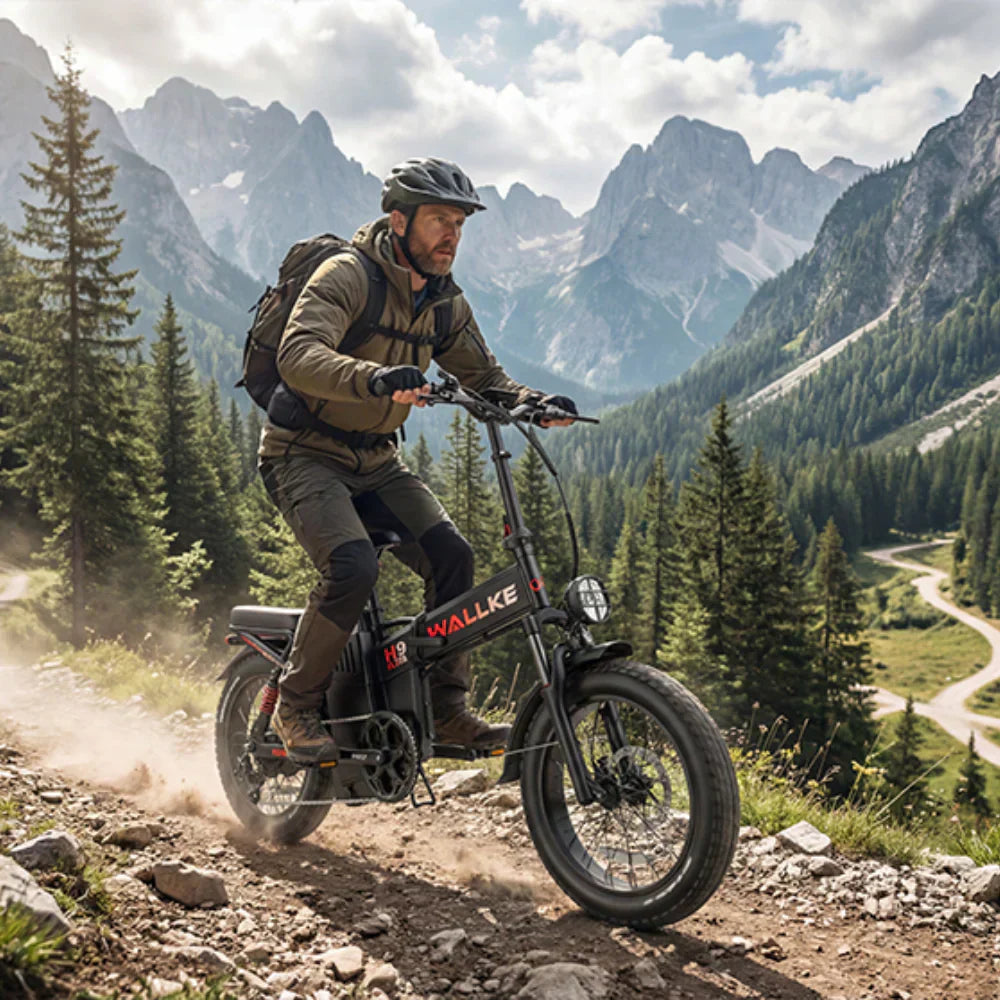
Vordere und hintere Luftfederung, Fatbike-Reifen, Gepäckträger und Schutzbleche eignen sich für beschädigten Asphalt, Schotter, Sand und raue Zufahrtswege. Das Fahrrad kann für den Betrieb als Klasse 1, Klasse 2 oder Klasse 3 konfiguriert werden; die richtige Einstellung hängt jedoch von bundesstaatlichen, lokalen und Trail-Regeln ab.
Warum es funktioniert
- Die Federung verbessert Kontrolle und Komfort auf rauem Untergrund.
- Die Sensormodi ermöglichen es dem Fahrer, den Charakter der Unterstützung zu verändern.
- Die Klasseneinstellungen erhöhen die Flexibilität, wo dies rechtlich erlaubt ist.
Was zu beachten ist
- Fatbike-Reifen verbrauchen auf Asphalt mehr Energie.
- Die Federung benötigt Einstellung und regelmäßige Wartung.
- Der Zugang zu Trails variiert; ein konfigurierbares Fahrrad ist nicht automatisch überall erlaubt.
Fahrer, die die meiste Zeit abseits befestigter Straßen unterwegs sind, finden möglicherweise auch den Kaufratgeber für Offroad-E-Bikes hilfreich.
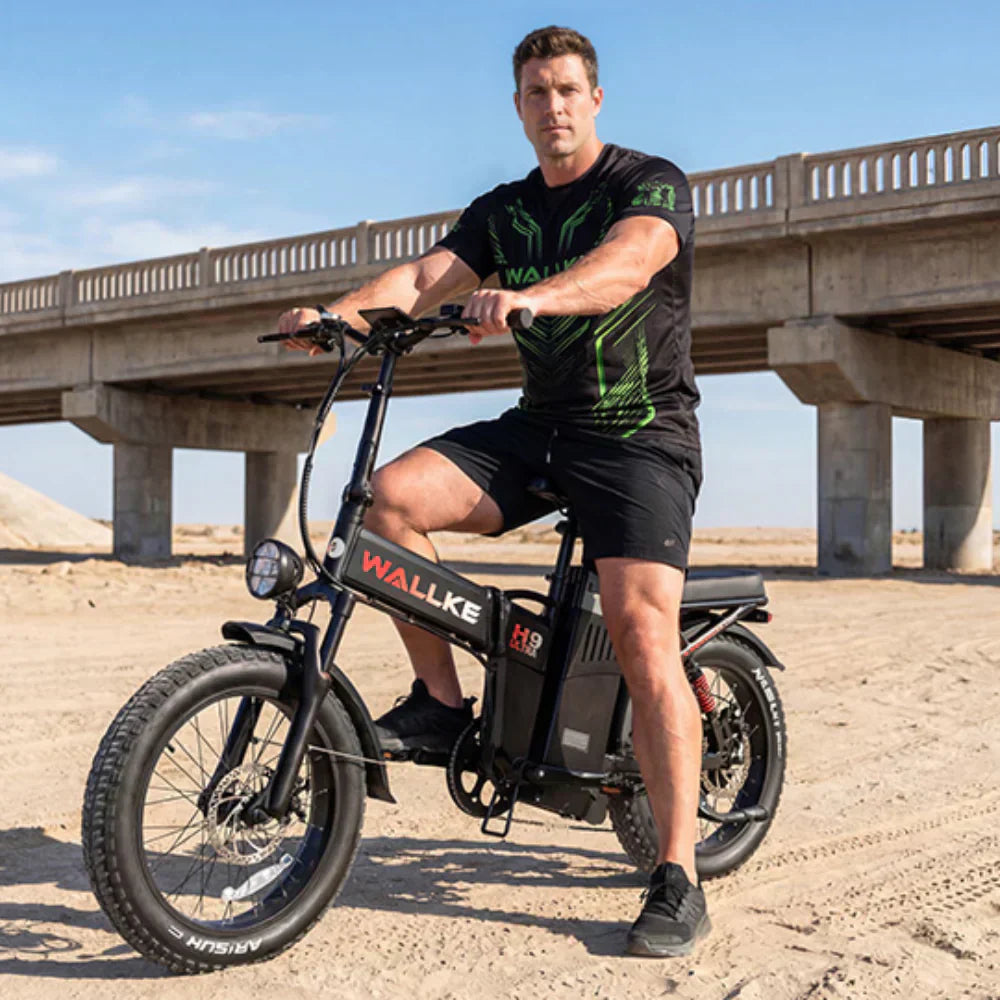
Wallke H7 Ultra 55Ah Single Motor: am besten für Tiefeinsteiger-Fahrten mit hoher Akkukapazität
Das Wallke H7 Ultra ist nicht die beste Wahl für jemanden, der das Fahrrad Treppen hinauftragen muss. Es richtet sich an einen anderen Käufertyp: jemanden, der einen großen Akku, einen stabilen Tiefeinsteigerrahmen, Fatbike-Reifen, Federung und eine hohe veröffentlichte Tragfähigkeit schätzt.
Die 55-Ah-Konfiguration mit einem Motor verwendet einen Drehmomentsensor und einen 48-V-55-Ah-Akku, entsprechend 2.640 Wh Nennenergie. Sie verfügt über 20 × 4-Zoll-Reifen und eine veröffentlichte maximale Zuladung von 400 lb. Diese Akkukapazität bietet eine große Energiereserve, doch die reale Reichweite hängt weiterhin von Fahrergewicht, Steigungen, Reifendruck, Temperatur, Geschwindigkeit, Gasgriffnutzung und Unterstützungsstufe ab.
Wählen Sie die Einmotor-Konfiguration mit Drehmomentsensor, wenn natürliches Ansprechverhalten beim Pedalieren und Effizienz wichtiger sind als maximale Beschleunigung. Ein Modell mit zwei Motoren kann für steile Privatgrundstücke oder Offroad-Nutzung sinnvoll sein, bringt jedoch zusätzliches Gewicht mit sich und kann Energie schneller verbrauchen.
Warum es funktioniert
- Der Tiefeinsteigerrahmen hilft Fahrern, die ein hohes Oberrohr vermeiden möchten.
- Der große Akku eignet sich für lange Fahrten und Fahrer, die zusätzliche Reserve wünschen.
- Der Drehmomentsensor liefert eine proportionalere Unterstützung als ein einfacher Trittfrequenzsensor.
- Die veröffentlichte Tragfähigkeit von 400 lb unterstützt ein breiteres Spektrum an Fahrern und Gepäck.
Was zu beachten ist
- Das Fahrrad ist schwer und kann einen besonders belastbaren Fahrzeugträger erfordern.
- Das Laden eines großen Akkus dauert länger.
- Hochgeschwindigkeits- oder entsperrter Betrieb kann außerhalb der üblichen E-Bike-Klassenregeln liegen.
- Prüfen Sie für die gewählte Variante die genaue Akku-, Motor- und Zertifizierungsangabe.
Wenn Sie das H7 mit anderen Modellen mit hoher Kapazität vergleichen, lesen Sie den Ratgeber zu E-Bikes mit besonders großer Reichweite und den Ratgeber zur Gewichtsgrenze bei E-Bikes.
Wie funktioniert Tretunterstützung?
Ein E-Bike mit Tretunterstützung nutzt Sensoren, um zu erkennen, dass der Fahrer pedaliert. Der Controller weist den Motor anschließend an, wie viel Unterstützung er liefern soll. Der Motor ersetzt nicht die Beine des Fahrers. Er reduziert den Kraftaufwand, der nötig ist, um Geschwindigkeit zu halten, Steigungen zu bewältigen, mit Gepäck anzufahren oder weiter zu fahren.
Die meisten Systeme bieten mehrere Stufen der Tretunterstützung, oft PAS-Stufen genannt. Eine niedrigere Stufe schont den Akku und lässt sich eher wie ein normales Fahrrad fahren. Eine höhere Stufe bietet stärkere Unterstützung, verbraucht aber mehr Energie.
Welche Stufe der Tretunterstützung sollten Sie verwenden?
Verwenden Sie die niedrigste Unterstützungsstufe, mit der sich Ihre Strecke angenehm fahren lässt. Geringe Unterstützung eignet sich gut für flache Straßen und wenn Sie mehr trainieren möchten. Erhöhen Sie die Unterstützung bei Steigungen, Gegenwind, schwerer Ladung oder Ermüdung. Höhere Stufen erhöhen in der Regel den Akkuverbrauch, daher kann sich die beste Einstellung während derselben Fahrt ändern.
Unterscheidet sich ein Fahrrad mit Tretunterstützung von einem E-Bike?
„E-Bike“ ist der Oberbegriff. Tretunterstützung ist eine Möglichkeit, wie ein E-Bike Motorleistung bereitstellt. Manche E-Bikes verfügen nur über Tretunterstützung. Andere kombinieren Tretunterstützung mit einem Gasgriff.
Drehmomentsensor vs. Trittfrequenzsensor

| Merkmal | Drehmomentsensor | Trittfrequenzsensor |
|---|---|---|
| Was er erfasst | Wie stark Sie auf die Pedale drücken | Ob und teilweise wie schnell sich die Kurbeln drehen |
| Fahrgefühl | Proportional und fahrradähnlich | Eher wie ein Ein-/Aus-Schub |
| Am besten geeignet für | Training, technisches Gelände, Verkehr, präzise Kontrolle bei niedriger Geschwindigkeit | Entspanntes Cruisen, Fahrer, die mit weniger Pedaldruck mehr Unterstützung wünschen |
| Typischer Nachteil | Kostet meist mehr und belohnt aktives Pedalieren | Kann nach kurzer Verzögerung ruckartig einsetzen, wenn die Programmierung schlecht ist |
Für viele Erstkäufer ist ein gut abgestimmter Drehmomentsensor die einfachere Standardwahl, weil die Unterstützung normalerweise proportional zur Pedalkraft zunimmt. Auch ein sauber programmierter Trittfrequenzsensor kann vorhersehbare Kontrolle bieten, insbesondere für Fahrer, die stärkere Unterstützung bei geringerem Pedaldruck bevorzugen.
Beurteilen Sie den Sensor nicht nur nach seinem Namen. Testen Sie die niedrigste Unterstützungsstufe, fahren Sie an einer Steigung wieder an, nehmen Sie eine enge Kurve und prüfen Sie, ob die Motorleistung schnell endet, sobald Sie nicht mehr treten.
Tretunterstützung vs. Gasgriff: Was werden Sie tatsächlich nutzen?

In Reddit-Diskussionen zur Tretunterstützung tauchen immer wieder dieselben Fragen auf: Bekomme ich trotzdem Training? Soll ich die Unterstützung ausschalten? Brauche ich einen Gasgriff für Steigungen oder Verkehr?
- Wählen Sie zuerst die Tretunterstützung wenn Training und ein fahrradähnliches Fahrgefühl wichtig sind. Da der Fahrer weiterhin selbst Leistung beisteuert, kann Tretunterstützung die Reichweite in vielen realen Situationen erhöhen. Der Akkuverbrauch hängt jedoch weiterhin von Geschwindigkeit, Motorleistung, Gelände, Fahrerleistung und Controller-Einstellungen ab.
- Ergänzen Sie einen Gasgriff wenn Sie Hilfe beim Anfahren mit Ladung, beim kurzen Überqueren einer Kreuzung, nach einem Halt oder bei Ermüdung benötigen, wenn ein sofortiger Neustart schwierig ist.
- Verwenden Sie den Gasgriff nicht als Ersatz für die richtige Gangwahl. Schalten Sie vor einer steilen Steigung in einen leichteren Gang.
- Prüfen Sie die lokalen Vorschriften. Ein Gasgriff kann die Klasse des Fahrrads und die erlaubten Einsatzorte verändern.
Ein Fahrrad mit beiden Systemen gibt dem Fahrer mehr Optionen. Es ist nicht automatisch besser. Die Unterstützung sollte schnell enden, wenn Sie nicht mehr treten. Verfügt das Fahrrad über Motorabschaltungen an den Bremshebeln, prüfen Sie bei einer Testfahrt, ob diese korrekt funktionieren.
Klasse 1, Klasse 2 und Klasse 3 vor dem Kauf verstehen
Das in den USA verbreitete Drei-Klassen-System verwendet im Allgemeinen folgende Definitionen:
- Klasse 1: Nur Tretunterstützung, die bei 20 mph endet.
- Klasse 2: Betrieb mit Gasgriffunterstützung bis 20 mph, häufig zusätzlich mit Tretunterstützung.
- Klasse 3: Im verbreiteten Drei-Klassen-System wird die Motorunterstützung beim Pedalieren bereitgestellt und endet bei 28 mph. Definitionen der Bundesstaaten und Regeln für Gasgriffe können abweichen; prüfen Sie daher das aktuell geltende lokale Recht.
Vorschriften von Bundesstaaten, Städten, Parks und Trails unterscheiden sich. Prüfen Sie die aktuellen Regeln für jeden Ort, an dem Sie fahren möchten. PeopleForBikes veröffentlicht Zusammenfassungen der E-Bike-Gesetze nach Bundesstaat.
So wählen Sie das beste E-Bike mit Tretunterstützung für Ihre Bedürfnisse

1. Einen primären Einsatzzweck festlegen
Beginnen Sie mit der Fahrt, die Sie am häufigsten machen werden, nicht mit der aufregendsten Tour, die vielleicht zweimal im Jahr stattfindet.
- Tägliches Pendeln: Schutzbleche, Gepäckträger, Beleuchtung, pannensichere Reifen, praxisgerechte Reichweite und Servicezugang.
- Training: Drehmomentsensor, geringeres Fahrradgewicht, effiziente Reifen, mehrere Rahmengrößen.
- Ältere Fahrer oder eingeschränkte Mobilität: Niedriger Einstieg, handhabbares Gewicht, stabiles Anfahren, gut erreichbare Bremsen.
- Schwerere Fahrer: Veröffentlichte Gesamttragfähigkeit, robuste Laufräder, passende Rahmengröße, leistungsstarke Bremsen.
- Familie oder Cargo: Gesamttragfähigkeit, Gepäckträgerfreigabe, Passagierzubehör, stabiler Ständer.
- All-Terrain-Fahren: Reifentraktion, Federungsqualität, Bremskontrolle, legaler Zugang zu Trails.
Wenn Asphalt im Alltag Ihr Haupteinsatz ist, vergleichen Sie praktische Konfigurationen in Wallkes Kollektion für Pendler-E-Bikes.
2. Worauf Sie bei Steigungen achten sollten
Bei Steigungen sollten Sie kontrollierbare Leistung, passende Übersetzung, Bremsleistung, Traktion und genügend Akkureserve für den Rückweg priorisieren. Ein Mittelmotor kann die Fahrradschaltung beim Klettern effizient nutzen, während ein gut abgestimmter Nabenmotor für Pendeln und gelegentliche Hügel ebenfalls eine starke Wahl sein kann. Testen Sie, wenn möglich, langsames Anfahren an einer Steigung.
3. Passform, Gewicht und Zuladung prüfen
Ein leistungsstarkes Fahrrad, das zu hoch, zu lang oder zu schwer ist, ist ein schlechter Kauf. Vergleichen Sie:
- Bereich für Körpergröße und Schrittlänge des Fahrers.
- Minimale Sattelhöhe.
- Überstandshöhe.
- Reichweite zum Lenker.
- Fahrradgewicht ohne Verpackung.
- Maximale Gesamtzuladung einschließlich Gepäck.
„Für Frauen“ und „für Senioren“ sind schwache Auswahlkriterien. Die richtige Rahmengröße und ein Handling-Test bei niedriger Geschwindigkeit sind hilfreicher.
Schwerere Fahrer sollten außerdem die Gesamtzuladungdes Fahrrads prüfen, nicht nur das Fahrerlimit. Beziehen Sie Kleidung, Schlösser, Taschen, Kindersitze, Passagiere und Gepäck in die Berechnung ein. Laufradstabilität, Reifentraglast, Bremsleistung und Rahmenpassform sind ebenso wichtig wie die Motorleistung.
4. Akkukapazität in Wattstunden umrechnen
Ampere-Stunden eines Akkus lassen sich nur sinnvoll vergleichen, wenn auch die Spannung berücksichtigt wird.
Wattstunden = Volt × Amperestunden.
- 36V × 20Ah = 720Wh.
- 48V × 17,5Ah = 840Wh.
- 48V × 55Ah = 2.640Wh.
Ein größerer Akku erhöht in der Regel Gewicht, Kosten und Ladezeit. Kaufen Sie genügend Kapazität für Ihre normale Strecke plus Reserve. Zahlen Sie nicht für einen überdimensionierten Akku, der das Fahrrad unnötig schwer handhabbar macht.
5. Beworbene Reichweite als Best-Case-Schätzung betrachten
Die reale Reichweite verändert sich durch:
- Gewicht von Fahrer und Gepäck.
- Steigungen und häufiges Anfahren.
- Geschwindigkeit und Unterstützungsstufe.
- Nutzung des Gasgriffs.
- Reifenbreite und Reifendruck.
- Wind und Temperatur.
- Fahrbahnbelag.
- Alter des Akkus.
Achten Sie auf Marken, die ihre Testbedingungen veröffentlichen. Planen Sie anhand Ihrer eigenen Strecke und behalten Sie eine Reserve, statt einfach die maximale Herstellerangabe anzunehmen.
6. Nabenmotor vs. Mittelmotor
- Hinterradnabenmotoren sind verbreitet, mechanisch unkompliziert und bieten häufig ein gutes Preis-Leistungs-Verhältnis für Pendeln und entspanntes Fahren.
- Mittelmotoren leiten die Leistung durch den Fahrradantrieb und können dadurch beim Bergauffahren die Übersetzung des Fahrrads nutzen. Gleichzeitig können sie den Verschleiß von Kette, Kassette und Kettenblättern erhöhen. Das Fahrgefühl hängt weiterhin stark von Sensor- und Controller-Abstimmung ab.
- Doppelmotor-Systeme können eine stärkere Beschleunigung und zusätzliche Traktion an den angetriebenen Rädern bieten, wenn beide Räder motorisiert sind. Sie erhöhen jedoch Gewicht, Komplexität und Energiebedarf.
Für viele Fahrer ist ein gut abgestimmter Einzelmotor im Alltag die bessere Wahl. Lesen Sie den Ratgeber Einzelmotor vs. Doppelmotor bevor Sie davon ausgehen, dass zwei Motoren notwendig sind.
7. Bremsen und Reifen prüfen, nicht nur die Beschleunigung
Mehr Geschwindigkeit und Gewicht erfordern mehr Bremsleistung. Hydraulische Scheibenbremsen sind bei schwereren E-Bikes weit verbreitet. Auch Bremsscheibengröße, Belagzustand, Reifenzustand, Eignung der Reifen und Verfügbarkeit von Ersatzteilen sind wichtig.
Fatbike-Reifen können bei passendem Luftdruck Auftrieb und Traktion auf Sand, Schnee und anderen losen Untergründen verbessern, erhöhen aber das Gewicht und sind auf Asphalt normalerweise weniger effizient als schmalere Pendlerreifen.
Wenn lose Untergründe regelmäßig zu Ihrer Strecke gehören, vergleichen Sie speziell dafür ausgelegte Optionen in Wallkes Fatbike-E-Bike-Kollektion.
8. Angaben zur elektrischen Sicherheit überprüfen
Die U.S. Consumer Product Safety Commission hat Hersteller aufgefordert, einschlägige UL-Sicherheitsstandards einzuhalten, da dies das Brandrisiko bei Mikromobilitätsprodukten reduzieren kann. Achten Sie auf eine klare Zertifizierungsangabe für das komplette elektrische E-Bike-System, beispielsweise UL 2849, sowie gegebenenfalls auf eine Akkuzertifizierung wie UL 2271.
Verlassen Sie sich nicht auf vage Formulierungen wie „UL-Komponenten“, „UL-konform“ oder ein Logo ohne modellspezifischen Nachweis. Verwenden Sie nur das Ladegerät, das für den konkreten Akku mitgeliefert oder freigegeben wurde.
9. Service und Ersatzteile einplanen
Stellen Sie diese Fragen:
- Kann eine Werkstatt vor Ort die mechanischen Komponenten warten?
- Sind Bremsbeläge, Reifen, Displays, Controller und Akkus verfügbar?
- Ist der Akku proprietär?
- Wie lange gilt die Garantie auf die elektrischen Komponenten?
- Stellt der Verkäufer Schaltpläne, Handbücher und Hilfe bei der Fehlersuche bereit?
- Passt das Fahrrad auf einen dafür freigegebenen Fahrzeugträger?
10. Was ändert sich unter 1.000 US-Dollar?
Die Suche nach dem „besten E-Bike mit Tretunterstützung unter 1.000 US-Dollar“ ist beliebt, doch dieses Budget bringt echte Kompromisse mit sich. Vor allem bei Aktionen lässt sich ein brauchbares Pendler- oder Faltmodell finden. Rechnen Sie jedoch in einem oder mehreren Bereichen mit Abstrichen:
- Trittfrequenzsensor statt Drehmomentsensor.
- Kleinerer Akku.
- Mechanische statt hydraulischer Bremsen.
- Niedrigere Zuladungsfreigabe.
- Weniger Rahmengrößen.
- Weniger Unterstützung durch lokale Händler.
Priorisieren Sie in dieser Preisklasse eine passende Ergonomie, transparente Sicherheitszertifizierung, zuverlässige Bremsen, verfügbare Ersatzakkus und eine realistische Einsatzstrecke. Geben Sie nicht das gesamte Budget nur für beworbene Wattzahlen aus.
Weitere Optionen in dieser preissensiblen Kategorie finden Sie im Kaufratgeber für günstige E-Bikes.
Welche E-Bikes sollten Sie meiden?
Meiden Sie ein E-Bike mit Tretunterstützung, wenn der Verkäufer grundlegende Fragen zu Passform, Akkusicherheit, Ersatzteilen oder legaler Konfiguration nicht beantworten kann.
- Kein veröffentlichtes Fahrradgewicht oder keine Gesamttragfähigkeit.
- Keine Angaben zur passenden Fahrergröße.
- Unklare Zertifizierung von Akku und Ladegerät.
- Extreme Reichweitenangaben ohne Testbedingungen.
- Hohe Geschwindigkeit oder hohes Fahrzeuggewicht in Kombination mit unzureichenden Bremsen, schlecht gewarteten Reifen oder Reifen, die für den vorgesehenen Untergrund ungeeignet sind.
- Kein klarer Weg zu Ersatzakku, Controller oder Display.
- Faltversprechen ohne Angabe der Faltmaße.
- Marketing, das Spitzenleistung als einziges Qualitätsmerkmal behandelt.
- Unterstützung, die nach dem Ende des Pedalierens zu lange weiterläuft.
Einfache Checkliste für die Probefahrt
- Fahren Sie mit ausgeschaltetem Motor. Prüfen Sie, ob sich das Fahrrad gut handhaben lässt.
- Starten Sie auf ebener Strecke mit der niedrigsten Unterstützungsstufe.
- Hören Sie auf zu treten und prüfen Sie, ob die Motorleistung schnell endet.
- Fahren Sie eine enge Kurve bei niedriger Geschwindigkeit ohne plötzliche Beschleunigung.
- Fahren Sie an einer mäßigen Steigung in einem leichten Gang wieder an.
- Testen Sie beide Bremsen aus kontrollierter Geschwindigkeit.
- Prüfen Sie, ob Sie sicher über dem Rahmen stehen oder durch den Tiefeinstieg aufsteigen können.
- Prüfen Sie, ob Sie das Fahrrad mit derselben Methode sicher verladen, rollen oder anheben können, die Sie zu Hause oder am Fahrzeugträger verwenden werden. Versuchen Sie nicht, ein sehr schweres E-Bike allein anzuheben.
- Achten Sie auf überspringende Ketten, schleifende Bremsen und lockere Bauteile.
- Prüfen Sie vor dem Verlassen des Geschäfts die genaue Klasse und Geschwindigkeitskonfiguration.
Probleme mit der Tretunterstützung werden häufig durch eine einfache Einstellungs- oder Sensorursache verursacht. Beginnen Sie mit den am wenigsten invasiven Prüfungen:
- Prüfen Sie, ob der Akku geladen und vollständig eingesetzt ist.
- Prüfen Sie, ob das Display eine Unterstützungsstufe über null anzeigt.
- Wenn das Fahrrad Motorabschaltungen an den Bremshebeln nutzt, stellen Sie sicher, dass kein Hebel klemmt oder dauerhaft ein Abschaltsignal sendet.
- Prüfen Sie sichtbare Sensorkabel und Steckverbindungen auf Schäden.
- Prüfen Sie bei Fahrrädern mit Trittfrequenzsensor, ob Sensor oder Magnetring verrutscht oder beschädigt ist.
- Starten Sie das System neu und prüfen Sie Fehlercodes im Handbuch.
Öffnen Sie keinen Lithium-Ionen-Akku und überbrücken Sie keine Bremsabschaltung. Wenden Sie sich an den Hersteller oder einen qualifizierten E-Bike-Techniker, wenn beschädigte Verkabelung, Hitze, Aufblähung, Rauch, Wassereintritt oder wiederholte Fehlercodes auftreten.
Häufig gestellte Fragen
Welches ist das beste E-Bike mit Tretunterstützung?
Die beste Wahl hängt von Strecke und Fahrer ab. Für den täglichen Arbeitsweg sollten Sie auf passende Ergonomie, sanfte Unterstützung, zuverlässige Bremsen, praxisgerechte Akkureserve und Service achten. Anforderungen an Faltbarkeit, Cargo, Fitness, schwerere Fahrer und All-Terrain-Nutzung können zu ganz unterschiedlichen Fahrrädern führen.
Lohnen sich Fahrräder mit Tretunterstützung?
Sie können sich lohnen, wenn die Unterstützung Ihnen hilft, häufiger zu fahren, lokale Steigungen zu bewältigen, Gepäck zu transportieren oder einen Arbeitsweg zu schaffen, der mit einem herkömmlichen Fahrrad unpraktisch wäre. Sie passen schlecht, wenn das Fahrrad zu schwer für die Lagerung ist oder lokale Regeln die geplante Strecke einschränken.
Ist ein Drehmomentsensor besser als ein Trittfrequenzsensor?
Ein Drehmomentsensor liefert die Unterstützung normalerweise proportional zur Pedalkraft, was viele Fahrer wegen des fahrradähnlichen Gefühls bevorzugen. Ein gut abgestimmter Trittfrequenzsensor kann für Fahrer sinnvoll sein, die bei geringerem Pedaldruck stärkere Unterstützung möchten. Die Controller-Programmierung ist bei beiden Systemen wichtig.
Was ist der Unterschied zwischen Tretunterstützung und Gasgriff?
Die Tretunterstützung ergänzt Motorleistung, während Sie pedalieren. Ein Gasgriff kann bei entsprechend ausgestatteten Fahrrädern Motorleistung bereitstellen, ohne dass dauerhaft pedaliert wird. Regeln für Gasgriffe können die E-Bike-Klasse und die erlaubten Einsatzorte beeinflussen; prüfen Sie daher die lokalen Vorschriften.
Wie schnell kann ein E-Bike mit Tretunterstützung fahren?
Im verbreiteten US-Drei-Klassen-System endet die Tretunterstützung bei Klasse 1 bei 20 mph und bei Klasse 3 bei 28 mph. Definitionen und Vorschriften der Bundesstaaten können abweichen, und schnellere Konfigurationen können außerhalb der üblichen Klassendefinitionen liegen.
Kann man mit einem E-Bike mit Tretunterstützung trainieren?
Ja. Verwenden Sie eine niedrigere Unterstützungsstufe, wenn Sie mehr Eigenleistung möchten, und erhöhen Sie die Unterstützung bei Steigungen, Gegenwind, Gepäck oder Ermüdung. Bei einem Drehmomentsensor folgt die Motorleistung häufig direkter der Fahrerleistung.
Welche Art von E-Bike mit Tretunterstützung eignet sich am besten für Steigungen?
Achten Sie auf kontrollierbare Leistung, passende Übersetzung, starke Bremsen, gute Traktion und genügend Akkureserve. Mittelmotoren können beim Klettern die Fahrradschaltung nutzen, während gut abgestimmte Nabenmotoren ebenfalls gut funktionieren können. Passform und Kontrolle bei niedriger Geschwindigkeit sind wichtiger als die maximale Wattzahl allein.
Worauf sollten schwerere Fahrer bei einem E-Bike achten?
Prüfen Sie die veröffentlichte Gesamtzuladung, Rahmenpassform, Eignung von Laufrädern und Reifen, Bremsleistung und Fahrradgewicht. Beziehen Sie Gepäck und Zubehör in die Lastberechnung ein. Ein größerer Motor gleicht keinen zu kleinen Rahmen oder unzureichende Bremsen aus.
Welche Stufe der Tretunterstützung sollte ich verwenden?
Verwenden Sie die niedrigste Unterstützungsstufe, mit der sich Ihre Strecke angenehm fahren lässt. Erhöhen Sie die Unterstützung bei Steigungen, Gegenwind, Gepäck oder Ermüdung. Mehr Unterstützung erhöht meist den Akkuverbrauch, daher ist es häufig praktischer, die Stufen während der Fahrt zu wechseln, statt dauerhaft die maximale Unterstützung zu nutzen.
Welche E-Bikes sollten Käufer meiden?
Meiden Sie Fahrräder mit unklaren Angaben zu Zuladung oder Passform, vagen Sicherheitsbehauptungen zu Akku und Ladegerät, unrealistischen Reichweitenangaben ohne Testbedingungen, unzureichenden Bremsen oder ungeeigneten Reifen für den vorgesehenen Einsatz sowie ohne klaren Zugang zu Ersatzakkus, Controllern, Displays oder Service.
Abschließende Empfehlung
Wählen Sie nach Einsatzzweck, Passform und Kontrolle – nicht nach der größten Zahl auf der Produktseite.
Das Aventon Level 3 bleibt eine praktische Pendleroption, auch wenn Käufer es vor der Entscheidung mit Aventons neuerer Level-4-Serie vergleichen sollten. Das Specialized Turbo Vado SL 2 eignet sich für Fahrer, die Fitness und ein klassisches Fahrradgefühl wünschen. Das Lectric XP4 bietet guten Nutzwert als Faltmodell. Das Aventon Pace 4 priorisiert leichtes Aufsteigen und Komfort. Das Abound LR übernimmt Cargo-Aufgaben. Das Velotric Nomad 2X eignet sich für rauere Untergründe. Das Wallke H7 Ultra richtet sich an Fahrer, die gezielt eine Tiefeinsteigerplattform mit hoher Akku- und Zuladungskapazität benötigen und mit dem Gewicht umgehen können.
Prüfen Sie vor dem Kauf die genaue Variante, die Passform für den Fahrer, die Gesamtzuladung, die Zertifizierungsangabe, Ihren tatsächlichen Lagerungsplan und die rechtlich zulässige Klasse für Ihre Fahrorte.
Hinweis zur Recherche: Die Erkenntnisse zur Suchintention basierten auf vier bereitgestellten US-Keyword- und SERP-Berichten zu „best pedal assist bike“, „best pedal assist electric bike“, „best pedal assist ebike“ und „pedal assist electric bike“. Produktspezifikationen wurden anhand der bis zum 7. August 2026 verfügbaren Herstellerangaben geprüft. Reichweitenwerte sind Herstellerschätzungen und keine Laborergebnisse von Wallke.


Leave a comment