Quick Takeaways
- Class 1: Pedal assist only, commonly assisted up to 20 mph.
- Class 2: Throttle and/or pedal assist, commonly assisted up to 20 mph.
- Class 3: Pedal assist up to 28 mph under many three-class definitions, often better for faster road commuting where allowed.
- Local rules matter: E-bike laws, bike path access, trail access, age rules, helmet rules, labeling, and speedometer requirements can vary by state, city, park, and trail system.
- Do not choose by class alone: Compare speed settings, throttle setup, battery range, brakes, tire size, riding position, display features, and product specifications before buying.
When shopping for an electric bike in the United States, many riders quickly come across terms like Class 1 e-bike, Class 2 e-bike, and Class 3 e-bike. These electric bike classes are more than simple labels. They can affect how fast the motor assists you, whether the bike includes a throttle, how pedal assist works, and where you may be allowed to ride, from city bike lanes to local paths and trail systems.
This guide gives you ebike classes explained in a clear, practical way, so you can better understand the difference between a class 1 vs class 2 vs class 3 ebike. Whether you ride for commuting, weekend cruising, hill climbing, long-range travel, or mixed-terrain adventures, knowing the class system can help you choose an e-bike that fits your riding style.
What Are E-Bike Classes? Understanding Class 1, 2, and 3 E-Bike Differences
In many U.S. states, e-bikes are grouped under a common three-class system. Under this framework, electric bicycles usually have fully operable pedals and a motor under 750 watts. The main differences between Class 1, Class 2, and Class 3 e-bikes come down to throttle use, pedal assist, and maximum assisted speed, typically 20 mph or 28 mph.
However, US e-bike speed limits and riding access rules can vary by state, city, park, and trail system. Some areas may follow the three-class system closely, while others may add rules for age, helmets, bike lanes, sidewalks, labels, speedometers, or trail access. Wallke riders often compare speed, range, comfort, tire size, throttle availability, and pedal-assist settings before choosing a model.
Important: This guide is for general informational purposes only and is not legal advice. Always check your current state, city, park, and trail regulations before riding or purchasing an e-bike for a specific use.
What Is a Class 1 E-Bike?
A Class 1 e-bike is commonly defined as a pedal assist e-bike that provides motor assistance only when the rider is pedaling. In other words, the motor does not move the bike on its own with a throttle. Instead, it gives you extra support as you pedal, then stops providing assistance once the bike reaches 20 mph. That is why many riders also think of a Class 1 model as a 20 mph e-bike with a more traditional bicycle-like feel.
If you are wondering what is a Class 1 e-bike best for, the answer is usually leisure riding, fitness-oriented rides, relaxed commuting, and bike paths where Class 1 e-bikes are allowed. Because the motor support depends on pedaling, this class often appeals to riders who want electric assistance without losing the natural rhythm of cycling.
However, a Class 1 e-bike may not be the best fit for every rider. If you frequently start and stop in traffic, climb steep hills, carry cargo, or want throttle support for easier takeoffs, you may also want to compare Class 2 and Class 3 e-bikes before choosing your ideal ride.
What Is a Class 2 E-Bike?
A Class 2 e-bike typically combines pedal assist with a throttle that can propel the bike without pedaling. Like Class 1 models, the motor is generally limited to 20 mph, but the throttle provides extra flexibility for starting, climbing hills, or navigating stop-and-go city traffic. This makes Class 2 e-bikes particularly suitable for casual riders, urban errands, and commuters who prefer easier takeoffs and a bit of backup power.
If you're curious what is a Class 2 e-bike best for, it is ideal for riders who want both pedal assistance and the convenience of a throttle. Because throttle availability, throttle speed limits, and pedal-assist settings can vary, always check the specific model. When comparing Wallke electric bikes, review each product page for throttle options, pedal-assist levels, motor configuration, and maximum assisted speed to ensure it fits your riding needs.
Class 1 vs Class 2 E-Bikes: Which One Should You Choose?
The biggest difference between a Class 1 ebike vs Class 2 is throttle control. A Class 1 e-bike usually feels closer to a traditional bicycle because the motor only helps when you pedal. A Class 2 e-bike gives riders more flexibility because the throttle can help the bike move even when you are not actively pedaling, within the applicable speed limit and product setup.
Choose Class 1 if you want a natural bike feel
Class 1 can be a strong choice for riders who mostly use pedal assist, enjoy fitness-style riding, and ride in areas where throttle-equipped e-bikes may be restricted.
Choose Class 2 if throttle convenience matters
Class 2 is often more convenient for stop-and-go city riding, hill starts, short errands, and riders who want backup power when carrying cargo or feeling tired.
If your main question is “What is the advantage of Class 1 vs Class 2 e-bike?”, think about where you ride. Class 1 may be easier to understand for bike-like riding and certain paths, while Class 2 may feel more practical for everyday urban use. Always confirm local access rules before riding on bike paths, trails, or public lands.
What Is a Class 3 E-Bike?
A Class 3 e-bike is typically a pedal assist e-bike that provides motor support up to 28 mph. Many definitions also require a speedometer to help riders monitor assisted speed. Class 3 e-bikes are designed for longer commutes, faster road riding, and riders who want to maintain pace with urban traffic. They are often preferred by experienced cyclists who prioritize speed and efficiency over casual or recreational riding.
It is important to note that what is a Class 3 e-bike can vary depending on local regulations. In many three-class definitions, Class 3 e-bikes are pedal-assist models that stop assisting at 28 mph. Throttle rules for higher-speed e-bikes can differ by state and model, so riders should always check local laws and review the specific product specifications before choosing a Wallke electric bike for faster riding or long-distance commutes.
Do Class 3 E-Bikes Need a Speedometer?
Many Class 3 e-bike definitions mention a speedometer because Class 3 models are commonly associated with pedal assist up to 28 mph. A speedometer helps riders monitor assisted speed, stay aware of local limits, and ride more responsibly in mixed traffic.
On modern e-bikes, speed information is often shown on the bike display, along with details such as battery level, ride mode, trip distance, odometer, maximum speed, or average speed. However, display functions vary by model. Before buying, check whether the e-bike display shows current speed and whether the model meets any speedometer or labeling requirements in your state or city.
Wallke product specifications should always be reviewed model by model. Some Wallke models include smart LCD display features, speed display, ride mode information, and app or programmable settings, but the exact setup can vary. If a local rule requires a Class 3 speedometer, confirm that requirement against the product specifications and local law before riding.
Class 1 vs Class 2 vs Class 3 E-Bikes: Quick Comparison
| E-Bike Class | Motor Assistance | Throttle | Max Assisted Speed | Range Considerations | Hill Climbing | Best For | Main Buyer Question |
|---|---|---|---|---|---|---|---|
| Class 1 | Pedal assist only | No throttle under common definitions | 20 mph | Depends on battery size, rider weight, assist level, terrain, tire pressure, and weather | Good for moderate hills when pedaling | Leisure rides, bike paths where allowed, fitness-style riding | Do I want a natural bicycle feel without throttle? |
| Class 2 | Pedal assist and/or throttle | Yes, commonly up to 20 mph | 20 mph | Throttle use may reduce range faster than light pedal assist | Helpful for starts, slopes, and stop-and-go riding | Urban riding, errands, easier starts, casual commuting | Do I want throttle convenience for starts, hills, and errands? |
| Class 3 | Pedal assist | Throttle rules vary by state and model setup | 28 mph | Higher assisted speeds may use more battery, especially on longer commutes | Useful for faster road riding when paired with strong pedal assist | Faster commuting, longer road rides, experienced riders | Do I need higher assisted speed for road commuting where allowed? |
E-bike class rules vary by state, city, road type, park, and trail system. Always check your local regulations before riding.
Class 2 vs Class 3 E-Bikes: Throttle Convenience or Higher Speed?
For many shoppers, the most important comparison is Class 2 vs Class 3 ebike. Class 2 is usually about throttle convenience. Class 3 is usually about higher pedal-assist speed. That difference matters because a rider who wants easy starts at stop signs may prefer Class 2, while a rider with a longer road commute may prefer Class 3 where it is legal and practical.
A common question is: Can a Class 2 e-bike go 28 mph? Under the common three-class framework, Class 2 assistance is generally limited to 20 mph. If an e-bike provides motor assistance beyond that limit, has non-standard settings, or can be modified beyond the normal class definition, its legal status may depend on the state, local rule, and product configuration.
Another common question is whether a Class 3 e-bike can have a throttle. In many three-class definitions, Class 3 e-bikes are pedal-assist models that stop assisting at 28 mph. However, throttle rules and product setups can vary. Before choosing between Class 2 and Class 3, review your local e-bike throttle regulations, the model’s product page, and the routes you plan to ride most often.
Does E-Bike Class Really Matter If You Stay Under the Speed Limit?
Yes, e-bike class can still matter even if you personally ride under the speed limit. Class is not only about how fast you ride at a given moment. It can also be tied to the bike’s motor assistance design, throttle capability, labeled class, maximum assisted speed, speedometer requirement, and where that type of e-bike is allowed.
For example, a trail system may allow Class 1 e-bikes but restrict throttle-equipped Class 2 models or higher-speed Class 3 models. A city may treat bike lanes differently from sidewalks or multi-use paths. A park manager may allow certain e-bike classes on one route but not another. That is why product configuration and local access rules matter, not just your riding behavior.
Which E-Bike Class Is Best for Commuting?
When considering commuting, riders typically care about speed, comfort, battery range, hill climbing, throttle convenience, traffic conditions, and cargo capacity. A Class 2 e-bike is ideal for stop-and-go commuting and shorter to mid-length rides where throttle-assisted takeoffs are helpful. For longer distances and faster road riding, a Class 3 e-bike may be better suited. Meanwhile, a Class 1 e-bike works well for leisurely, low-speed, bike path-friendly commutes, but local rules should always be verified.
If your daily ride includes city streets, hills, and longer distances, compare Wallke commuter electric bikes for daily rides and check each model’s assisted speed, throttle setup, battery capacity, display features, brake setup, and riding position to find the best fit for your needs.
Are Class 3 E-Bikes Worth It for Commuting?
Class 3 e-bikes can be worth it for riders who have longer commutes, ride mostly on roads or bike lanes where Class 3 access is allowed, and want faster pedal assist for better travel efficiency. A 28 mph e-bike can help some riders keep a smoother pace in urban traffic, reduce commute time, and make longer routes feel more manageable.
However, Class 3 is not automatically the best choice for every rider. If you mostly ride on multi-use paths, local trails, parks, crowded areas, or routes with lower speed limits, Class 3 access may be more restricted. Faster assisted riding also makes braking performance, tire stability, visibility, rider skill, and local rules more important.
If you are comparing the best e-bike for 2026, do not choose by class label alone. Compare the full setup: battery capacity, brake quality, tire width, suspension, display, payload, comfort, motor settings, and whether the model fits the routes you actually ride.
Which E-Bike Class Is Best for Trails and Off-Road Riding?
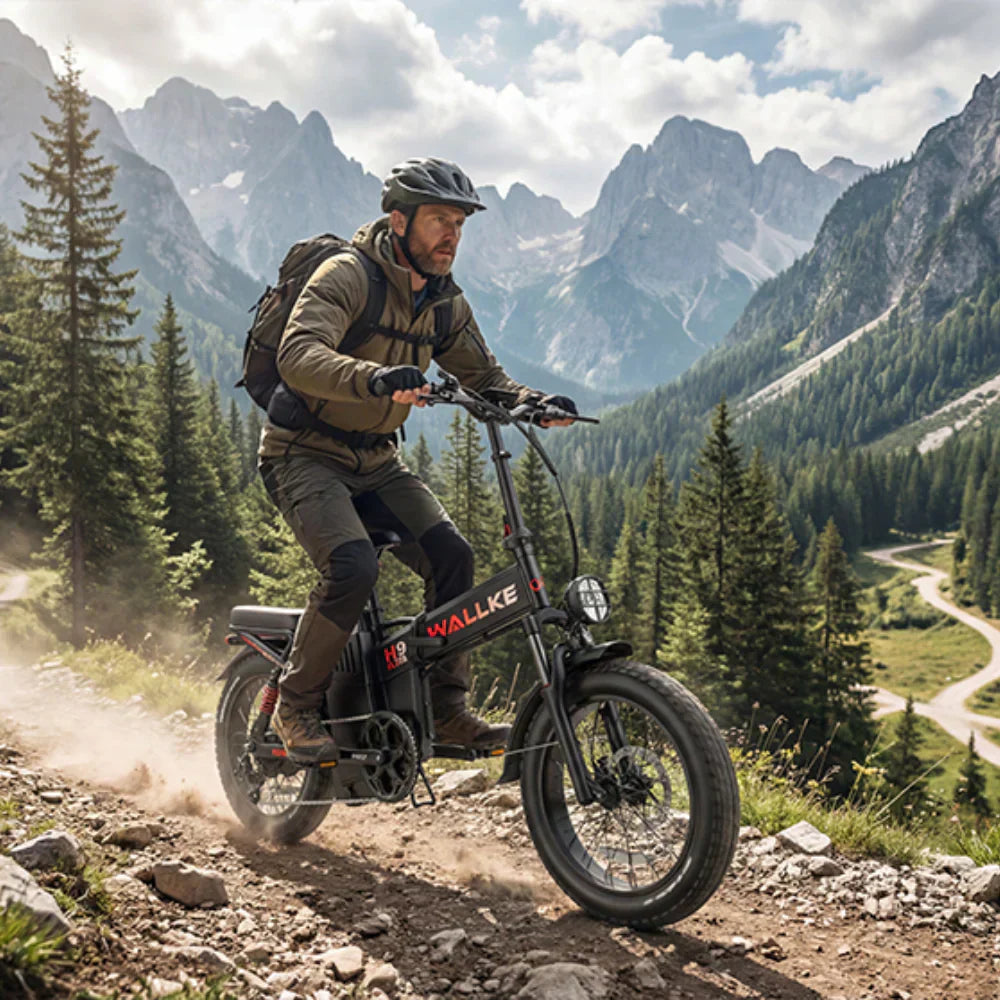
Choosing the best e-bike class for trails and off-road riding can be more complicated than choosing one for city streets. Some trails may allow Class 1 e-bikes but restrict Class 2 or Class 3 models, especially when throttle use or higher assisted speeds are involved. Rules can also differ between public lands, state parks, city-managed trails, private trail systems, and local recreation areas, so it is important to check the specific trail rules before riding.
Beyond the class label, off-road riders should also compare tire width, suspension, frame geometry, brake performance, motor torque, battery range, and available riding modes. These factors can make a major difference when riding on gravel, dirt, sand, snow, hills, or uneven terrain.
For mixed terrain, sand, gravel, snow, or uneven roads, many riders also compare Wallke fat tire e-bikes for stability and comfort and Wallke off-road e-bikes for trails and mixed terrain. Always check the product specifications and local trail rules before choosing where to ride.
Throttle vs Pedal Assist: Why It Matters
Understanding the difference between pedal assist and throttle is essential when choosing an e-bike. Pedal assist engages the motor only when you pedal, providing a natural cycling experience and often more predictable battery usage. In contrast, a throttle allows the bike to move without pedaling, using a thumb or twist control, though its availability and speed limits depend on the e-bike class and model.
For example, a Class 1 e-bike usually does not include a throttle, while a Class 2 electric bike relies on throttle as a key feature. For Class 3 electric bikes, throttle rules can vary by state and product, so riders should review local regulations and the specific bike specifications. Throttle can be especially helpful for starts, hill climbs, intersections, or when the rider is fatigued, whereas pedal assist provides a more bicycle-like ride and can enhance commuting efficiency at higher speeds.
When comparing electric bike throttle vs pedal assist, think about how you actually ride. Throttle support can make daily starts, traffic lights, steep driveways, and short errands easier, while pedal assist often feels more natural and may help riders manage battery use more efficiently. Riders should also pay attention to US e-bike speed limits, because Class 1 and Class 2 e-bikes are commonly associated with 20 mph assisted speeds, while Class 3 e-bikes are generally designed for pedal assist up to 28 mph under many three-class definitions.
If you are reading a Wallke e-bike review or comparing the best e-bike for 2026, do not look at class alone. Speed, throttle setup, battery range, tire width, brakes, riding position, and local e-bike regulations all affect whether a model is right for commuting, adventure riding, or mixed-terrain use.
Are E-Bike Class Rules the Same in Every State?
E-bike laws are not identical across the United States. While many states use the common three-class system, the details can still vary. Some states or local areas may have additional rules for rider age, helmet use, road access, bike lane use, trail access, speedometers, or required e-bike labels. This is especially important for riders comparing Class 1, Class 2, and Class 3 e-bikes, because where you can ride may depend on both the bike class and the location.
Even when a state recognizes the three-class system, access rules may differ for streets, bike lanes, multi-use paths, sidewalks, state parks, national lands, and local trails. Cities, counties, park agencies, and private trail managers may also set their own restrictions. Before riding, check your state law, city rules, and the regulations for the specific road, path, park, or trail you plan to use.
National parks and public lands can also manage e-bike classes differently. Some routes may allow Class 1 only, some may allow Class 1 and Class 2, and others may restrict e-bikes based on local management rules. Always check the specific park, trail, or land manager policy before riding.
How to Choose the Right E-Bike Class
Choose Class 1 if...
- You prefer a bicycle-like feel and mostly rely on pedal assist.
- You ride recreationally and want simpler controls.
- You ride in areas where throttle access may be restricted.
Choose Class 2 if...
- You want throttle support for easier starts and hill climbs.
- You ride in stop-and-go traffic or carry cargo.
- You need a flexible everyday e-bike for urban commuting or errands.
Choose Class 3 if...
- You have a longer commute and want faster assisted riding.
- You ride mostly on roads or bike lanes where allowed.
- You are comfortable managing higher speeds and checking local restrictions.
Also Compare Range, Tires, Brakes, and Fit
E-bike class is only one part of the decision. Other factors like battery capacity, tire width and stability, hydraulic brakes, suspension, frame geometry, riding modes, and optional folding or step-through designs can make a big difference. Dual motor or AWD setups are sometimes available but should be considered separately from class.
Before choosing a Wallke electric bike, review the product specifications for assisted speed, throttle setup, pedal-assist levels, motor configuration, battery capacity, tire size, brakes, display functions, payload, and recommended riding use. Comparing these details will help you select the e-bike that best fits your riding style, terrain, and commuting needs.
Wallke Model Features to Compare Before You Choose
Wallke models can vary by motor setup, battery capacity, throttle configuration, display functions, tire size, brake system, suspension, payload, and riding mode. Because these details can affect class interpretation and legal use, do not assume every Wallke model belongs to the same e-bike class. Always check the product page and local rules before riding.
Wallke H7 / H7 AWD
A step-through fat tire platform designed for heavy-duty commuting, long-distance riding, and comfort-focused everyday use. Compare specifications such as throttle setup, pedal-assist levels, display functions, hydraulic disc brakes, payload, battery options, and tire size before choosing.
Wallke H9 AWD
A folding full-suspension fat tire option for riders who want long-range capability, dual-drive performance, and a compact storage format. Review assisted speed, throttle, display, battery capacity, tires, brakes, and local rules before riding.
Wallke Titan X1
A heavy-duty fat tire e-bike design for riders who prioritize stability, comfort, and a strong frame feel. Check tire size, battery capacity, throttle setup, brake system, riding modes, and recommended use before choosing.
Wallke H7 Ultra / H9 Ultra
Ultra-series models are designed around long-range riding, outdoor use, and off-grid-style utility features. Compare battery capacity, display functions, throttle, braking system, tire setup, suspension, and recommended riding use on the product page.
Explore Wallke Electric Bikes
Once you understand the difference between Class 1, Class 2, and Class 3 e-bikes, the next step is matching the bike to your real riding style. Some riders care most about a smooth daily commute, while others prioritize fat tire stability, off-road confidence, hill climbing, comfort, or long-range battery performance.
Wallke offers electric bikes designed for different riding needs, including commuting, mixed-terrain riding, fat tire stability, folding convenience, off-road confidence, and outdoor adventures. Because speed settings, throttle availability, pedal-assist modes, motor configurations, tire size, display functions, and battery capacity can vary by model, always check the product specifications before choosing.
You can explore all Wallke electric bikes for commuting and adventure, shop Wallke commuter e-bikes for city riding, compare Wallke fat tire e-bikes for stability and comfort, browse Wallke off-road e-bikes for trails and mixed terrain, or compare Wallke folding e-bikes for storage and transport.
Find the Right Wallke E-Bike for Your Ride
Whether you need a commuter e-bike, a fat tire model for stability, a folding e-bike for easier storage, or an off-road electric bike for mixed terrain, compare Wallke models by speed, throttle setup, pedal assist, range, tire size, brakes, display, payload, and riding style.
FAQ
1. What is the difference between Class 1, Class 2, and Class 3 e-bikes?
Class 1 e-bikes provide pedal assist only and typically support speeds up to 20 mph. Class 2 e-bikes offer both pedal assist and throttle, also generally limited to 20 mph. Class 3 e-bikes are pedal-assist models that can provide assistance up to 28 mph, and many definitions require a speedometer. Access rules can vary by state, city, trail, or park.
2. Is a Class 2 e-bike better than a Class 1 e-bike?
Not necessarily. Class 2 e-bikes are convenient for riders who want throttle assistance, while Class 1 models provide a more traditional cycling experience and may be allowed on certain bike paths where throttle use is restricted. The best choice depends on your riding environment and style.
3. Can a Class 2 e-bike go 28 mph?
Under the common three-class framework, Class 2 motor assistance is generally limited to 20 mph. If an e-bike assists beyond 20 mph, its class status may depend on its configuration and local regulations. Always check the product specifications and local law.
4. Can Class 3 e-bikes have throttles?
Many Class 3 e-bikes are pedal-assist models that stop assisting at 28 mph. Throttle rules can vary by state and model setup, so it’s important to check local laws and each bike’s specifications before assuming throttle availability.
5. Are Class 2 e-bikes legal on bike paths?
It depends on your location. Some states and cities allow Class 2 e-bikes on bike paths, while others restrict throttle use. Park and trail managers may also have their own rules. Always check local regulations before riding.
6. Which e-bike class is best for commuting?
For short to mid-length urban commutes with frequent stops, a Class 2 e-bike is often practical. Longer road commutes may favor Class 3 for higher speeds, while Class 1 can work for low-speed, bike path-friendly routes. Consider battery range, tire size, brakes, comfort, and local access rules in your decision.
7. Are Class 3 e-bikes worth it?
Class 3 e-bikes can be worth it for longer road commutes where faster pedal assist is allowed. They may not be ideal if you mostly ride on trails, parks, or multi-use paths where Class 3 access is restricted. The value depends on your route, speed needs, comfort level, and local rules.
8. Which e-bike class is best for off-road riding?
Off-road suitability depends on more than just class. Trails may have restrictions for Class 1, 2, or 3 e-bikes. Riders should also consider fat tires, suspension, brake performance, motor torque, battery capacity, and local trail rules before riding.
9. Do Class 3 e-bikes need a speedometer?
Many Class 3 definitions mention a speedometer because Class 3 e-bikes are commonly associated with pedal assist up to 28 mph. Display features vary by model, so check whether the bike shows current speed and whether your local rules require a speedometer or class label.
10. Does e-bike class matter if I ride under the speed limit?
Yes. Class can be based on the bike’s design, throttle capability, motor assistance, maximum assisted speed, labeling, and local access rules. Even if you ride slowly, the bike’s configuration may still affect where it is legally allowed.
11. Can I ride a Class 3 e-bike on city bike lanes?
Rules vary by city and state. Some areas allow Class 3 e-bikes in bike lanes, while others restrict higher-speed e-bikes. Always check local laws before riding.
12. Are Class 1 e-bikes allowed in national parks?
Some national parks and public land managers allow certain e-bike classes where traditional bicycles are allowed, but access rules can vary by park, road, and trail. Riders should check the specific park’s current regulations before riding.
13. Do I need insurance for an e-bike?
Most U.S. states do not require insurance for standard e-bikes, but rules may vary. Riders may also want to check homeowner, renter, or specialty bicycle insurance options for theft, damage, or liability coverage.
Helpful Legal and Policy Resources
E-bike laws can change, and this article is not legal advice. For the most accurate information, check your state, city, and trail manager rules. Helpful starting points include PeopleForBikes state e-bike laws, NCSL state electric bicycle laws, and National Park Service e-bike guidance.