You will not find a paid ranking or a long list of logos here. This guide shows U.S. buyers how to identify a reliable e-bike brand by the things that matter after purchase: battery safety, honest range, braking, frame strength, replacement parts, warranty terms, service, and long-term ownership.
Brand disclosure: This guide is published by Wallke. Rather than presenting a competitor-based ranking, it gives U.S. buyers a practical checklist they can use to evaluate any e-bike brand, including Wallke.
In This Guide
- What makes an e-bike brand worth buying?
- Nine signs of a reliable e-bike brand
- Strong signs vs. warning signs
- Online buying, local service, and after-sales support
- Long-term ownership costs
- What U.S. buyers should check
- How to choose by riding style
- How Wallke approaches range, power, fit, and support
- Frequently asked questions
Quick Answer: What Makes an E-Bike Brand Worth Buying?
A good e-bike brand is not defined by one feature. It is defined by the full ownership experience: how the bike rides, how safely the electrical system is designed, how clearly the specifications are listed, how well the frame handles load, and whether replacement parts and support are available after the sale.
For most adults, a reliable e-bike brand should meet these standards:
- Clear motor, battery, range, payload, and brake specifications
- Battery and electrical safety information, including certification details where available
- A frame built for e-bike weight, speed, and real riding conditions
- Brakes strong enough for the bike’s weight and intended terrain
- Tires that match the riding environment, such as city pavement, gravel, sand, snow, or mixed terrain
- Realistic range guidance instead of exaggerated mileage claims
- Warranty, manuals, replacement parts, and customer support
- A product lineup that helps different riders choose the right model instead of forcing one bike to fit everyone
Bottom line: the best e-bike brand for you is the one that matches your route, rider weight, storage space, terrain, comfort needs, and budget. A lightweight city rider, a heavy-duty commuter, a camper, a hunting rider, and a moped-style e-bike shopper all need different features.
Nine Signs of a Reliable E-Bike Brand
Shoppers often ask for a list of trusted e-bike brands, but a logo alone cannot tell you whether a bike will be safe, repairable, comfortable, or economical to own. Use these nine checks before buying from any electric bike company.
1. Battery Safety and Certification Transparency
A trustworthy brand should clearly identify battery voltage, amp-hours, watt-hours, charger specifications, charging guidance, and safety documentation. Certification details should be tied to a specific model or electrical system rather than presented as a vague brand-wide claim.
Selected Wallke models list safety-related certifications and documentation such as UL 2849, TUV, CE, EN15194, MSDS, UN38.3, and battery-cell certification information depending on the model and market. Check the current product page for the exact bike you are considering.
2. Honest Battery Capacity and Range Claims
The brand should state battery capacity in watt-hours and explain the conditions behind any range estimate. Rider weight, assist level, throttle use, speed, hills, wind, temperature, tire pressure, cargo, and road surface all affect mileage.
Wallke offers high-capacity systems across several platforms, including 1920Wh, 2640Wh, and up to 2880Wh combined capacity configurations. These numbers help buyers compare stored energy, but they do not guarantee one fixed real-world range.
3. Motor Power That Matches the Intended Use
Motor wattage should be considered together with torque, controller tuning, sensor type, bike weight, traction, and local regulations. A city commuter and a heavy-duty all-terrain bike do not need the same motor system.
Wallke platforms range from single-motor long-range setups to dual 1000W AWD systems with up to 190Nm of listed combined torque. High-output models are intended for riders who prioritize traction, hills, payload, or mixed terrain.
4. Brakes Sized for Bike Weight and Speed
A heavy fat tire e-bike needs more braking capacity than a lightweight low-speed bicycle. Look for the brake type, piston count, rotor diameter, power cut-off function, and whether the system matches the bike's weight and intended use.
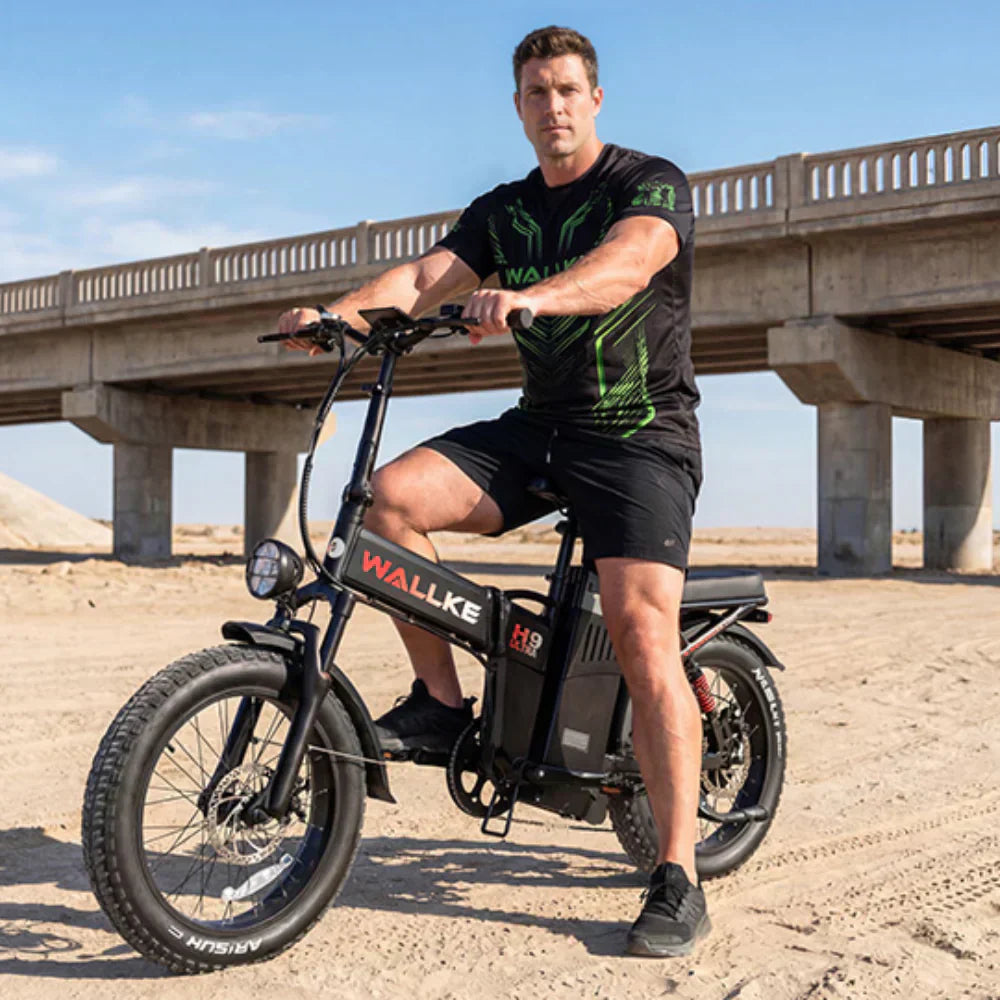
Models such as the H9 AWD and H7 AWD list four-piston hydraulic disc brakes with 203mm rotors, supporting the demands of heavier long-range and dual-motor platforms.
5. Frame Construction, Payload, and Rider Fit
Reliable brands publish maximum payload, recommended rider height, frame type, bike weight, and cargo limits. Step-through, step-over, folding, full-suspension, and moped-style designs each solve different fit and storage problems.
Several Wallke heavy-duty models list a maximum payload of up to 400 lb, while the R60 Series lists 400–500 lb depending on configuration. Payload should include the rider and carried gear, and buyers should confirm the current model page before purchase.
6. Replacement Batteries and Proprietary Parts
Ask what happens after the original battery, display, controller, charger, or wiring component needs replacement. An attractive purchase price can become poor value if a model-specific part is unavailable two years later.
Before ordering, check whether the company offers compatible replacement e-bike batteries, chargers, displays, controllers, brake components, and model-specific hardware. Wallke also maintains an e-bike parts collection for supported models.
7. Warranty Terms, Exclusions, and Claim Process
Do not stop at the warranty duration. Read what is covered, what is excluded, whether labor is included, who pays shipping, what evidence is required, and whether the customer must install replacement parts.
Warranty terms vary by Wallke model. Many models list a one-year warranty, while selected products may carry different terms. Always review the current warranty and product page rather than relying on a general statement.
8. Customer Support and After-Sales Troubleshooting
A reliable brand should provide a clear support path for mechanical and electrical problems. Check whether support is available by email, phone, or both, how diagnostic information is collected, and whether replacement parts can be approved and shipped from within the United States.
9. Repairability and Local Service Options
Some bicycle shops will service tires, chains, derailleurs, and brakes on an online e-bike but will not diagnose batteries, controllers, motors, or proprietary electronics from a brand they do not sell. Ask local shops what work they accept before ordering.
Best practice: Contact one or two local repair shops before buying and ask whether they can handle the bike's mechanical components and install brand-supplied electrical parts. Then ask the brand who handles electrical diagnosis, warranty approval, labor costs, and parts shipping.

E-Bike Brand Scorecard: Strong Signs vs. Warning Signs
Use this comparison table when evaluating a brand website, marketplace listing, or direct-to-consumer e-bike company.
| Category | Strong Sign | Warning Sign |
|---|---|---|
| Battery documentation | Voltage, Ah, Wh, charger, and certifications are clearly listed. | The page only says “long range” or “safe battery.” |
| Range | Test conditions and range variables are explained. | One maximum mileage figure is presented without conditions. |
| Brakes | Brake type, piston count, and rotor size are provided. | The listing says only “disc brakes.” |
| Payload and fit | Payload, rider height, bike weight, and frame style are published. | No maximum load or sizing guidance is available. |
| Warranty | Coverage, exclusions, labor, shipping, and claim steps are explained. | The page only says “warranty included.” |
| Parts | Batteries, chargers, displays, controllers, and model parts are available. | There is no replacement parts path. |
| Support | The company explains troubleshooting and after-sales contact options. | Support is limited to a marketplace message form. |
| Service | Mechanical and electrical repair responsibilities are clear. | No repair or diagnostic guidance is provided. |
| Legal use | Speed, class, and location-dependent rules are acknowledged. | The page promotes top speed without legal context. |
Should You Buy an E-Bike Online or From a Local Shop?
A local shop can offer test rides, fitting help, assembly, and a clearer service path. An online brand may offer larger batteries, more specialized configurations, or stronger specifications for the price. Neither route is automatically better; the key is knowing who will support the bike after delivery.
Before buying an e-bike online, ask:
- Who handles electrical diagnosis?
- Does support respond by email, phone, or both?
- Are replacement parts stocked in the U.S.?
- Can a local shop install brand-supplied parts?
- Who pays labor during a warranty claim?
- Who pays shipping for failed components?
- Are the battery and charger model-specific?
- Will support provide wiring diagrams or installation guidance?
A direct-to-consumer e-bike can still be a strong long-term value, but the support path should be clear before you buy, not after the bike develops a problem.
What Makes an E-Bike Brand Good for Long-Term Ownership?
Purchase price is only one part of e-bike value. Batteries are consumable components, brake pads and tires wear out, and displays or controllers may be model-specific. Consider the likely ownership costs before comparing two bikes by price alone.
| Ownership Question | Why It Matters |
|---|---|
| Can you buy a replacement battery? | Battery capacity declines over time, and model-specific packs can be difficult to substitute safely. |
| Are brake pads, rotors, tubes, and tires standard sizes? | Common wear parts are easier for local shops to source and service. |
| Are controllers and displays available? | Electrical components may be proprietary and can determine whether an older bike remains usable. |
| Does the warranty include labor? | Parts-only coverage can leave the owner responsible for diagnosis and installation costs. |
| How heavy is the bike? | Very heavy bikes can be harder to transport to a repair shop or load into a vehicle. |
What U.S. Buyers Should Check Before Choosing an E-Bike Brand
E-bike definitions and access rules can vary by state, city, trail system, and land manager. The common Class 1, Class 2, and Class 3 framework does not automatically make every high-output model legal everywhere.
- Check state and local rules for motor output, assisted speed, throttles, registration, and minimum rider age.
- Confirm whether a trail, park, or bike path has separate e-bike restrictions.
- Review the exact model's UL, TUV, CE, EN15194, MSDS, or UN38.3 documentation where applicable.
- Ask whether warranty parts ship from within the United States and whether labor is included.
- Confirm local repair options for mechanical parts and the brand's process for electrical diagnosis.
- Use the legal speed and power settings required for the location where you ride.
Important: UL 2849 concerns the e-bike electrical system; it does not determine where a bike may legally be ridden. Safety certification and local access rules are separate questions.
How Wallke Approaches Range, Power, Fit, and Support
Wallke is designed for riders who prioritize long range, fat tire traction, higher payload capacity, folding or step-through utility, and stronger power delivery. Rather than treating one configuration as suitable for everyone, the lineup uses different platforms for commuting, all-terrain riding, heavy riders, camping, hunting, long-distance travel, and moped-style road use.
Long-Range Platforms
Battery options include 1920Wh, 2640Wh, and up to 2880Wh combined configurations, depending on model.
Heavy-Duty Control
Selected models combine fat tires, suspension, high payload ratings, hydraulic brakes, and single- or dual-motor systems.
Parts and Model Support
Wallke provides product-specific pages plus battery and spare-parts collections for supported models.
These strengths make Wallke most relevant to adults seeking long-range, all-terrain, folding, step-through, heavy-duty, or moped-style e-bikes rather than the lightest possible city bicycle.
Brand Features by Rider Type
Instead of asking, “What is the best e bike brand?” start with a better question: “What do I need this e-bike to do every week?”
Use the guide below to match your riding style with the features that matter most.
| Rider Type | What to Prioritize | Wallke Direction | Helpful Internal Link |
|---|---|---|---|
| Daily commuter | Range, brakes, lights, fenders, comfort, battery capacity, and reliability. | Choose a long-range model with strong brakes and stable tires. | Explore commuter e-bikes → |
| Fat tire rider | Tire width, traction, suspension, braking power, and battery size. | Look at 20" x 4.0" or 20" x 5.0" fat tire models. | Explore fat tire e-bikes → |
| Off-road and outdoor rider | Torque, suspension, fat tires, frame strength, and battery range. | Consider AWD, high-torque, or long-range all-terrain models. | Explore off-road e-bikes → |
| Storage-conscious rider | Folding frame, battery size, total weight, and ride stability. | A folding fat tire e-bike can help balance storage and utility. | Explore folding e-bikes → |
| Heavy-duty rider | Payload, frame strength, brakes, torque, saddle comfort, and tire volume. | Look for models rated up to 400 lb or more, depending on configuration. | Read the heavy rider guide → |
| Hunting or camping rider | Range, quiet operation, cargo options, fat tires, and hill climbing. | Choose a long-range fat tire model with strong torque and stable braking. | Read the hunting e-bike guide → |
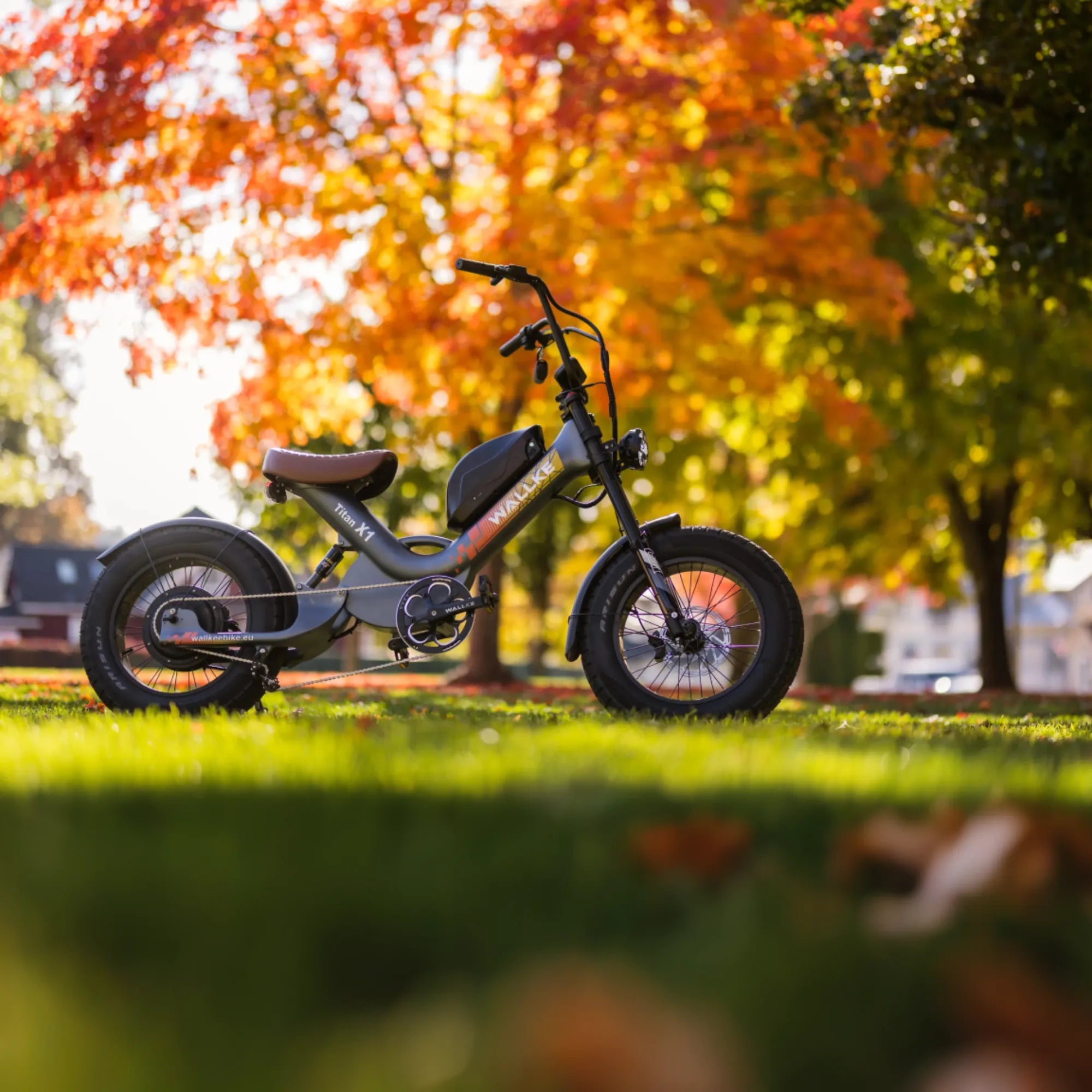
| Moped-style e-bike shopper | Seat comfort, wide tires, braking, road presence, battery capacity, and local rules. | Titan X1 and R60 Series fit riders who want a stronger moped-style platform. | Compare all Wallke e-bikes → |
Note: E-bike access and speed rules vary by location. Always follow local laws and ride settings appropriate for your area.
Which Wallke Platform Matches Your Ride?
The table below uses representative platforms rather than turning this guide into a full product catalog. Review the current product page for complete specifications and available configurations.
| Riding Need | What to Look For | Wallke Example | Learn More |
|---|---|---|---|
| AWD traction and hills | Dual motors, high combined torque, hydraulic brakes, fat tires, and a strong frame. | H9 AWD or H7 AWD | View H9 AWD → |
| Long-range outdoor utility | High watt-hour capacity, realistic range conditions, cargo support, and full-suspension comfort. | H9 Ultra or H7 Ultra | View H9 Ultra → |
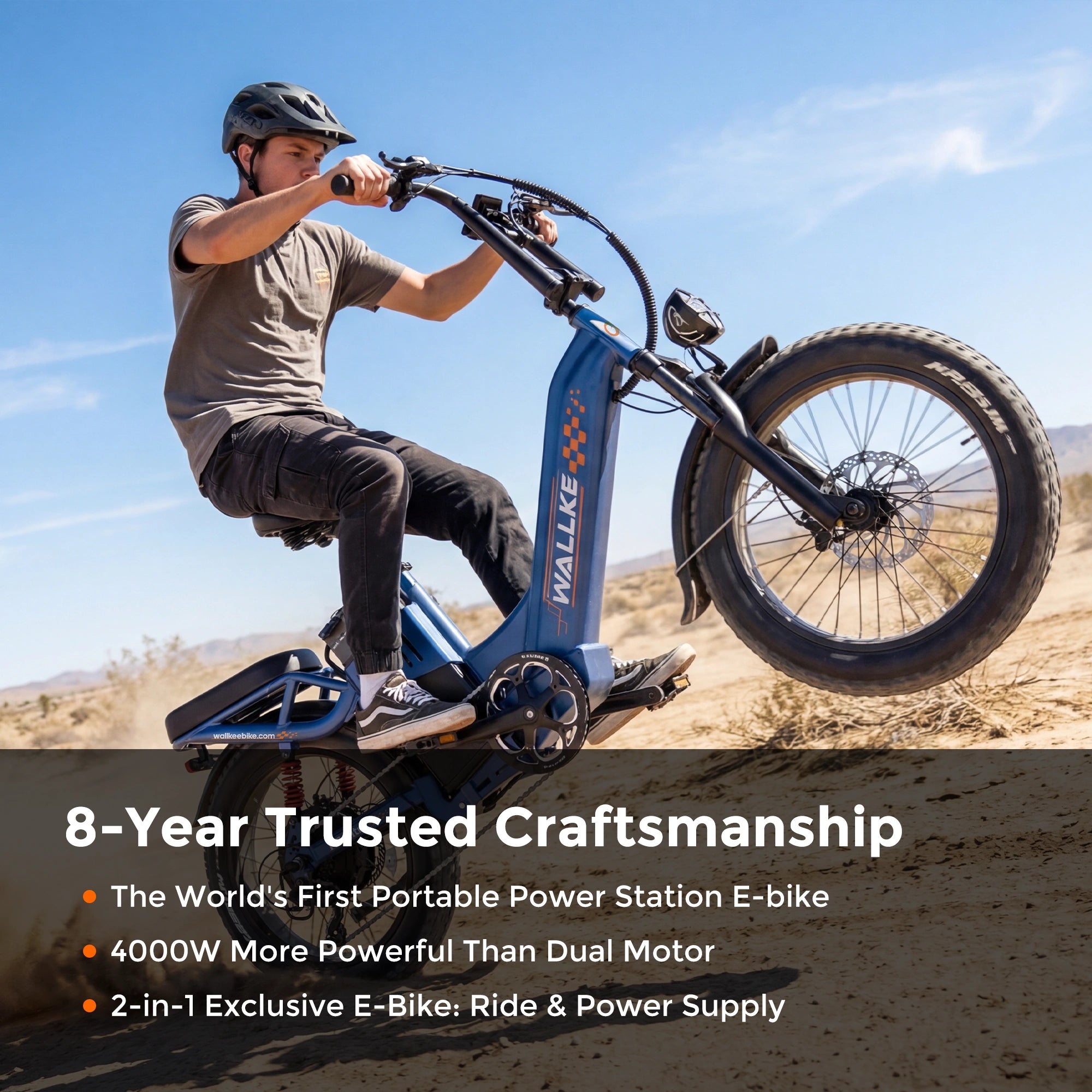
| Moped-style heavy-duty road use | Wide tires, a large saddle, strong braking, high payload, and local legal compatibility. | Titan X1 or R60 Series | View R60 Series → |
Range, speed, and performance vary by rider weight, terrain, tire pressure, assist level, throttle use, temperature, cargo, and local settings.
What Should You Actually Pay For?
The phrase “best e bike brands for the money” does not mean buying the cheapest e-bike. It means paying for the features that make a real difference after the first week of ownership.
For adults, the features worth paying for usually include:
- Battery capacity: Bigger batteries support longer rides and reduce range anxiety.
- Hydraulic brakes: Important for heavy e-bikes, hills, cargo, and fat tire models.
- Frame strength: A stable frame matters more than a flashy design.
- Payload rating: Especially important for heavy riders, cargo, and outdoor gear.
- Tire quality: Fat tires can improve stability and traction on mixed terrain.
- Suspension: Useful for rough roads, trails where allowed, gravel, and longer rides.
- Parts support: Batteries, chargers, brakes, lights, and accessories should be available.
- Warranty: A clear warranty helps protect long-term ownership value.
If two e-bikes look similar online, compare battery watt-hours, brake type, payload, tire size, frame design, and replacement part availability. These details often matter more than a small price difference.
What Real Owner Discussions Get Right
Many riders search for “best e bike brands reddit” because they want owner feedback instead of marketing claims. That instinct is smart. Real riders often talk about range, support, brake feel, delivery, assembly, long-term durability, and whether a bike still feels good after hundreds of miles.
Owner discussions are useful for spotting repeated patterns in delivery, assembly, customer support, battery replacement, brake wear, and long-term durability. However, some forum users prioritize DIY modifications or speed changes, while other buyers need official warranty coverage and a predictable service path. Use community feedback as one input, then verify specifications, warranty terms, parts availability, and legal use on official sources.
Before making a decision, compare:
- Does the product page list real specifications?
- Does the brand explain range conditions?
- Does the bike have brakes that match its weight and speed?
- Are replacement batteries, chargers, and parts available?
- Is the warranty easy to understand?
- Does the model fit your height, payload needs, and terrain?
E-Bike Brand Red Flags to Avoid
A reliable e-bike brand should make the buying decision easier, not more confusing. Be careful if a brand focuses only on top speed, extreme wattage, or huge range claims without explaining the parts that support those claims.
Unclear Specs
Avoid bikes that do not clearly list battery capacity, motor output, brakes, payload, charging time, or frame fit.
Weak Brake Setup
A heavy fat tire e-bike should have braking power that matches its weight, speed, and intended terrain.
No Parts Path
If you cannot find replacement batteries, chargers, tires, lights, or parts, long-term ownership becomes risky.
- No clear warranty or support page
- No replacement battery or charger information
- No realistic range explanation
- No payload capacity
- No brake details
- No safety certification information where applicable
- No user manual or assembly guidance
- No clear product category or intended rider type
How to Choose the Right Wallke E-Bike
Once you know what a good e-bike brand should provide, the next step is choosing the right model for your riding style.
Choose H9 AWD if you want maximum all-terrain capability.
- BatteryUp to 48V/60Ah
- MotorDual 1000W
- TorqueUp to 190Nm
- Payload400 lb
Best for riders who want long range, dual motor traction, fat tire stability, and a folding full-suspension platform.
View Wallke H9 AWD →Choose H7 AWD if you prefer step-thru access with AWD power.
- Battery48V/60Ah
- MotorDual 1000W
- FrameStep-thru
- Payload400 lb
Best for riders who want easier mounting, long-range battery support, and dual motor capability.
View Wallke H7 Series →Choose H9 Ultra or H7 Ultra if range is your top priority.
- Battery48V/55Ah
- Capacity2640Wh
- Estimated RangeUp to 80–100 miles
- Brakes4-piston hydraulic
Best for outdoor riding, camping, long trips, and riders who want high-capacity power storage in an e-bike platform.
View Wallke H9 Ultra →Choose Titan X1 or R60 Series for moped-style riding.
- Tires20" x 5.0"
- Ride StyleMoped-inspired
- Use CaseRoad / utility
- PayloadHeavy-duty
Best for riders searching for a stronger road presence, large tires, a comfortable saddle, and a more powerful e-bike feel.
View Wallke R60 Series →Helpful Safety and E-Bike Rule Resources
E-bike rules and safety expectations can vary by region. For independent reference, riders may review resources from safety and cycling policy organizations:
Final Verdict: The Right E-Bike Brand Is the One Built for Your Real Ride
If you are comparing the best e bike brands, do not stop at a brand name or a single spec. Look at the full system: battery capacity, safety information, motor output, torque, brakes, frame strength, tire design, payload, comfort, range, support, and replacement parts.
Wallke is a strong choice for riders who want long range, fat tire stability, folding utility, all-terrain confidence, heavy-duty construction, and powerful e-bike performance. It is especially worth considering if you ride longer distances, carry more weight, explore mixed terrain, or want more capability than a basic city e-bike.
The right e-bike should make your ride easier, safer, and more useful. Start with how and where you ride, then choose the Wallke model that matches your route, terrain, storage needs, and comfort expectations.
July 2026 update: We expanded this guide with a nine-point brand-reliability checklist, a strong-signs-versus-warning-signs scorecard, U.S. service considerations, local repair questions, replacement-parts guidance, long-term ownership costs, and updated answers to common brand-comparison questions.
Ready to Compare Wallke E-Bikes?
Explore Wallke long-range, fat tire, folding, commuter, and off-road electric bikes to find the model that fits your riding style.
Frequently Asked Questions About Choosing an E-Bike Brand
What are the top 3 bike brands?
There is no universal top three for every rider because commuter, cargo, folding, mountain, fat tire, and moped-style e-bikes require different strengths. Build a shortlist around battery safety, service access, replacement parts, fit, brakes, warranty, and the type of riding you plan to do.
Which is the best quality electric bike?
The highest-quality e-bike is the one whose electrical system, frame, brakes, battery capacity, fit, and support match its weight and intended use. Quality cannot be determined by motor wattage, price, or brand recognition alone.
Who is the leading manufacturer of e-bikes?
There is no single manufacturer that leads every e-bike category or market. Sales leadership varies by country, price range, retail channel, and bike type. Evaluate the specific model and support network rather than relying on a global “number one” claim.
What is America's best-selling eBike?
Sales rankings vary by retailer and reporting period, and there is no single public dataset covering every dealer and direct-to-consumer brand in the United States. A best-selling model is not automatically the best match for your terrain, fit, range, payload, or service needs.
What are trusted e-bike brands?
Trusted e-bike brands publish clear specifications, explain range conditions, provide warranty and support information, stock replacement parts, and give buyers a realistic repair path. Trust should be based on documentation and long-term support, not only reviews or advertising.
How can I tell if an e-bike company is legitimate?
Look for a real company website, contact information, model-specific manuals, warranty terms, safety documentation, replacement parts, clear return and shipping policies, and product specifications that remain consistent across the site.
Which e-bike brand offers the best value?
The best value comes from the brand that meets your real riding needs at the lowest total ownership cost. Compare battery capacity, brakes, payload, warranty labor, replacement battery price, parts availability, local service, and expected maintenance.
Is it better to buy an e-bike online or from a local shop?
A local shop can provide test rides, fitting, assembly, and in-person service. An online brand may offer more specialized configurations or stronger specifications for the price. Before buying online, confirm who handles electrical diagnosis, warranty labor, replacement parts, and local installation.
Are replacement batteries available after the warranty ends?
Availability depends on the brand and model. Check for an official battery collection, confirm compatibility before ordering, and ask how long the company expects to support the battery, charger, controller, and display used by the bike.
Is UL 2849 important when choosing an e-bike?
UL 2849 is an important electrical-system safety standard, but certification details should be verified for the exact model. It does not determine where the bike is legally allowed to operate, and it should be considered alongside charger instructions, battery documentation, local laws, and responsible charging practices.