
Respuesta rápida: ¿qué hace buena a una e-bike de aventura?
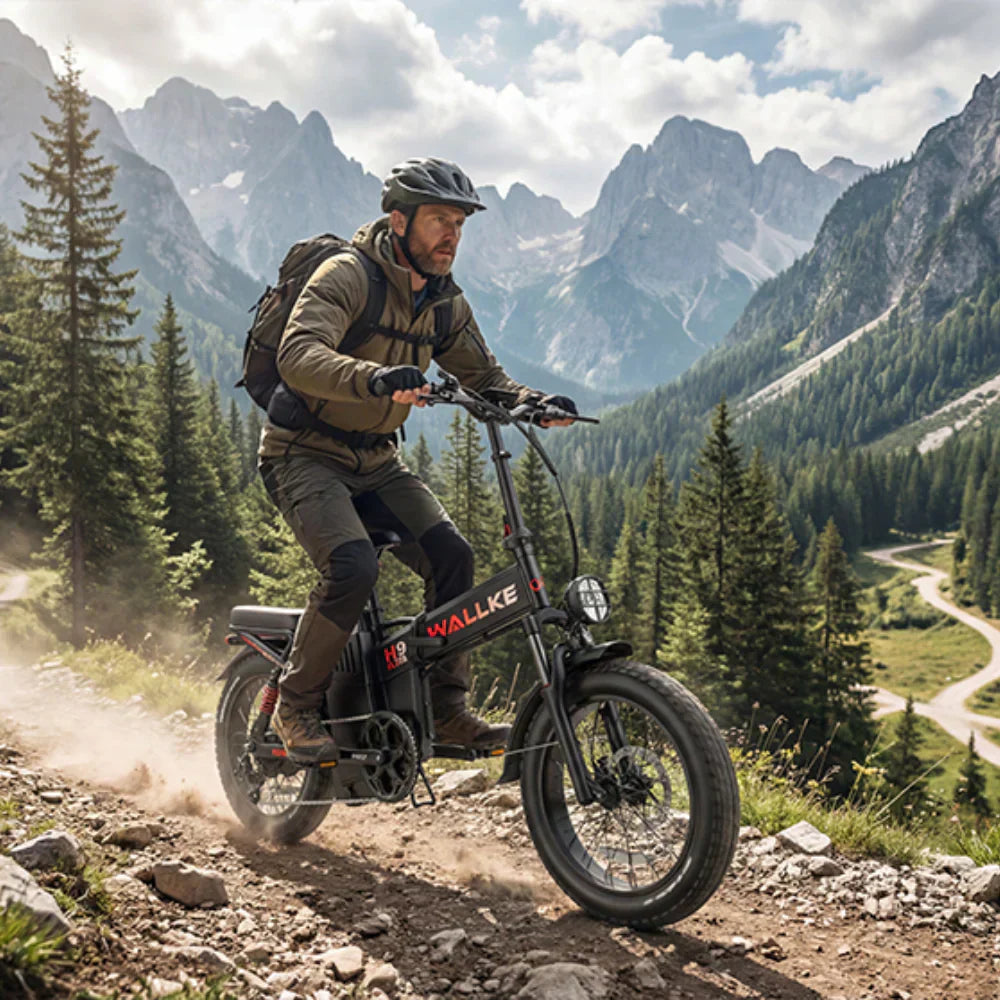
Una buena e-bike de aventura está pensada para recorridos más largos y variados que una e-bike urbana básica. Debe sentirse estable en asfalto, grava, tierra compacta, caminos de camping y colinas, llevando al ciclista, agua, herramientas y carga ligera con confianza.
1. Autonomía fiable
Busca una batería adecuada para tu ruta real, no solo para la cifra máxima anunciada. Las subidas, el acelerador, el frío, el terreno blando y el peso reducen la autonomía.
2. Neumáticos y suspensión estables
Los neumáticos más anchos, el dibujo todoterreno y la suspensión delantera o completa hacen que los caminos irregulares y superficies sueltas sean más controlables.
3. Frenos y cuadro sólidos
Los frenos de disco hidráulicos, rotores fuertes, un cuadro reforzado y una carga máxima clara importan más que un diseño llamativo.
Para la mayoría, la mejor e-bike de aventura no es la más extrema, sino la que encaja con tu terreno, distancia, talla, almacenamiento y normas locales.
¿Qué es una e-bike de aventura?
Una e-bike de aventura es una bicicleta eléctrica para quienes quieren una sola bici para uso diario y exploración de fin de semana. Se sitúa entre una e-bike de commuting y una máquina off-road dedicada.
En la práctica, una bicicleta eléctrica de aventura suele estar pensada para:
- Rutas recreativas más largas que paseos cortos por el barrio.
- Superficies mixtas como asfalto, grava, caminos de parque, tierra y rutas de camping.
- Más ayuda en subidas que una bici urbana ligera.
- Más comodidad sobre baches, grietas y terreno irregular.
- Llevar mochila, bolsa trasera, candado, kit de reparación, agua o equipo ligero de camping.
¿Para quién es mejor este tipo de e-bike?
Vale la pena considerarla si tus rutas van más allá de carriles bici lisos. Es especialmente útil si quieres una sola e-bike para desplazarte entre semana y hacer rutas al aire libre el fin de semana.
Buena opción
- Haces rutas largas y no quieres ansiedad por la batería.
- Quieres más estabilidad en grava, arena, tierra o asfalto roto.
- Llevas carga, herramientas, compras o equipo outdoor.
- Quieres más apoyo en cuestas que una commuter básica.
- Prefieres una postura erguida y segura.
Puede no ser ideal
- Solo haces trayectos urbanos cortos en llano.
- Necesitas la bici más ligera posible para escaleras o apartamento.
- Buscas una e-bike estrecha de carretera para velocidad y eficiencia.
- Vas a usar senderos técnicos donde las normas exigen clases específicas.
Mejor e-bike de aventura según el uso
La mejor e-bike de aventura no es igual para todos. Una bici perfecta para fines de semana de grava puede ser pesada para subir escaleras, mientras que una plegable compacta puede no ser ideal para subidas muy empinadas y sueltas. Empieza por tu estilo principal y luego compara las especificaciones que lo apoyan.
Mejor para rutas largas de fin de semana
Prioriza capacidad de batería, comodidad, frenos hidráulicos, luces, compatibilidad con portaequipajes y una posición cómoda tras la primera hora.
Mejor para grava y terreno mixto
Busca neumáticos todoterreno anchos, geometría estable, suspensión delantera o completa y frenado predecible en superficies sueltas.
Mejor para ciclistas bajos
Compara altura de paso, sillín, alcance, manillar y opciones step-through. Un cuadro bajo mejora el control con carga.
Mejor para ciclistas pesados o carga
Revisa carga total, solidez del cuadro, frenos, volumen de neumáticos, ruedas y par útil en cuestas.
Mejor para camping y caza
Enfócate en autonomía, funcionamiento silencioso, carga, tracción, luces, facilidad de reparación y reglas locales de acceso.
Mejor para RV o almacenamiento compacto
Una e-bike plegable puede tener sentido si importan transporte y espacio, pero compara peso, tamaño plegado, rigidez, frenos y batería.
Especificaciones clave para rutas de aventura
Una buena ficha técnica debe ayudarte a entender cómo se comportará la bici en la vida real. Compara autonomía, motor, frenos, neumáticos, cuadro, ajuste y soporte.
En móvil, desplázate lateralmente para ver la tabla completa.
| Especificación | Qué buscar | Por qué importa |
|---|---|---|
| Capacidad de batería | Más Wh o Ah, celdas de calidad y guía clara de carga | Rutas largas, cuestas, acelerador, carga y frío reducen la autonomía. |
| Motor y par | Suficiente ayuda en subidas; doble motor solo si necesitas tracción extra | Cuestas, suelo suelto y cargas pesadas requieren más par útil que la ciudad plana. |
| Neumáticos | Dibujo todoterreno, resistencia a pinchazos, 4 pulgadas o más para superficies blandas | Afectan comodidad, tracción, frenado y confianza en grava o tierra. |
| Frenos | Discos hidráulicos; rotores grandes en bicis pesadas | Las rutas de aventura incluyen bajadas, carga, cambios de velocidad y humedad. |
| Suspensión | Delantera para terreno mixto ligero; completa para rutas más duras | Reduce fatiga y mantiene los neumáticos pegados al suelo. |
| Carga máxima | Carga total y límite de portaequipajes claros | La bici debe soportar ciclista, bolsas, herramientas y suministros. |
| Cuadro y ajuste | Step-through, plegable o alto según talla y almacenamiento | Una bici bien ajustada es más segura y cómoda. |
| Luces y accesorios | Luz frontal, luz de freno, guardabarros, portaequipajes y display | Útil para salidas temprano, regresos tarde, commuting y clima cambiante. |
Motor, par y tracción de doble motor
Un trayecto urbano plano no exige el mismo sistema que una carretera de grava empinada. Para cuestas, carga y terreno suelto, el par define la fuerza desde baja velocidad. El doble motor puede ayudar en colinas, arena, nieve o terreno irregular. Si la tracción es clave, compara opciones de doble motor para rutas difíciles.
Fat tires y control en terreno mixto
Muchas e-bikes de aventura usan fat tires porque aportan estabilidad y comodidad en grava, arena, nieve y asfalto irregular. Añaden peso y resistencia, pero si tus rutas incluyen terreno suelto, los modelos con neumáticos anchos suelen encajar mejor.
Frenos, rotores y seguridad
Las e-bikes de aventura suelen ser más pesadas y pueden llevar carga. Los frenos hidráulicos se dosifican mejor, los rotores grandes ayudan con el calor y el corte de motor al frenar añade control.
Autonomía real: por qué las rutas de aventura gastan más batería
La autonomía real suele ser inferior a la máxima anunciada. Subidas, viento, niveles altos de asistencia, carga, terreno blando y frío consumen más energía. Elige más batería de la que parece requerir tu ruta para terminar sin depender del modo más bajo.
Cómo elegir según terreno y estilo
No compres solo para el escenario más extremo si el 90% de tus rutas son de asfalto. Ajusta la bici a tu uso normal y añade capacidad para las rutas difíciles que más haces.
Paved roads / city routes
No compres solo para el escenario más extremo si el 90% de tus rutas son de asfalto. Ajusta la bici a tu uso normal y añade capacidad para las rutas difíciles que más haces.
Gravel / off-road
Una buena ficha técnica debe ayudarte a entender cómo se comportará la bici en la vida real. Compara autonomía, motor, frenos, neumáticos, cuadro, ajuste y soporte.
Hills / cargo
Antes de elegir, responde con honestidad: cuántas millas harás, si habrá cuestas o terreno suelto, si necesitas fat tires, suspensión completa o doble motor, si el cuadro te queda bien, si la carga máxima basta y si puedes guardar, transportar y cargar la bici.
Camping / hunting
El equipo depende de distancia, clima, terreno y distancia a la ayuda. Empieza por seguridad, reparación, hidratación y visibilidad.
RV / compact storage
Una e-bike plegable puede tener sentido si importan transporte y espacio, pero compara peso, tamaño plegado, rigidez, frenos y batería.
Shorter riders
Compara altura de paso, sillín, alcance, manillar y opciones step-through. Un cuadro bajo mejora el control con carga.
E-bike de aventura vs. fat tire, off-road, commuter, plegable y dual sport
Las búsquedas de “adventure ebike” suelen mezclarse con fat tire, off-road, commuter, plegables e incluso motos. Esta es la diferencia práctica.
En móvil, desplázate lateralmente para ver la tabla completa.
| Type | Best for | Comparison |
|---|---|---|
| Adventure ebike | Long rides, mixed terrain, utility | Balanced comfort, range, stability and cargo ability. |
| Fat tire e-bike | Sand, snow, gravel, rough pavement | Often a strong adventure choice when traction matters. |
| Off-road ebike | Dirt roads and permitted trails | More terrain-focused; check access rules. |
| Commuter ebike | Daily pavement and errands | Lighter and efficient, but usually less rugged. |
| Folding ebike | Storage, RV travel, transport | Useful when capability and compact storage both matter. |
Ejemplos Wallke preparados para aventura
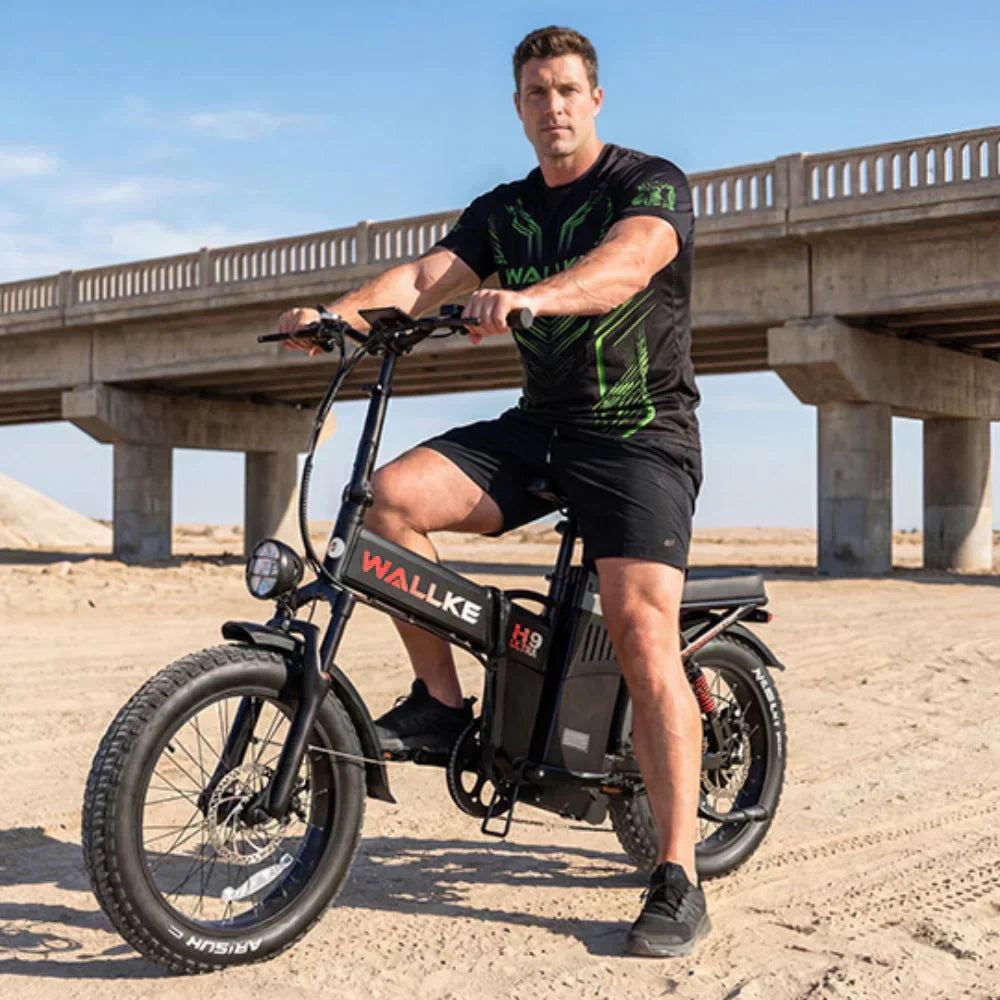
No todos necesitan la bici más potente. La pregunta correcta es qué configuración encaja con tu ruta. Wallke ofrece ejemplos con baterías de largo alcance, fat tires, suspensión completa, doble motor y formatos plegables o step-through.
Wallke H9 AWD
Dual motorFat tireLong range
Built for steep hills, heavier loads, long routes and extra traction.
Wallke H7 / H7 AWD
Step-throughAWD optionComfort fit
Good for easier mounting, accessible frame shape and optional dual-motor traction.
Wallke H9 Ultra
FoldingLarge batteryUtility
Useful for long-distance adventure, RV travel and compact storage.
Full Wallke e-bike lineup · Dual-motor collection · Wider-tire models
Acceso a rutas, leyes y seguridad de batería
Las rutas de aventura pasan por calles, carriles bici, parques, terrenos públicos, campings y propiedad privada. Las reglas cambian por estado, ciudad, gestor y clase de e-bike. Verifica normas locales, parques y señales antes de rodar.
Checklist de equipo para bicicleta de aventura
El equipo depende de distancia, clima, terreno y distancia a la ayuda. Empieza por seguridad, reparación, hidratación y visibilidad.
Safety and comfort
- Helmet
- Gloves
- Eye protection
- Weather layers
- Front and rear lights
Repair and route essentials
- Tire inflator or mini pump
- Spare tube or patch kit
- Multitool
- Water and snacks
- Phone, ID, lock and first aid
Checklist final antes de comprar
Antes de elegir, responde con honestidad: cuántas millas harás, si habrá cuestas o terreno suelto, si necesitas fat tires, suspensión completa o doble motor, si el cuadro te queda bien, si la carga máxima basta y si puedes guardar, transportar y cargar la bici.
Compara e-bikes Wallke para rutas de aventura
Compara bicicletas eléctricas Wallke con largo alcance, estabilidad fat tire, comodidad de suspensión completa, utilidad plegable y tracción de doble motor.
Comparar todas las e-bikes WallkeComparar modelos centrados en tracciónComparar modelos de neumático anchoComparar e-bikes plegablesFAQ: e-bikes de aventura
¿Qué es una e-bike de aventura?
Es una bicicleta eléctrica diseñada para rutas largas y terrenos mixtos, con batería grande, neumáticos estables, geometría cómoda, frenos fuertes y funciones útiles para carga.
¿Cuál es la mejor e-bike de aventura para la mayoría?
Depende de tu ruta. En asfalto, prioriza comodidad, autonomía, luces y portaequipajes. En grava, cuestas o superficies blandas, prioriza neumáticos anchos, frenos hidráulicos, suspensión y batería suficiente.
¿Diferencia entre e-bike de aventura y off-road?
La de aventura es más versátil para rutas largas, terreno mixto y utilidad. La off-road se centra más en caminos duros y senderos donde esté permitido.
¿Diferencia con una fat tire e-bike?
Fat tire describe el neumático; aventura describe el uso. Muchas e-bikes de aventura usan fat tires por estabilidad y comodidad.
¿Cuánta autonomía necesito?
Elige más autonomía de la que exige tu ruta, porque cuestas, carga, viento, frío, terreno blando y acelerador reducen la autonomía real.
¿Están permitidas en senderos?
Depende del sendero, estado, gestor y clase de e-bike. Revisa normas locales y señales.
¿Necesito doble motor?
No siempre, pero ayuda en cuestas empinadas, superficies sueltas, nieve, arena y cargas pesadas.


Leave a comment