
Un deuxième moteur peut ajouter de la traction et de la force de montée, mais il ajoute également du poids, du coût, de la complexité et de la demande d'énergie. Ce guide explique quand la mise à niveau est utile et quand un système à moteur unique bien adapté est le choix le plus pratique.

Le verdict rapide
Choisissez un vélo électrique à moteur unique pour des déplacements domicile-travail principalement pavés, des pentes modérées, une manipulation plus facile, un coût d'achat inférieur et les meilleures chances de maximiser l'autonomie d'une batterie donnée.
Choisissez un vélo électrique à double moteur lorsque vous êtes régulièrement confronté à des montées raides, des terrains meubles, des charges utiles lourdes, des démarrages avec arrêts et départs répétés ou des conditions dans lesquelles la conduite des deux roues peut fournir une traction utile.
Ne choisissez pas uniquement en fonction du nombre de moteurs. La qualité du moteur, le réglage du contrôleur, la capacité de la batterie, les freins, les pneus, la conception du cadre, le poids total et l'assistance technique peuvent avoir plus d'importance que le fait que le vélo soit équipé d'un ou deux moteurs.
Quoi « moteur unique » et « double moteur » signifient sur un vélo électrique
Un vélo électrique à moteur unique utilise un moteur électrique pour entraîner la roue arrière ou la roue avant. Les systèmes de moyeu arrière sont courants car ils offrent une traction familière et maintiennent le système de direction relativement simple.
Un vélo électrique à double moteur place normalement un moteur dans la roue avant et un autre à l'arrière. Lorsque les deux sont engagés, le vélo peut entraîner les deux roues. Ceci est souvent décrit comme une configuration de vélo électrique à traction intégrale ou AWD.
Cette définition de base est simple. L’expérience de conduite ne l’est pas. Deux vélos avec le même nombre de moteurs peuvent sembler très différents en raison de la programmation du contrôleur, du type de capteur, de l'engrenage, de la taille des roues, de la masse totale et de la rapidité avec laquelle la puissance est délivrée.

Comparaison des vélos électriques à un ou deux moteurs
| Facteur de décision | Moteur unique | Moteur double | Ce qui compte en utilisation réelle |
|---|---|---|---|
| Accélération | Généralement plus fluide et plus facile à gérer | Peut sembler plus fort, surtout à l'arrêt | Réglage du contrôleur et limite de traction de la force utilisable |
| Collines abruptes | Capable lorsque le moteur, l'engrenage, la batterie et la charge sont bien adaptés | Souvent préférable pour les répétitions montées raides ou charges lourdes | La chaleur, la tension de la batterie, le poids du cycliste et la longueur de la colline comptent |
| Terrain meuble | Une roue motrice ; prévisible pour de nombreux pilotes | Deux roues motrices peuvent améliorer la traction vers l'avant | La traction intégrale n'améliore pas l'adhérence au freinage ; les pneus comptent toujours |
| Autonomie | Souvent plus efficace dans des conditions comparables | Peut consommer de l'énergie plus rapidement lorsque les deux moteurs sont utilisés | Les wattheures de la batterie et le comportement de conduite dominent |
| Poids | Généralement plus léger | Généralement plus lourd en raison du deuxième moteur et du matériel associé | Tenez compte des escaliers, des supports, du stockage et de l'équilibre à basse vitesse |
| Coût | Coût d'achat et de remplacement normalement inférieur | Coût initial normalement plus élevé | Comparez le vélo dans son ensemble, pas seulement la mise à niveau du moteur |
| Maintenance | Moins de composants alimentés | Plus de câblage, de connecteurs, de commandes et de matériel moteur | La disponibilité des pièces et l'assistance déterminent la difficulté de réparation |
| Meilleur ajustement | Déplacements, loisirs pavés, terrain modéré | Collines abruptes, charges lourdes, surfaces meubles, utilisation axée sur la performance | Votre itinéraire normal devrait décider, pas le trajet le plus extrême imaginable |
Puissance et montée de côte : la différence est-elle vraiment si grande ?
C'est la question que les coureurs posent le plus souvent. La réponse honnête est : parfois.
Sur une chaussée plate à vitesse constante, un deuxième moteur peut apporter peu d'avantages pratiques. Le vélo est déjà en mouvement, la traînée aérodynamique augmente avec la vitesse et le cycliste n'a peut-être pas besoin de traction supplémentaire.
La différence devient plus facile à ressentir dans les situations exigeantes :
- démarrer sur une pente raide ;
- grimper à plusieurs reprises avec un passager ou une charge plus lourde ;
- rouler dans le sable, le gravier, la terre meuble ou la terre meuble ;
- accélération d'un vélo électrique à gros pneus à basse vitesse ;
- maintenir l'élan là où un pneu peut glisser.
Même ici, « deux moteurs » ne constitue pas une spécification complète. Un moteur unique bien conçu, associé à un contrôleur et une batterie appropriés, peut surpasser un système à deux moteurs mal intégré.

Traction et stabilité : ce que la traction intégrale peut et ne peut pas faire
Conduire les deux roues peut aider un vélo électrique à avancer lorsqu'un pneu a une adhérence limitée. Cela peut être utile dans les montées lâches ou sur des surfaces inégales. Cela ne crée pas une traction illimitée.
Une force motrice plus élevée peut également faire patiner un pneu si le pilote applique brusquement la puissance. Le couple aux roues avant modifie la sensation de direction, en particulier sur un sol meuble ou dans les virages. Les cyclistes qui quittent un vélo électrique de banlieue conventionnel doivent d'abord s'entraîner avec le réglage de puissance le plus bas.

Autonomie et utilisation de la batterie : les moteurs doubles épuiseront-ils la batterie plus rapidement ?
L'utilisation de deux moteurs à haut rendement nécessite généralement plus d'énergie électrique que l'utilisation douce d'un seul moteur. Cela ne signifie pas que tous les vélos électriques à double moteur ont une faible autonomie. Beaucoup sont associés à des batteries plus grosses, et certains permettent au pilote de basculer entre les modes monomoteur et double moteur.
Pour une comparaison utile, regardez au-delà des miles annoncés. Vérifiez :
- énergie de la batterie en wattheures (Wh), pas seulement en ampères-heures ;
- si la revendication d'autonomie utilise l'accélérateur, l'assistance au pédalage ou la conduite mixte ;
- la vitesse et le niveau d'assistance utilisés pour l'estimation ;
- poids du passager et du chargement ;
- terrain, température, vent et pression des pneus ;
- si un ou les deux moteurs étaient actifs.
Un principe simple aide : l'utilisation d'une accélération maximale, d'une vitesse élevée, d'une faible pression des pneus et des deux moteurs ensemble réduira l'autonomie par rapport à une assistance modérée au pédalage sur une chaussée plane.
Le poids, la maniabilité et les pièces que les acheteurs négligent souvent.
Les vélos électriques à double moteur sont généralement plus lourds. La masse supplémentaire peut sembler stable à grande vitesse, mais elle affecte également la conduite au quotidien.
Avant d'acheter, réfléchissez à la façon dont vous gérerez le vélo lorsque vous ne le conduisez pas :
- soulever le vélo sur un support ;
- le faisant passer à travers une porte étroite ;
- le retournant dans un garage ;
- le contrôlant à vitesse de marche ;
- récupération après une inclinaison à l'arrêt ;
- le transportant après une crevaison ou un défaut électrique.
Un vélo impressionnant lors d'un essai peut devenir gênant si son poids entre en conflit avec votre configuration de stockage ou de transport.

Coût et fiabilité : la mise à niveau du double moteur en vaut-elle la peine ?
Payez pour le deuxième moteur uniquement lorsque votre itinéraire normal exige à plusieurs reprises plus de force de lancement ou de traction des deux roues. Il est plus difficile de justifier un rare scénario « juste au cas où ».
Votre semaine normale ressemble à ceci
- Déplacements pavés
- Niveaux modérés
- Espace de stockage limité
- Vous appréciez un poids réduit et un service plus simple
- Vous souhaitez vous étirer autonomie de la batterie
Votre semaine normale ressemble à ceci
- Montées raides ou répétées
- Terrain meuble ou mixte
- Charges lourdes de passagers et de marchandises
- Démarrages fréquents à basse vitesse sous charge
- Vous acceptez plus de poids et de complexité
La fiabilité n'est pas déterminée uniquement par le nombre de moteurs. Un système à double moteur comporte davantage de composants pouvant nécessiter un entretien, mais la qualité de fabrication, la protection contre l'eau, les connecteurs, la gestion thermique du contrôleur, la disponibilité des pièces et l'assistance du fabricant sont plus significatives qu'une règle simpliste « un moteur dure plus longtemps ».
Avant d'acheter un vélo électrique à double moteur, demandez au vendeur :
- Les moteurs avant et arrière ont-ils les mêmes spécifications ?
- L'entretien des roues avant nécessite-t-il de débrancher un câble moteur ?
- Des contrôleurs et des écrans de remplacement sont-ils disponibles ?
- Si un moteur ou un contrôleur tombe en panne, le vélo peut-il toujours fonctionner dans un mode monomoteur pris en charge ?
Pourquoi ne pas utiliser un seul gros moteur au lieu de deux ?
Cette question apparaît fréquemment dans les forums de cavaliers. Un moteur plus gros peut être une conception judicieuse. Cela réduit le nombre de moteurs d'entraînement et peut simplifier le câblage et le contrôle.
Deux moteurs offrent un avantage différent : ils peuvent répartir la force motrice entre les roues avant et arrière. Cela peut améliorer la traction et la traction à basse vitesse dans certaines conditions. Il peut également permettre des modes de fonctionnement sélectionnables sur les vélos conçus avec cette fonctionnalité.
Le compromis en matière d'ingénierie n'est pas « faible contre fort ». Il s'agit de simplicité et efficacité par rapport à une traction distribuée et une capacité d'entraînement supplémentaire.
Lorsque le deuxième moteur est généralement inutile
Ne mettez pas à niveau le moteur uniquement lorsque la plupart des trajets se déroulent sur une chaussée plate, que vous habitez à l'étage, que vous transportez le vélo sur un porte-bagages arrière, que vous le poussez ou le tournez fréquemment à basse vitesse ou que vous préférez un vélo plus léger et plus naturel. Dans ces situations, un poids supplémentaire peut affecter la conduite quotidienne plus souvent qu’une traction supplémentaire n’aide.
Quelle configuration correspond aux scénarios de conduite courants ?
Déplacements urbains quotidiens
Un seul moteur suffit généralement pour les trajets pavés, les feux de circulation, les pistes cyclables et les pentes modérées. Il a tendance à être plus facile à manœuvrer et peut coûter moins cher. La double motorisation devient plus pertinente lorsque l'itinéraire comprend des pentes inhabituellement raides, de lourdes charges de livraison ou des surfaces en mauvais état.
Quartiers vallonnés
Ne jugez pas une colline uniquement en fonction de son inclinaison. Une courte rampe de 12 % peut être plus facile qu'une montée soutenue de 8 % sous une lourde charge. Tenez compte de la longueur de la pente, de la fréquence, de la charge utile totale, de la surface et de la nécessité ou non de redémarrer sur la pente. Un seul moteur performant peut gérer de nombreuses collines. Les démarrages abrupts répétés sous charge sont les cas où le moteur supplémentaire peut offrir un avantage significatif malgré le poids supplémentaire.
Utilisation sur sable, gravier, neige et tout-terrain
La transmission à double moteur peut aider à maintenir l'élan lorsque la traction varie entre le pneu avant et le pneu arrière. La bande de roulement des pneus, la pression, la technique du cycliste et les règles d'accès locales restent essentielles. Plus de puissance ne peut pas faire disparaître un pneu inadapté ou une condition de sentier dangereuse.
Coureurs lourds et chargements
Commencez par la charge utile totale. Ajoutez le pilote, les vêtements, les cadenas, les sacs, les accessoires et la cargaison. Évaluez ensuite les freins, les roues, les pneus, le cadre, la suspension et la capacité de la batterie. Un deuxième moteur peut améliorer les démarrages et les montées, mais l'ensemble du vélo doit être conçu pour la charge.
Conduite récréative longue distance
Pour les longs trajets sur route pavée, un seul moteur offre souvent le meilleur équilibre entre efficacité et poids gérable. Un modèle à deux moteurs avec fonctionnement sélectionnable d’un seul moteur peut offrir de la flexibilité, mais les acheteurs doivent vérifier le fonctionnement de chaque mode et la manière dont le fabricant a produit ses estimations d’autonomie.
Pourquoi Wallke propose des vélos électriques à un ou deux moteurs
Le retour d'une option à moteur unique à haut rendement ne signifie pas que les moteurs doubles sont devenus inutiles. Cela reflète un ensemble différent de priorités. Certains pilotes souhaitent une propulsion arrière puissante et une grosse batterie sans le couple supplémentaire de la roue avant, le câblage, le poids et la complexité d'entretien d'un système AWD.
Pour les randonnées pavées, les longues randonnées récréatives et les cyclistes qui déplacent ou transportent fréquemment le vélo, une configuration à moteur unique peut offrir un meilleur équilibre global. Les modèles à double moteur restent utiles lorsque les départs raides, les surfaces meubles ou les charges lourdes sont des parties récurrentes de l'itinéraire. Proposer les deux configurations permet aux acheteurs d'adapter le système d'entraînement à l'itinéraire au lieu de traiter le nombre de moteurs comme une hiérarchie de produits.
- Comparez tous les vélos électriques Wallke lorsque vous n'avez pas encore décidé entre un moteur simple et un moteur double.
- Découvrez les vélos électriques à double moteur Wallke lorsque les démarrages abrupts récurrents, les terrains meubles ou l'utilisation de charges lourdes rendent la transmission intégrale pertinente.
- Examinez le Wallke H7 Ultra pour une configuration pas à pas à moteur arrière unique. Les conducteurs qui souhaitent une option de passage à deux moteurs devraient la comparer avec le H7 AWD. Confirmez la disponibilité, les choix de batterie et les spécifications avant de commander.
- Découvrez la famille H9 Ultra pour un format pliable. Les informations actuelles sur le produit comparent les configurations à moteur unique et à traction intégrale, mais les acheteurs doivent confirmer quelles variantes de lecteur et de batterie sont actuellement disponibles à la commande.
- Comparez la série Wallke Ravager R60 pour une alternative à moteur arrière unique haute capacité.
La disponibilité et les spécifications du produit peuvent changer selon l'année modèle, l'option de batterie et l'état des ventes. Vérifiez la configuration exacte sur la page produit concernée avant l'achat.
Sept questions auxquelles répondre avant d'acheter

- À quoi ressemble mon itinéraire normal ? Utilisez votre trajet hebdomadaire, pas une aventure annuelle.
- Quelle est la pente et la durée des montées ? Une rampe courte et une pente soutenue créent des exigences différentes.
- Quelle est ma charge utile totale ? Incluez le pilote, les vêtements, l'équipement, les accessoires et le chargement.
- Puis-je supporter le poids du vélo ? Testez la marche, les virages, le stationnement et le levage, pas seulement la conduite.
- Quelle est la quantité d'énergie disponible de la batterie ? Comparez les wattheures et les conditions de test réalistes.
- Puis-je obtenir des pièces et un service ? Renseignez-vous sur les moteurs, les contrôleurs, les écrans, les batteries et les connecteurs.
- La configuration est-elle légale là où je roule ? Les règles relatives à la puissance du moteur, à l'utilisation de l'accélérateur et à la vitesse assistée varient selon l'État, la ville, le sentier et le gestionnaire foncier.
Les contrôles de sécurité et légaux sont d'autant plus importants à mesure que les performances augmentent.
Avant d'acheter un vélo électrique à haut rendement, inspectez le vélo et confirmez le système électrique et la documentation de charge du fabricant, le chargeur fourni, les freins, les pneus, les fixations et les règles locales. La Commission américaine de sécurité des produits de consommation conseille aux consommateurs d'utiliser le chargeur fourni ou recommandé par le fabricant, de rester présent pendant le chargement et d'éviter de charger pendant leur sommeil.
Recherchez également des informations claires sur les tests de sécurité des systèmes électriques et des batteries applicables. UL 2849 évalue la transmission électrique, la batterie et le chargeur du vélo électrique en tant que système ; les allégations de certification doivent être vérifiées pour le modèle exact plutôt que supposées à partir de produits similaires.
Les classifications juridiques et les règles d'accès varient. Les capacités techniques d'un vélo peuvent dépasser la vitesse assistée ou l'équipement autorisé sur une route, une piste cyclable ou un sentier particulier. Confirmez l'état actuel et les exigences locales avant de rouler.
L'essentiel
Adaptez le système d'entraînement aux conditions auxquelles vous êtes confronté chaque semaine. Pour les chaussées ordinaires et les pentes modérées, un seul moteur bien adapté suffit généralement. Les moteurs doubles constituent l’argument le plus solide lorsque les démarrages abrupts, les charges lourdes ou les surfaces meubles sont des parties récurrentes de l’itinéraire. Dans les deux cas, comparez le vélo complet (batterie, contrôleur, freins, pneus, charge utile, ajustement, poids, support et règles locales) et pas seulement le nombre de moteurs.
Questions fréquemment posées
Un vélo électrique à double moteur est-il toujours meilleur qu'un vélo électrique à moteur unique ?
Non. Un vélo électrique à double moteur peut fournir une accélération plus forte, une traction améliorée à basse vitesse et une traction utile lorsque les deux roues sont motrices. Un vélo électrique monomoteur est souvent plus léger, plus simple et moins cher. Il peut également consommer moins d’énergie lorsque la vitesse, la charge, les pneus, les réglages d’assistance et la conception du vélo sont par ailleurs comparables. Le meilleur choix dépend du terrain, de la charge utile, des besoins de manutention et du budget.
Le double moteur en vaut-il la peine pour les déplacements quotidiens ?
Généralement uniquement lorsque le trajet comprend des pentes raides, des surfaces meubles, des charges lourdes fréquentes ou des conditions où une traction supplémentaire est véritablement utile. Pour une chaussée généralement plate et des charges modérées, un vélo électrique monomoteur bien conçu est souvent le choix le plus pratique.
Double moteur signifie-t-il transmission intégrale sur un vélo électrique ?
C'est généralement le cas lorsqu'un moteur entraîne la roue avant et l'autre entraîne la roue arrière. Cependant, les commandes diffèrent selon le modèle. Certains vélos permettent au pilote de sélectionner le fonctionnement à l'arrière uniquement, à l'avant uniquement ou à deux moteurs, tandis que d'autres gèrent les moteurs différemment. Vérifiez la logique de contrôle du produit avant d'acheter.
Un vélo électrique à double moteur a-t-il moins d'autonomie ?
C'est possible. L’utilisation agressive des deux moteurs augmente la demande électrique. L'autonomie dépend également des wattheures de la batterie, de la vitesse, du poids du cycliste, des pentes, de la pression des pneus, de la température, du vent et du niveau d'assistance. Une grosse batterie peut compenser une partie de la demande supplémentaire, mais le nombre de moteurs à lui seul ne détermine pas l’autonomie.
Pourquoi ne pas utiliser un très gros moteur au lieu de deux moteurs ?
Un gros moteur peut fournir une puissance élevée avec un système plus simple. Deux moteurs peuvent répartir la force motrice sur les deux roues et améliorer la traction dans certaines conditions. Le compromis est plus de poids, plus de câblage et de commandes, et une plus grande consommation d'énergie lorsque les deux moteurs sont engagés.
Les vélos électriques à double moteur sont-ils plus difficiles à entretenir ?
Ils comportent plus de composants alimentés, de câblage, de connecteurs et de matériel de contrôle qu'un système à moteur unique. Cela ne garantit pas des problèmes, mais cela crée davantage de pièces qui pourraient éventuellement nécessiter un diagnostic ou un remplacement. La disponibilité des pièces et le service après-vente sont aussi importants que le nombre de moteurs.
Un vélo électrique à double moteur est-il difficile à contrôler à basse vitesse ?
Il peut nécessiter plus de soins qu'un vélo de banlieue plus léger, en particulier lorsque la puissance des roues avant s'enclenche brusquement. Démarrez avec le réglage d'assistance le plus bas, utilisez des commandes d'accélérateur douces et entraînez-vous aux démarrages, aux virages et au freinage dans une zone dégagée avant de rouler dans la circulation.
Les cyclistes plus lourds devraient-ils automatiquement choisir le double moteur ?
Pas automatiquement. Vérifiez d’abord la charge utile totale du vélo, la résistance du cadre, les freins, les roues, les pneus et la capacité de la batterie. Les moteurs doubles peuvent faciliter les démarrages répétés ou les montées sous charge, mais ils ne remplacent pas un châssis et un système de freinage adéquats.
Que dois-je comparer en plus du nombre de moteurs ?
Comparez la puissance nominale et la puissance maximale uniquement dans le contexte du courant du contrôleur, de la tension de la batterie, des performances soutenues, de la gestion thermique et des conditions de test du fabricant. Comparez également les wattheures de la batterie, les freins, les pneus, le poids total, la charge utile, le support pièces, les conditions de garantie et les règles de conduite locales.


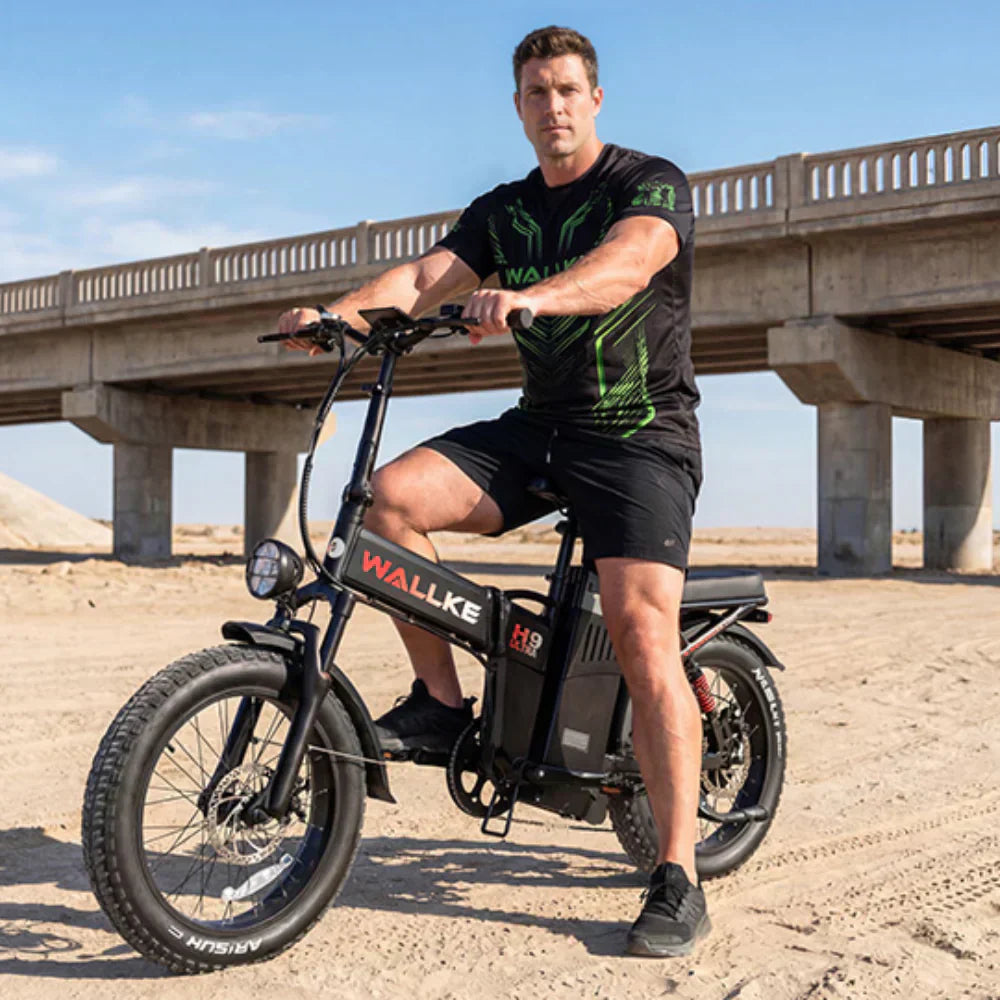
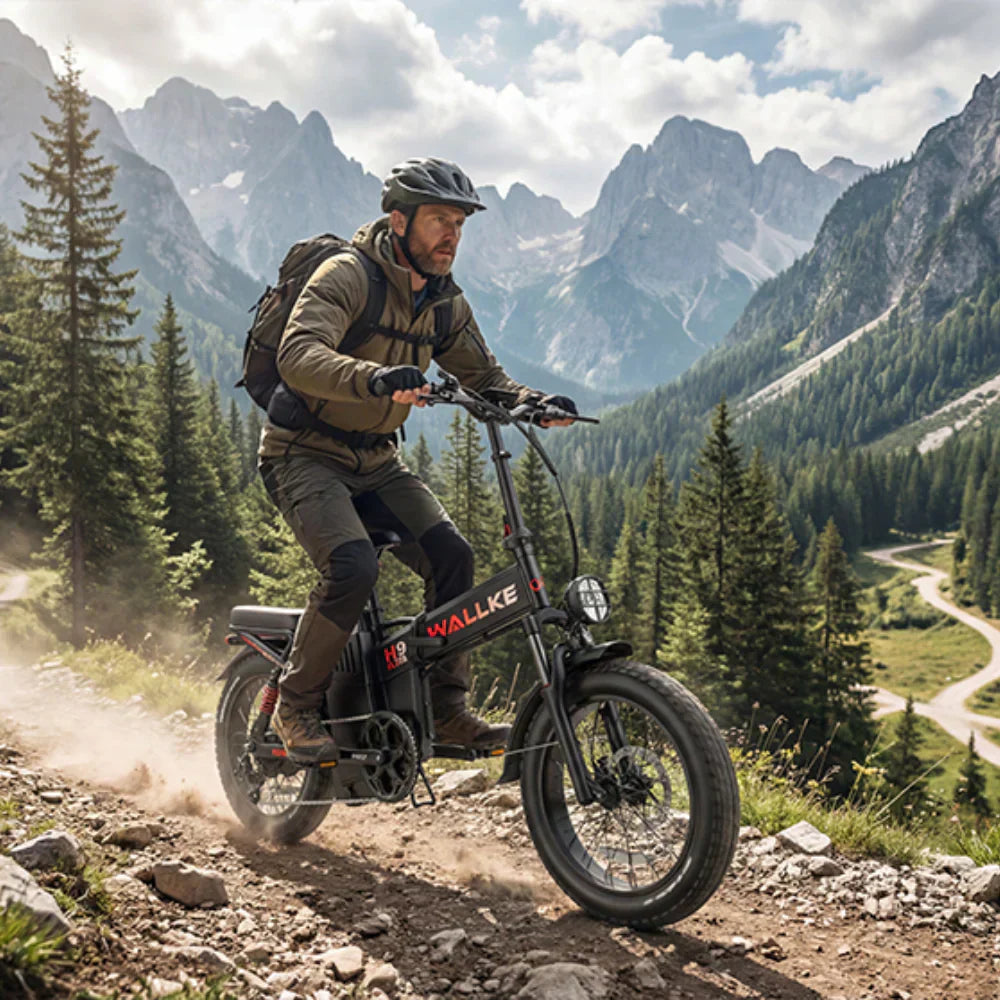
I want to share my honest feedback regarding the comparison between single motor and dual motor Wallke models.
After real-world riding experience in Los Angeles — a city with constant hills and elevation changes — it is very clear that the dual motor Wallke H9 AWD performs significantly better than any single motor version.
A single motor setup may work on flat terrain, but in hilly environments:
The motor operates under constant heavy load
Internal planetary gears are placed under excessive stress
Gear wear accelerates noticeably on steep climbs
Torque delivery feels weak under sustained uphill riding
Overall power output is insufficient for demanding terrain
In contrast, the dual motor (AWD) system distributes the workload between front and rear motors:
Significantly higher combined torque
Strong and stable hill-climbing performance
Reduced strain on each individual motor
Better traction and control
More consistent power under load
In real-world hill conditions, nothing compares to the torque and pulling power of a dual motor setup.
While dual motor systems may slightly impact battery range due to higher power draw, the performance advantage far outweighs that tradeoff. For cities like Los Angeles, dual motor is not just better — it is the correct engineering solution.
From a mechanical perspective, claiming that a single motor is superior for hilly terrain does not reflect actual field performance. Based on practical use, the dual motor H9 AWD is clearly more powerful, more reliable under load, and better suited for demanding environments.
I strongly recommend positioning the dual motor system as the optimal choice for riders in mountainous or hilly cities.
You already have a single motor option. If that was important I would but a single motor bike. The only reason I buy wallke over any other brand is that you have one of the best dual motors. Also, your premise that single motor is better ignores a lot of data and conditions. Single motor, even with more power, will never match dual under real world conditions. It is heavy and I wish I could change that, but not at the cost of my second motor. If you abandon dual motors I abandon wallke.
Will the new battery work the older h7 ?
Your argument for single motor ignores traction (AWD) and redundancy. With AWD, one motor fails, you can get home on the other.
Im 63,bad knees. 3kw battery , range is no problem..i have your 2024 H9 awd, single controller.. i have 7,000 km in 7 months.. only dislike, no torque up hill.. steep street roads. Not safe going from 35 mph down to 11 mph. My next ebike will be a 72v (amps dont change, so wiring will be the same, more or less) i am hoping to get a larger diameter motor for torque..and speed of 45-50 mph max, torque hopefully of 400 n.m., Wired ebike is close but too fast, less torque.. i am hoping others are expressing my same thoughts, and maybe future you and ADD this style bike to your LINE of ebikes.. your frames are very strong to handle a 72v high torque drive system and fit a 40AH 72v in same compartment. I think many 60+ year people like myself have plenty of money to buy a ebike that can trailer the grandkids across the busy road, swiftly.