A low sticker price can be tempting. It can also hide a weak battery, poor fit, hard-to-find parts, or a seller who disappears when something breaks. This guide shows how to find an e-bike that earns its price over years of real use.
The best value e-bike is not automatically the cheapest or the most powerful. It is the bike that safely fits your route, rider weight, storage space, comfort needs, and service expectations without making you pay for features you will rarely use. For a short paved commute, that may be a simple, lighter city bike. For steep hills, heavier loads, rough roads, or long distances, paying more for stronger brakes, a larger battery, higher payload capacity, and accessible replacement parts can be the better value.
Best value e-bike picks by real-world need
Start with your least negotiable requirement. That is usually more useful than starting with a brand name or a motor number.
| Your priority | What usually creates value | What often wastes money |
|---|---|---|
| Short paved commute | Comfortable fit, predictable assist, dependable brakes, lights, fenders, rack mounts, and nearby or responsive support. | Oversized batteries, dual motors, very wide tires, and off-road suspension you do not need. |
| Apartment or RV storage | A folding frame only if the folded size and total bike weight work for your doorway, stairs, trunk, or storage area. | Assuming “folding” also means light enough to carry. Many folding fat-tire e-bikes are still heavy. |
| Hills or heavier loads | Published payload capacity, hydraulic brakes, appropriate gearing, sufficient battery reserve, and a motor system matched to the grade. | Buying by peak wattage alone while ignoring controller, traction, brakes, bike weight, and heat management. |
| Rough pavement and mixed terrain | Stable tires, controlled suspension, strong wheels, reliable braking, and parts that can be replaced. | Maximum tire width or maximum suspension travel when most rides are on smooth pavement. |
| Long-distance riding | Transparent battery watt-hours, realistic range assumptions, charger compatibility, comfort, and a plan for battery replacement. | Treating a best-case range headline as a guaranteed everyday result. |
If you already know your use case, browse by category instead of sorting every bike by price: commuter e-bikes, folding e-bikes, step-through e-bikes, or fat-tire e-bikes.
“Best value” and “cheapest” are not the same search
Affordable describes the purchase price. Value describes what that money keeps doing for you after checkout.
A cheap e-bike can be good value when it has a clear use case, safe electrical documentation, acceptable brakes, realistic range, and support for basic parts. An expensive bike can be poor value if its premium features do not help your ride.
Value = useful performance + safety + fit + support − avoidable cost and ownership friction.
This is why a rider with a 5-mile flat commute may get more value from a straightforward commuter than from a 100-pound, high-power machine. The same simple commuter may be false economy for a 300-pound rider carrying groceries up repeated steep grades.
What should you expect at each e-bike budget?
Price alone cannot establish quality. Still, budget bands help set realistic expectations before you compare individual models.
| Budget | A realistic shopping goal | Where to be cautious |
|---|---|---|
| Below $700 | A basic, limited-use bike from a seller with a verifiable return path, model-specific charger, and available wear parts. | Unknown sellers, vague battery origin, unverifiable certification claims, unrealistic range, and no replacement battery listing. |
| $700–$1,000 | A simpler commuter or compact folder with fewer premium components. Prioritize fit, brakes, battery documentation, and support over display features. | Feature overload at an implausibly low price. Every extra motor, battery, suspension part, and accessory adds cost somewhere. |
| $1,000–$2,000 | The broad value range for many U.S. direct-to-consumer commuters, folders, cruisers, and fat-tire bikes. Compare the complete system, not just power. | Paying for speed, weight, or battery capacity that creates storage, legal, or handling problems for your actual route. |
| Above $2,000 | Specialized utility, cargo, long-range, heavy-duty, premium commuter, or off-road capability that solves a specific need. | Assuming a higher price guarantees better support, safer charging, better fit, or better value for your use. |
Those price points frequently surface in related searches, but a complete adult e-bike at that price deserves exceptional scrutiny. Confirm whether the listing is actually for a bike, a deposit, an accessory, a children's product, or a heavily used item. Do not lower your battery, charger, braking, fit, and return standards to chase a headline price.
The 7-point scorecard for finding the best value ebike
1. Verify the electrical system, battery, and charger
Look for a model-specific statement about third-party safety testing or certification. Do not assume a battery-cell brand, a generic badge, or certification on a similar model covers the complete bike you are considering.
UL 2849 evaluates the e-bike electrical drive train, battery, and charger as a system. UL 2271 applies to batteries for light electric vehicles. Ask for the exact standard, exact model or system, certifying laboratory, and a way to verify the claim.
The U.S. Consumer Product Safety Commission advises riders to follow the manufacturer's charging instructions, use the supplied or recommended charger, remain present while charging, and avoid charging while asleep.
2. Compare battery energy, not amp-hours alone
Amp-hours cannot be compared fairly without voltage. Convert the battery to watt-hours when possible:
A 48V 15Ah battery is 720Wh. That number helps compare stored energy, but it does not guarantee mileage. Speed, assist level, throttle use, hills, wind, temperature, tire pressure, rider weight, cargo, and stops all affect range.
If range is your main concern, use a dedicated long-range e-bike comparison method rather than accepting one advertised distance.
3. Match the motor system to the route
More motor is not automatically more value. A well-matched single motor can be lighter, simpler, and more efficient for moderate paved riding. Dual motors are easier to justify for steep starts, repeated climbs, loose surfaces, or heavy loads.
Compare nominal and peak output, torque if it is documented, controller limits, wheel size, gearing, thermal protection, and total bike weight. For a deeper explanation, see single vs. dual motor e-bikes.
4. Treat brakes and payload as core value features
A heavier bike traveling faster or carrying more weight asks more of its brakes, tires, wheels, and frame. Hydraulic disc brakes can reduce lever effort and provide strong, consistent control, but rotor size, pad condition, setup, and maintenance still matter.
Payload usually means the combined rider, clothing, lock, bags, child seat, and cargo—not rider weight alone. Leave a practical margin instead of planning to live at the published limit. This electric bike weight limit guide explains the calculation.
5. Check fit, access, and total bike weight
A spec sheet cannot rescue a bike that is awkward to mount, too tall at stops, or too heavy to move into your home.
- Compare rider-height guidance, standover, reach, handlebar adjustment, and saddle range.
- Choose a step-through frame when easy mounting and frequent stops matter more than a traditional top tube.
- For a folding bike, measure the storage area and the narrowest doorway.
- If stairs are involved, decide how many pounds you can safely lift before you shop.
6. Look for support before you need it
The seller should provide a reachable support channel, manuals, warranty terms, return conditions, and a process for diagnosing problems. A warranty is only as useful as its exclusions, response process, parts availability, and shipping terms.
Search the seller's site for a replacement battery, charger, brake pads, display, controller, throttle, and model-specific hardware. Wallke, for example, maintains pages for replacement e-bike batteries and spare parts. That does not prove every part will always be in stock, but it gives a buyer something concrete to verify.
7. Calculate total ownership cost
The checkout price is only the first number. Add the equipment and service your route requires:
- a properly fitted helmet and a serious lock;
- lights, fenders, a rack, bags, or a mirror if not included;
- assembly inspection or tune-up;
- brake pads, tires, tubes, chains, and routine service;
- eventual battery replacement;
- return shipping or restocking exposure under the written policy.
A bike that costs $150 less but needs $250 in immediate upgrades is not the cheaper complete solution.
What is the best value e-bike for commuting?
For most commuters, reliability and daily convenience beat headline performance. A good commuter should be easy to live with on a wet Tuesday morning, not just impressive in a product photo.
For a 5–7 mile daily commute
- Buy enough battery for a round trip plus a reserve, not the largest pack available.
- Prioritize predictable pedal assist, controllable braking, lights, fenders, and rack compatibility.
- Choose tires for your pavement. Very wide tires add comfort and traction but also weight and rolling resistance.
- Confirm where the bike will be locked and charged.
For hills, cargo, or a longer commute
- Compare battery watt-hours and leave more reserve for cold weather, wind, and climbing.
- Check payload with your work bag, groceries, and locks included.
- Favor strong brakes and appropriate gearing before chasing peak speed.
- Make sure your planned riding mode complies with state and local rules.
Use the Wallke commuter collection as one category reference, then compare it with lighter, lower-power alternatives if your route is flat, short, and storage-sensitive.
Best value e-bike for adults: choose by rider, not age label
“For adults” is too broad to choose a bike. Two adults can need completely different frames, brakes, batteries, and carrying capacity.
For riders who want easy mounting
A step-through frame can be worth more than extra motor power if hip mobility, knee comfort, frequent stops, or rear cargo makes a high top tube inconvenient. Confirm that the frame still fits your height and riding position.
For heavier riders or regular cargo
Start with payload, wheel and tire suitability, brake system, and frame fit. Then evaluate the motor and battery. Do not buy a bike whose rating leaves no room for a lock, backpack, groceries, or winter clothing.
For apartment, RV, or vehicle storage
A folding hinge solves only one part of storage. Check folded dimensions, weight, handle placement, battery removability, and whether the folded bike remains stable. If you must carry it upstairs, a lighter non-fat-tire folder may provide better value than a heavier high-capacity model.
For rough roads, gravel, sand, or packed snow
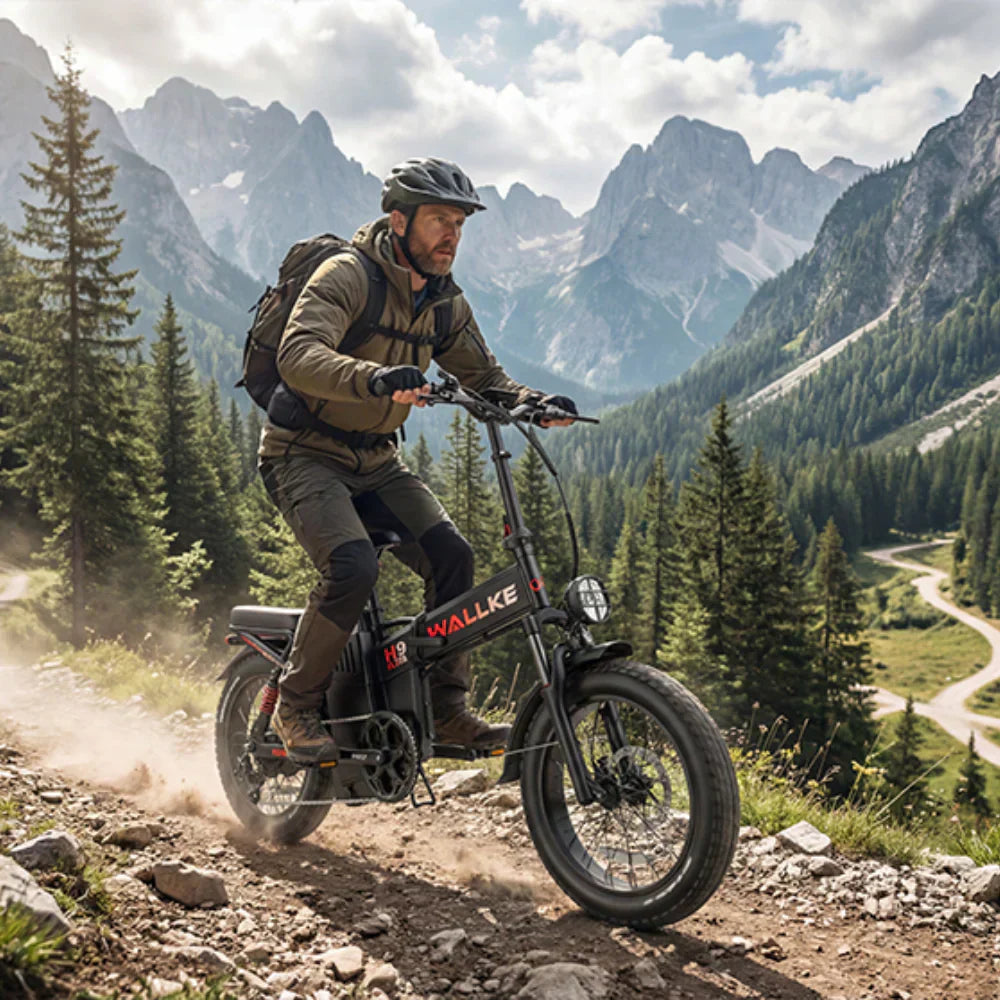
Fat tires can add stability, flotation, and comfort, but they do not make every surface safe or every trail legal. Pay for wide tires and suspension when your regular terrain needs them—not because they look substantial in a listing.
For repeated steep hills
Look at the whole climbing system: rider-and-cargo load, grade, start frequency, traction, motor configuration, battery voltage, controller, gearing, and heat. Dual-motor AWD can be valuable on steep or loose terrain, but it adds weight and energy demand. Browse dual-motor e-bikes only after confirming that your route justifies the tradeoff.
Can the best value ebike come from Amazon?
It can, but the marketplace listing is not the support system. The important questions are who manufactured the bike, who the seller is, where returns go, and whether parts remain available after the listing changes.
Before buying an e-bike on Amazon or another marketplace:
- Open the seller profile and confirm the legal seller and support contact.
- Read the return terms for an assembled or ridden bike, not just the marketplace's general policy.
- Verify the exact electrical-system or battery certification claim.
- Search for the exact replacement battery and charger outside the product listing.
- Check recent low-star reviews for repeated support, charger, controller, brake, and missing-part problems.
- Save the listing, specifications, serial number, and seller communication after purchase.
A marketplace can make checkout easy. It cannot make an untraceable brand reliable.
What e-bikes should you stay away from?
Avoid a specific listing—not an entire price category—when several of these warning signs appear together:
- No model-specific safety evidence. The page uses generic certification logos without a standard, certifier, model, or verification path.
- No compatible charger information. The seller suggests a “universal” replacement or does not identify voltage and compatibility.
- Range claims without conditions. There is no rider weight, speed, assist level, terrain, or battery capacity context.
- Peak power is the entire sales pitch. Brakes, payload, battery, controller, wheels, and fit are barely documented.
- The seller identity is unclear. There is no physical return path, reachable support channel, or stable brand website.
- Replacement batteries and wear parts do not exist. Search results lead only to more complete bikes.
- The return policy is vague or impractical. It does not explain opened, assembled, ridden, defective, or freight returns.
- The deal creates pressure instead of evidence. Permanent countdown timers and huge “regular prices” replace useful specifications.
If the only reason to buy is a giant wattage number at an unbelievable price, pause. A reputable budget e-bike should become easier to understand as you investigate it, not harder.
How Wallke models fit into a best-value decision
Wallke's current U.S. lineup is strongest for riders who value large-battery options, fat-tire stability, high payload ratings on key models, step-through or folding choices, and higher-output configurations. Those features can create value for long rides, heavier loads, hills, and mixed terrain. They can be unnecessary weight and cost for a short, flat commute.
| Wallke option | Consider it when | Look elsewhere when |
|---|---|---|
| H7 Series | You want a step-through frame, fat tires, substantial battery options, and configurations aimed at hills, heavier loads, or mixed use. | Your top priorities are minimum bike weight, easy stair carrying, a simple flat-road commuter, or a sub-$1,000 purchase. |
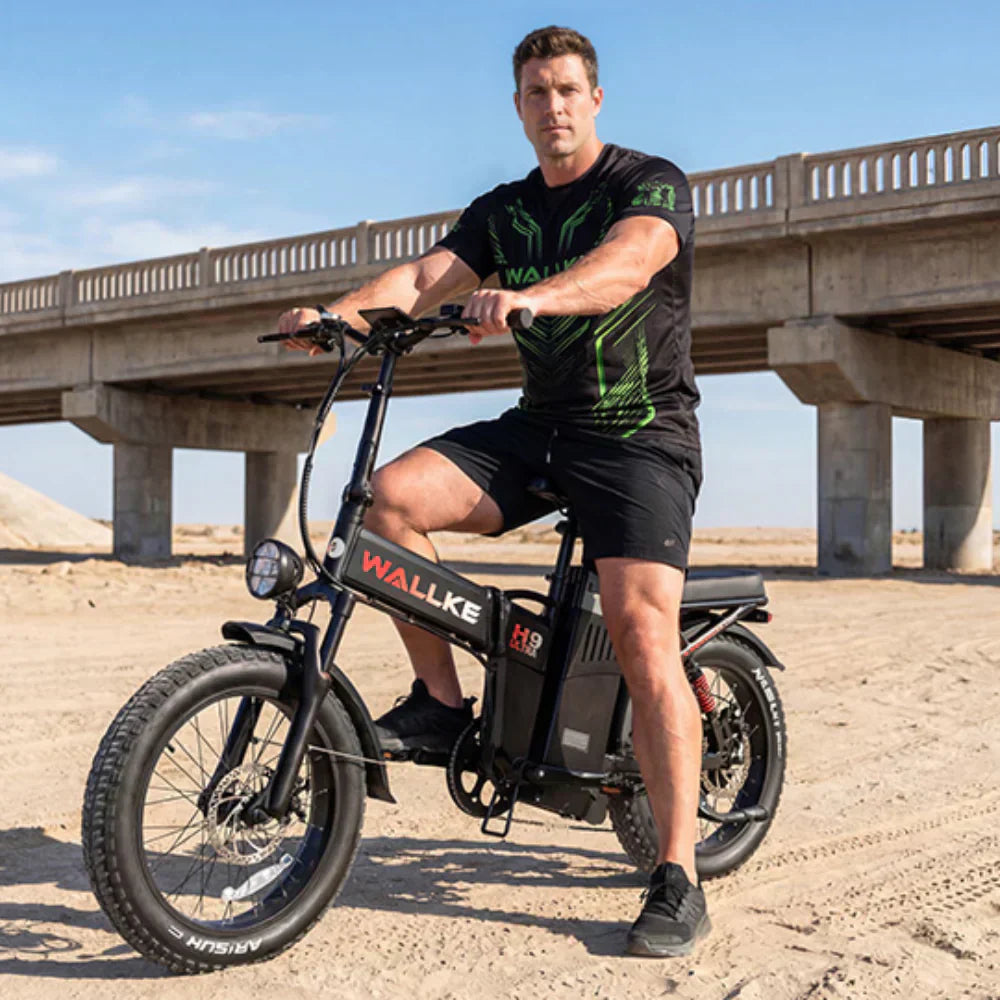
| H9 Series | You want a folding step-over format for garage, RV, truck, or large-vehicle storage without giving up fat tires and high-capacity options. | You need a light folder for frequent lifting, public-transit carrying, or a very small car trunk. Check weight and folded size carefully. |
| Ravager 60V Series | Your use justifies a long-range, heavy-duty platform for demanding routes, utility, or extended outdoor riding. | You mainly ride short urban trips and would not use the battery capacity, size, weight, or higher-output system. |
Wallke is not the automatic answer for every budget. If your hard ceiling is $1,000, your route is smooth and short, or you need a bike that is easy to carry upstairs, a simpler and lighter model from another reputable seller may be the better value. If your requirements include more range reserve, a 400-pound-class payload on selected configurations, fat tires, strong braking, or AWD options, Wallke belongs on the comparison list.
Before ordering, check the current product page and compare the written warranty, return policy, and the full Wallke e-bike lineup. Variant names and specifications can change.
A five-minute value comparison before checkout
Give each bike 0, 1, or 2 points in every row. Use 0 for missing or unacceptable, 1 for adequate, and 2 for strong and clearly documented. Do not let a high total override a zero in battery safety, fit, brakes, or payload.
| Category | 0 points | 1 point | 2 points |
|---|---|---|---|
| Safety evidence | Vague or absent | Claim is specific but needs verification | Exact system/model claim is verifiable |
| Fit and handling | Likely poor fit or too heavy | Acceptable with compromises | Fits rider, storage, and lifting needs |
| Battery and range | Vague capacity or implausible claims | Adequate energy with limited reserve | Transparent Wh and useful reserve |
| Brakes and payload | Underspecified or inadequate | Suitable at normal load | Strong match with practical margin |
| Parts and service | No clear path | Support exists but parts are uncertain | Reachable support and model-specific parts |
| Total cost | Major hidden costs | Some immediate additions needed | Complete solution within budget |
Then ask one final question: If this bike had 20% less motor power or one fewer screen feature, would it still solve my real problem? If the answer is yes, you may be paying for the wrong things.
Frequently asked questions
What is the best e-bike for value for money?
The best value e-bike is the one that safely fits your route, body, storage, and service needs at the lowest sensible total ownership cost. For a short paved commute, prioritize fit, brakes, predictable assist, lights, and support. For hills, heavier loads, or long rides, stronger brakes, more battery reserve, and a higher payload rating may justify a higher price.
Which ebike is the best value for money in 2026?
There is no single best-value model for every rider in 2026. A lightweight commuter can be the best value for flat city trips, while a step-through, folding, cargo, fat-tire, or dual-motor bike may be worth more for a different route. Compare safety evidence, battery watt-hours, brakes, payload, fit, parts, warranty, and total cost before choosing.
Can I buy a cheap e-bike?
Yes, but do not buy on price alone. Confirm the exact battery and charger, model-specific safety claims, braking system, payload, fit, return terms, support contact, and replacement parts. Below about $700, weak documentation and poor after-sales support become especially important risks to screen out.
Are there actually any reputable budget e-bikes?
Yes. A reputable budget e-bike should have a traceable manufacturer or seller, clear specifications, a model-specific charger, written warranty and return terms, reachable support, and a realistic path to replacement batteries and wear parts. A modest feature list with good documentation is usually safer than an implausibly loaded bike with no support trail.
What is the most reliable brand of ebike?
No brand is automatically the most reliable in every category. Look for model-level evidence: transparent battery and electrical information, consistent owner support, replacement parts, clear warranty exclusions, service documentation, and a stable sales history. Reliability claims are more useful when they are tied to a specific model and support process.
What ebikes should I stay away from?
Stay away from listings with unverifiable safety badges, no compatible charger information, unrealistic range or power claims, unclear seller identity, no replacement battery, weak brakes for the bike's weight, or return terms that do not address assembled and ridden bikes. Several red flags together matter more than one low price.
What is the best value ebike for commuting?
For most commuters, the best value comes from correct fit, dependable brakes, predictable pedal assist, enough real-world battery reserve, lights, fender and rack compatibility, manageable weight, and responsive support. Buy dual motors, fat tires, or a very large battery only when hills, road conditions, cargo, or distance make them useful.
Is buying an e-bike on Amazon a good value?
It can be, but evaluate the manufacturer and seller rather than the marketplace alone. Verify who handles support, where returns go, whether the exact certification claim can be checked, and whether the correct battery, charger, controller, and wear parts are available after purchase. Easy checkout does not guarantee easy ownership.