
From a home-built loading pallet for his Kia EV6 to a cargo trailer and a long gravel climb in Colorado, Keith Jacobson has been carefully shaping his Wallke H9 Ultra into a travel setup that works for him.
For Keith Jacobson, riding an eBike is not simply about getting from one place to another. It is a way to explore unfamiliar places, test new ideas, and prepare for journeys that reach beyond his everyday routes.
After choosing the Wallke H9 Ultra as his travel companion, Keith began working through the practical questions that come with longer-distance riding. How would he carry his gear? Could he load the folded bike into his vehicle by himself? How would the bike feel with travel weight? And what would he learn once the route turned steep and unpaved?
Instead of waiting for one major trip to answer everything at once, Keith built his setup step by step. Each preparation ride gave him another opportunity to evaluate his luggage, refine his transportation system, and see how the bike handled the kind of riding he hoped to do more often.

Keith’s Setup at a Glance
- Bike
- Wallke H9 Ultra
- Main goal
- Prepare for longer rides and larger travel adventures
- Gear setup
- Saddlebags, travel equipment, and a cargo trailer
- Battery setup tested
- A 55Ah battery together with an additional 22Ah battery
- Transport vehicle
- Kia EV6 with a custom rolling loading pallet
Starting With Preparation Rides
Keith’s process began with relatively simple test rides. Before committing to longer routes, he evaluated his saddlebags and checked whether his gear arrangement was practical on the road. These early rides were less about reaching a dramatic destination and more about learning how the complete setup behaved.
That approach matters when a bike is expected to carry more than a rider and a small day bag. Luggage placement can affect balance, access, and the way a bike feels when starting, turning, climbing, or stopping. By testing the equipment first, Keith could make changes before a longer journey made those changes more difficult.
His preparation also reflects one of the advantages he saw in a folding model. The H9 Ultra uses a folding aluminum frame, but folding the bike was only one part of the transportation problem. The next challenge was finding a realistic way to move a large, fully equipped eBike between the ground and his vehicle.
Solving the Kia EV6 Loading Challenge
Keith planned to transport the H9 Ultra in his Kia EV6. Once he tested the fit, however, he found that the folded bike could not stand upright in the cargo area. The bike could still be transported, but lifting, positioning, and unloading it alone required a better system.
His solution was a custom rolling “pallet.” He designed and built the platform so the folded bike could rest on it and be moved into or out of the cargo area with less awkward handling. Rather than relying on a second person every time he traveled, Keith created a setup designed around his own vehicle and his need to load the bike independently.

The photo shows how specific this solution was to Keith’s situation: the folded bike, the cargo opening, and the pallet all had to work together. It is a good example of a rider adapting his travel routine to the real dimensions and weight of his equipment rather than assuming that “folding” automatically means effortless lifting.
Adding a Cargo Trailer for More Gear
As Keith’s plans developed, his luggage system developed with them. Saddlebags could carry part of what he needed, but larger adventures called for more room. He adapted a cargo trailer to work with the H9 Ultra, giving him another way to carry equipment without placing everything directly on the bike.
The trailer was not treated as an automatic final solution. Keith continued testing it as part of the complete travel setup. That meant riding with the bike loaded closer to the weight he expected on a trip, then paying attention to how the additional cargo affected the experience.

For readers considering a similar setup, the important part of Keith’s story is not simply that a trailer appeared behind the bike. It is the sequence: first evaluate the bags, then adapt the trailer, then test the bike with realistic travel weight. That step-by-step method made it easier to learn what worked before traveling farther from home.
Riders planning their own equipment setup can also review Wallke’s adventure eBike guide and the collection of folding eBikes for additional planning context.
Testing the H9 Ultra at Travel Weight
By his third round of preparation rides, Keith was testing the bike on longer routes with the equipment loaded to travel weight. This was the stage where the project moved beyond organizing gear and began answering the bigger question: how would the H9 Ultra perform when the route became longer and the bike was carrying the setup he intended to use?
“The H9 is a real workhorse as well. Steep hills seem to be effortless with everything loaded.”
That is Keith’s description of his own experience, and the “with everything loaded” portion is important. His positive impression came from riding the bike as part of a working travel system, not from evaluating it empty in a controlled setting.
During one of these longer tests, Keith used a 55Ah battery together with an additional 22Ah battery. He reported achieving around 100 miles while maintaining a comfortable riding speed. For him, that result provided useful information for planning future journeys and understanding how his chosen battery arrangement supported his riding style.
Readers planning longer rides may also find Wallke’s guides to the longest-range eBike considerations and long-range eBike battery care useful when building their own route and charging plans.
A Colorado Climb on Fall River Road
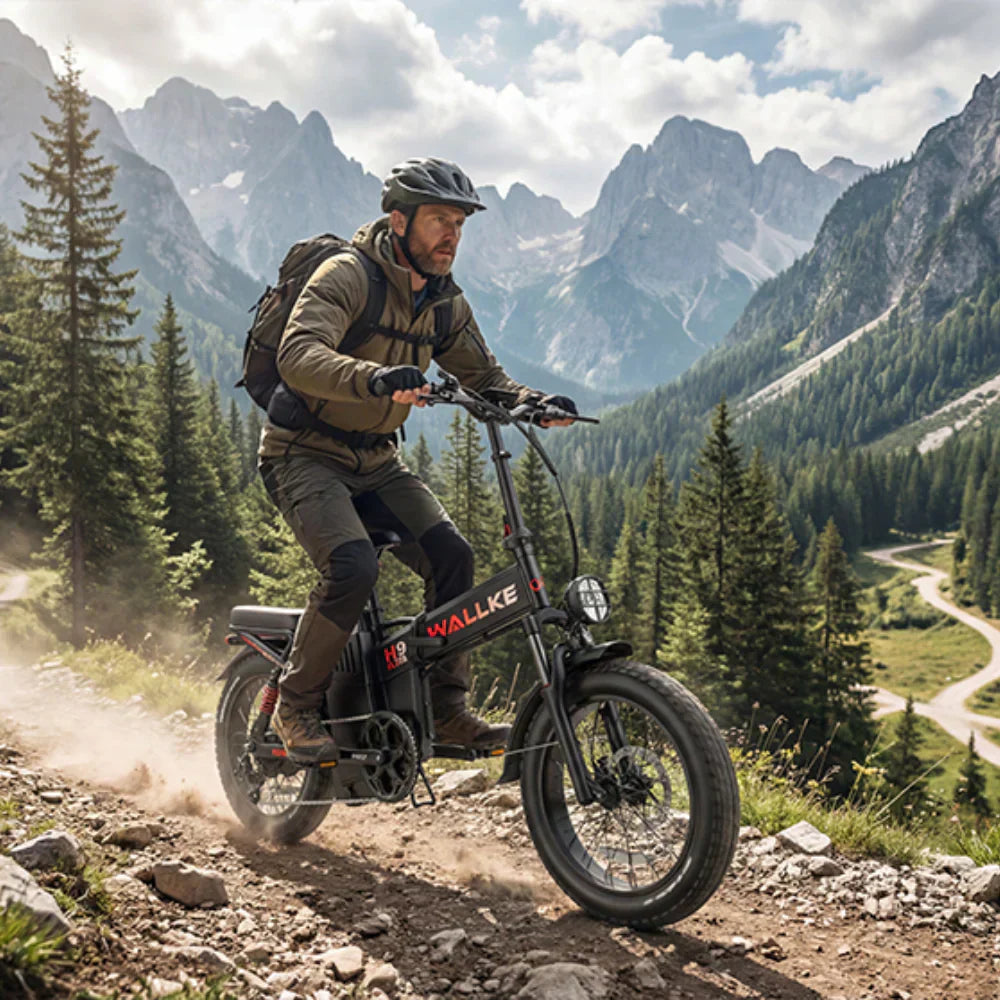
Preparation eventually led Keith to one of the most memorable parts of his story: a ride on Fall River Road in Rocky Mountain National Park. The route included an 11-mile gravel climb surrounded by mountain views, followed by a long descent back toward the trailhead.
The setting brought together the different parts of his preparation. Gravel required attention to traction and line choice. The extended climb put the bike and battery plan to work over a sustained distance. The return downhill called for controlled riding after the effort of the ascent. Most importantly, it gave Keith the kind of destination-focused experience he had been preparing for from the beginning.
The mountain photo is more than a scenic product image. It represents the outcome of many smaller decisions: testing luggage, solving the vehicle-loading problem, adapting a trailer, and learning how the bike behaved with added travel weight. Each practical step helped make a larger adventure possible.
What Other Riders Can Learn From Keith’s Process
Keith’s setup is personal, but the way he developed it offers several useful ideas for riders preparing for their own longer trips.
Test the Complete Load
A short ride on an unloaded bike cannot reveal everything about a travel setup. Keith progressed toward realistic luggage and battery weight before relying on the system for a longer route.
Solve Transportation Early
The bike must reach the starting point before the ride can begin. Keith tested the fit in his Kia EV6 and built a loading solution around the actual challenge he encountered.
Add Equipment Step by Step
Testing saddlebags before the trailer made each change easier to evaluate. When several parts are added at once, it becomes harder to identify what needs adjustment.
Treat Range as a Planning Variable
Keith’s reported distance was useful for his own planning, but range changes with the route, load, speed, weather, assist level, and battery arrangement.
Where Will Keith Ride Next?
From testing saddlebags and building a custom loading pallet to towing additional gear and climbing a Colorado gravel road, Keith has steadily developed an H9 Ultra setup that supports the way he wants to travel.
His story is not about completing one perfect configuration on the first attempt. It is about preparation, adaptation, and using each ride to get closer to the next destination. We are excited to see where Keith and his H9 Ultra go next.
Explore the Wallke H9 Ultra
See the current H9 Ultra configurations, battery options, and product details on the official product page.
View the Wallke H9 UltraWallke H9 Ultra
This article presents one Wallke owner’s personal experience. Route access, eBike rules, towing requirements, vehicle-loading procedures, and riding conditions vary by location and equipment. Riders are responsible for confirming compatibility, securing cargo, following applicable rules, and riding within their abilities.


Leave a comment