

Why proper ebike winter storage matters
An electric bike combines normal bicycle parts with a lithium-ion battery, wiring, connectors, a controller, a display, and a motor system. Winter storage therefore involves more than parking the bike and waiting for spring.
Cold is only one part of winter storage. A depleted battery, charging outside the permitted temperature range, condensation, and road salt often create the more immediate problems:
- Leaving the battery deeply discharged for weeks or months
- Charging a battery outside its approved temperature range
- Moisture, condensation, snowmelt, and road salt
- Rust on the chain, fasteners, and exposed metal
- Tire-pressure loss and prolonged loading in one position
- Using an incompatible charger or charging unattended
A good storage routine protects battery health, reduces corrosion, and makes the first ride after winter safer. The exact limits for your battery always come from its owner’s manual, because charging and storage ranges differ by system and model.
How to store an ebike battery for winter
Battery care is the most important part of electric bike winter storage because charge and temperature limits vary by system. Use the following steps as a framework, then confirm the numbers in your battery manual.

1. Inspect the battery before storing it
Remove loose dirt with a dry or slightly damp cloth. Do not immerse the battery or direct high-pressure water at the case, charging port, key cylinder, or electrical contacts.
Stop using and charging the battery if you notice any of the conditions below. Keep it away from children, pets, heat, ignition sources, and routine living-area storage. Contact the manufacturer or your local household hazardous-waste program for handling or disposal instructions. If the battery is smoking, overheating, or making unusual sounds, move away and contact local emergency services.
- Swelling, deformation, cracking, or impact damage
- Leaking fluid, corrosion, or water intrusion
- An unusual odor, hissing, popping, or excessive heat
- Damaged charging ports, connectors, cables, or terminals
2. Store the battery at a partial charge
Do not intentionally leave an e-bike battery at zero for the winter. Deep discharge during long storage can make recovery difficult and may permanently reduce usable capacity.
At the opposite extreme, keeping many lithium-ion batteries at 100% for months is also not the preferred long-term strategy. Major e-bike system manufacturers commonly recommend a partial state of charge. For example, Many lithium-ion e-bike systems recommend a partial state of charge for long-term storage rather than leaving the battery empty or continuously at 100%.
Practical rule: use the charge level specified by the manufacturer. When no model-specific number is available, approximately half charged is a reasonable general reference, not a replacement for the manual.
3. Choose a dry, stable storage temperature
Battery specifications usually separate three different limits: an allowable storage range, a preferred long-term storage range, and a charging range. A battery may be allowed to sit at a temperature where charging is not permitted, so check both values in the manual.
| Storage factor | Better practice | Avoid |
|---|---|---|
| Temperature | Use the storage range stated in the battery manual. Preferred long-term storage limits and allowable storage limits vary by battery system. | Temperatures outside the battery’s specified range, direct heat, hot attics, moisture, and repeated freeze-thaw conditions. |
| Humidity | Dry, ventilated, and protected from condensation. | Damp basements, wet floors, snowmelt, or sealed containers that trap moisture. |
| Placement | Stable surface away from living-area exits and combustible clutter. | Near furnaces, radiators, flammable liquids, paper piles, or direct heat. |
| Connection | Disconnected from the bike and charger unless the manufacturer instructs otherwise. | Leaving the battery plugged into a charger all winter. |
4. Let a cold battery warm gradually before charging
Before charging a battery brought in from the cold, confirm that it is dry and within the charging-temperature range stated in its manual. Let it reach that range naturally, and do not connect the charger while visible condensation remains on the case, port, or contacts.
Do not speed warming with a space heater, hair dryer, heating pad, or direct sunlight. Once the battery is dry and within its permitted charging range, use the charger specified for that battery.
5. Charge safely
U.S. lithium-ion battery safety guidance advises owners to follow the manufacturer’s instructions, use only the supplied or recommended charger, remain present while charging, and avoid charging while asleep. These habits matter during winter because batteries may be moved between cold and warm environments more often.
- Charge in a stable, dry location away from combustible materials, following the battery and charger manuals.
- Follow the charger manual’s instructions for the outlet, power cord, ventilation, and connection sequence.
- Disconnect the charger when charging is complete.
- Never use a “universal” charger unless the battery manufacturer specifically approves it.
6. Check the battery periodically
Battery packs gradually lose charge during storage through normal self-discharge and, in some systems, standby electronics. Check the battery at the interval in the owner’s manual and recharge only when needed.
Recharge only when the level has fallen below the manufacturer’s recommended storage range. Repeatedly topping the battery back to 100% is not necessary for long-term storage unless the manual explicitly instructs it.
How to winterize an ebike step by step

Step 1: Wash off dirt and road salt
Road salt and winter grime hold moisture against metal. Clean the frame, fork, wheels, fenders, drivetrain, and lower areas around the motor housing. Use bike-safe cleaning methods and avoid high-pressure spray around bearings, electrical connectors, displays, and battery mounts.
Step 2: Dry the bike completely
Pay special attention to bolt heads, the chain, cassette or freewheel, brake areas, battery rails, connectors, folding joints, and places where water can collect. Storing a damp bike in a cool room makes corrosion more likely.
Step 3: Clean and lubricate the drivetrain
Wipe the chain, apply an appropriate bicycle-chain lubricant, and remove excess lubricant so it does not collect dust. Check for stiff links, unusual wear, and visible rust. Do not contaminate brake rotors or brake pads with lubricant.
Step 4: Inspect the brakes
Check pads, rotors, levers, hoses, and cables. Hydraulic brake systems should not be “topped off” casually; fluid level and bleeding procedures depend on the brake design. Arrange service if the lever feels unusually soft, braking is weak, fluid is leaking, or pads are worn.
Step 5: Inflate and support the tires correctly
Tires naturally lose pressure while a bike sits. Inflate them within the approved range and check pressure periodically. For a heavy bike stored in one position for several months, occasionally moving the bike or rotating the wheels can reduce prolonged loading on one area.
Heavy fat-tire e-bikes need extra care when they are lifted or stored off the floor. Use only a stand, hook, or rack rated for the bike’s full weight and compatible with its wheel and frame design. Never support the bike by a folding joint, fender, cable, handlebar accessory, or another component not designed to carry its weight.
Step 6: Remove accessories that dislike cold or damp conditions
Detach removable displays, GPS units, phones, cameras, lights, and electronic accessories when practical. Store them indoors and follow their own battery instructions.
Step 7: Reduce corrosion and pest risk
Keep the bike away from fertilizer, pool chemicals, salt bags, and other corrosive materials. Do not wrap the bike tightly in non-breathable plastic while it is damp. In sheds and garages, inspect wiring and soft components occasionally for rodent damage.
Step 8: Secure the bike
A garage or apartment storage room is not automatically theft-proof. Lock the frame to a fixed anchor when possible, remove the battery, and avoid leaving keys with the bike. Record the serial number and keep purchase and ownership information in a separate location.
Where should you store an electric bike in winter?
The best location is dry, secure, and reasonably temperature stable. The bike and battery do not always need to stay in the same place.

| Location | Is it suitable? | What to do |
|---|---|---|
| Climate-controlled room | Usually the best option | Protect floors, keep exits clear, secure the bike, and store the battery according to fire-safety guidance. |
| Dry attached garage | Often suitable for the bike | Bring the removable battery indoors if the garage falls outside its preferred storage range. Watch for condensation and salt. |
| Unheated detached garage or shed | Conditional | Keep the bike dry and covered with a breathable cover. Remove the battery and detachable display when required. Check temperature limits, moisture, pests, and security. |
| Apartment | Good when space and building rules allow | Use a floor mat, stable stand, and secure anchor. Do not block doors, halls, stairs, or emergency exits. |
| Balcony or open outdoor area | Last resort | Remove the battery, use a breathable waterproof cover, raise the bike off wet ground, and secure it. Inspect frequently. |
| Self-storage unit | Depends on policy and climate control | Confirm whether lithium-ion batteries are allowed. A non-climate-controlled unit may be unsuitable for the battery. |
Can you store an ebike in a cold garage?
A dry, secure garage may be suitable for the bicycle itself. Store a removable battery—and any detachable display whose manual requires indoor storage—within the temperature and humidity limits specified for those components.
If the battery is removable, store it indoors. If it is integrated, check the bike manual for the minimum storage temperature and recommended state of charge. Do not guess based on advice for a different battery system.
Can you leave an electric bike outside in winter?
Outdoor storage should be treated as a fallback, not the default. Water resistance during normal use does not mean an e-bike is suitable for months of exposure to snow, rain, pooled water, or repeated freeze-thaw conditions. A cover also cannot control condensation, theft, or ground moisture.
Winter storage checklist: what to check each month
- Battery case, ports, and contacts look normal
- Battery charge remains within the recommended storage range
- Bike and storage floor are dry
- Tires still hold adequate pressure
- No new chain or fastener corrosion is visible
- Cover is dry and not trapping condensation
- Lock, anchor, and storage area remain secure
- No rodent or cable damage is visible
How to prepare your ebike after winter storage

Do not make the first spring ride the inspection. Check the bike while it is stationary, then complete a short low-speed test in a safe area.
- Inspect the battery. Do not install or charge it if the case, port, or contacts are damaged.
- Check the battery mount. Make sure the rail, latch, lock, and contacts are clean, dry, and secure.
- Set tire pressure. Inspect sidewalls and tread for cracking, cuts, or deformation.
- Test both brakes. Confirm firm lever feel and adequate pad material.
- Inspect the drivetrain. Check chain lubrication, shifting, and visible wear.
- Check fasteners and folding points. Follow the torque values and procedures in the bike manual.
- Power on the system. Check the display, lights, assist controls, throttle where equipped, and error messages.
- Take a low-speed test ride. Listen for unusual noises and test braking before riding in traffic or on steep terrain.
Arrange professional service when the bike has been exposed to heavy salt, floodwater, impact damage, battery faults, brake problems, or uncertain electrical damage.
Common ebike winter storage mistakes
Storing the battery empty
A deeply discharged battery may continue losing charge during storage and become difficult or impossible to recover.
Leaving it at 100% all winter
Unless the manufacturer instructs otherwise, long-term storage at a partial charge is generally preferred.
Charging below the permitted temperature
A battery may need time indoors before charging. Confirm that it is dry and within the charging limits in its manual.
Using an unapproved charger
Connector fit does not prove electrical compatibility. Use the charger supplied or approved for that battery.
Putting away a wet or salty bike
Moisture and salt accelerate corrosion, especially when the bike is not moving or drying regularly.
Ignoring tire pressure
Months of low pressure can stress tires and tubes and may create avoidable deformation.
Special considerations for long-range and dual-battery ebikes
Long-range, fat-tire, and dual-battery e-bikes can be heavier and may use larger or multiple battery packs. That changes the handling and storage routine, even though the basic principles remain the same.
- Use a stand or rack rated for the complete bike weight.
- Label multiple batteries so each one stays paired with its approved charger and bike position.
- Inspect every battery separately rather than treating a dual-battery system as one pack.
- Do not connect, combine, or charge batteries in a way that is not approved by the bike manufacturer.
- Plan safe lifting and ground-level storage for heavier bikes.
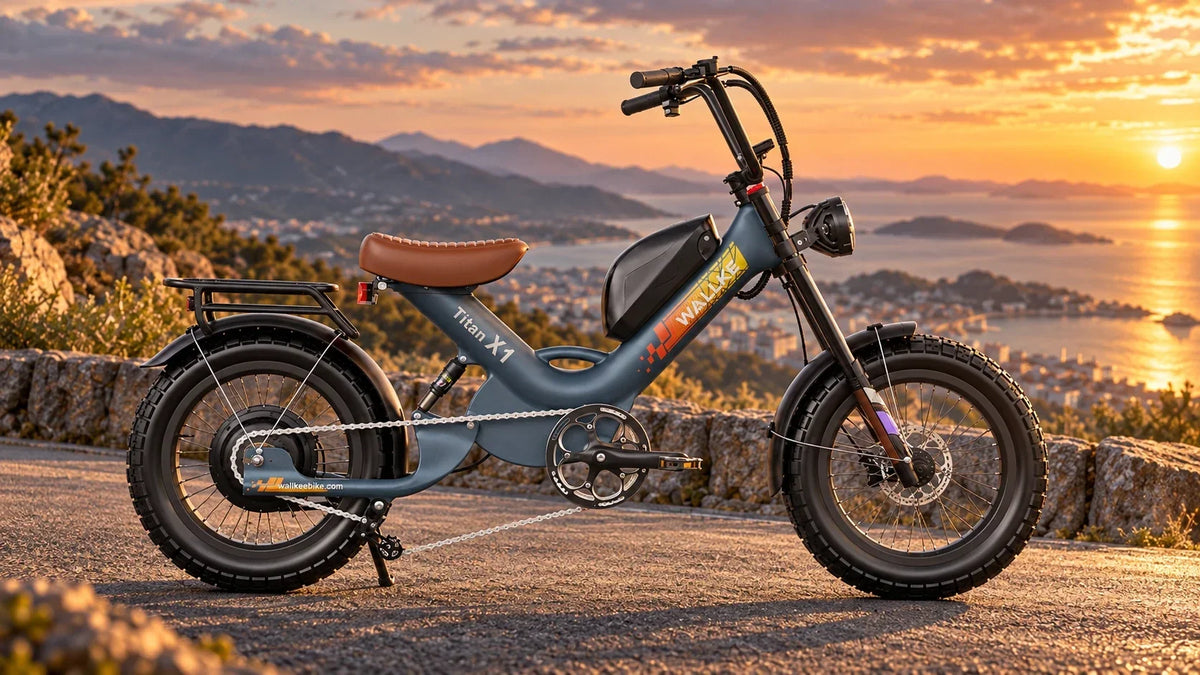
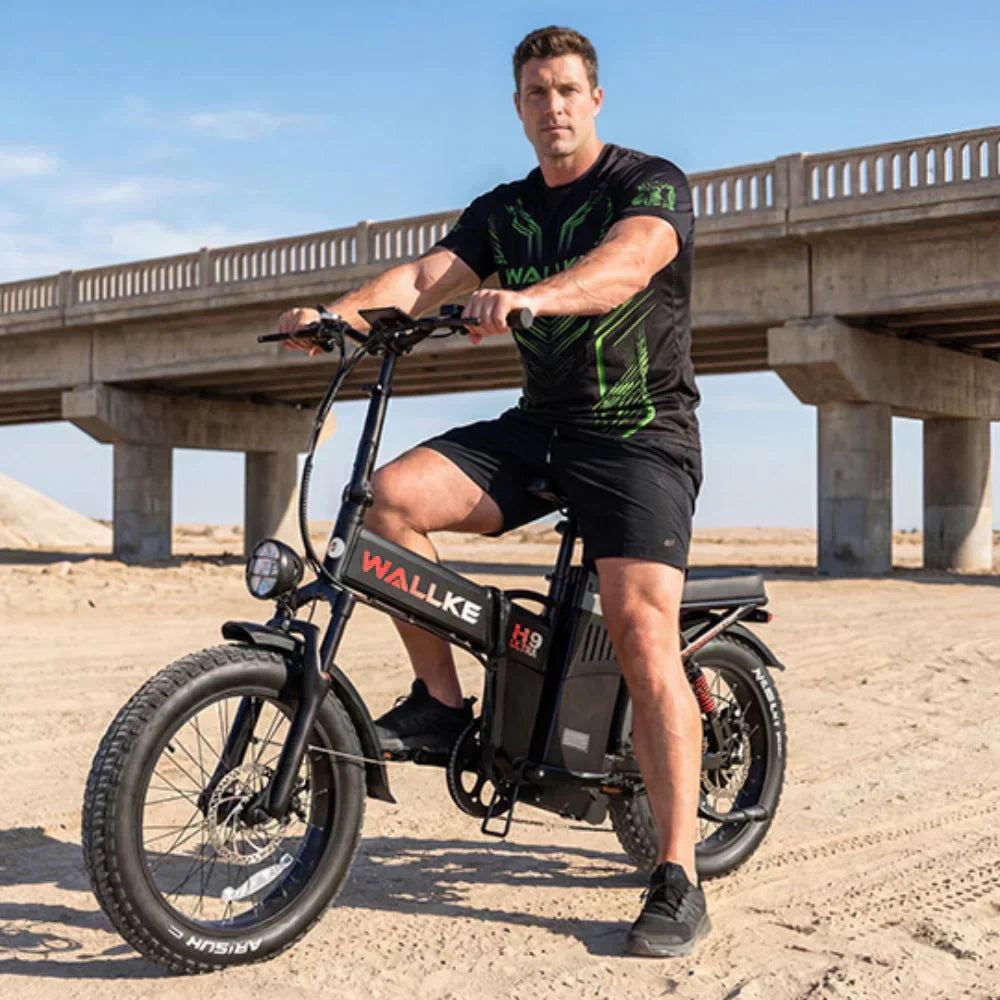
Some Wallke models use heavy fat-tire frames, folding designs, or more than one removable battery. That makes safe lifting, battery labeling, and model-specific charger matching especially important. For broader maintenance guidance, read Wallke’s long-range ebike battery care guide. Owners can also browse the official e-bike battery collection and e-bike parts collection, then confirm compatibility with the individual listing, model manual, or Wallke support before ordering.
Frequently asked questions about ebike winter storage
What charge level should an ebike battery have for winter storage?
Follow the battery manual. Many lithium-ion e-bike systems recommend a partial charge for long-term storage rather than an empty or continuously full battery. Check the charge at the interval stated by the manufacturer.
What temperature should an ebike battery be stored at?
Check the battery manual because preferred and allowable storage limits vary by system. Storage temperature and charging temperature are not necessarily the same.
Can I store my ebike in an unheated garage during winter?
Usually, a dry and secure garage can work for the bicycle itself. A removable battery should be stored within the temperature and humidity limits in its manual, and a detachable display should be brought indoors when its documentation requires it. Watch for condensation, road salt, pests, and repeated freeze-thaw conditions.
Can I leave an electric bike outside in winter?
Long-term outdoor storage is not recommended. If no indoor or enclosed option is available, remove the battery, use a breathable weather-resistant cover, keep the bike above pooled water, lock the frame to a fixed anchor, and inspect it frequently.
Should I remove the battery from my ebike for winter?
For storage lasting weeks or months, removing a removable battery is usually the practical choice. Store it disconnected from both the bike and charger under the conditions in its manual. Follow model-specific instructions for integrated or non-removable batteries.
Can I charge an ebike battery when it is cold?
Only when the battery is dry and within the charging-temperature range stated in its manual. After bringing it indoors, let it reach that range naturally and wait until visible condensation has cleared. Do not use a heater or other rapid-warming method.
Should I keep my ebike plugged in all winter?
No, unless the manufacturer explicitly instructs otherwise. Use the charger specified for the battery, remain present while charging, and disconnect it when charging is complete.
What should I check before riding after winter storage?
Inspect the battery and mount, tire pressure and condition, both brakes, chain, fasteners, cables, connectors, lights, and display. Test the system and brakes at low speed in a safe area before returning to normal riding.


Leave a comment