
The best off-road ebike is not simply the fastest model on a spec sheet. It is the bike that matches your terrain, gives you enough real-world range, stays controlled on loose ground, and can be transported, charged, and serviced without turning every ride into a project.
Quick Answer: What Makes a Good Off-Road Ebike?
A good off-road ebike should match the route you actually ride. For gravel, campground roads, and mild trails, prioritize predictable handling, hydraulic brakes, comfort, and usable battery capacity. For steep hills, sand, snow, hunting, fishing, or gear hauling, look harder at torque, traction, tire volume, frame strength, payload, brake hardware, and battery margin.
- Best for gravel and mixed dirt: stable handling, hydraulic brakes, practical range, and serviceable components.
- Best for sand, snow, and loose ground: fat tires, low-speed torque, and AWD traction where appropriate.
- Best for steep grades or heavy loads: strong brakes, large rotors, controlled power delivery, and a realistic payload rating.
- Best for technical singletrack: a lighter eMTB with trail-focused geometry and better suspension control, not simply the widest tires or largest motor.

Why Off-Road Ebike Shopping Is Different
“Off-road” can describe very different rides. One person may want a comfortable fat tire bike for gravel roads and beach access paths. Another may need traction for a steep fire road, a muddy farm, snow, camping gear, or a fishing route. A third rider may mean technical singletrack with roots, drops, and tight switchbacks.
Those are not the same buying decision. The best ebike for off-road riding depends on how the entire system works together: motor configuration, low-speed torque, battery watt-hours, tire width, suspension control, brake strength, frame design, payload, total bike weight, and trail access.
This off-road ebike buying guide separates those use cases before comparing specifications. The goal is to help you buy for your real terrain rather than for the biggest number in an advertisement.
Quick Picks: Best Wallke Off-Road Ebikes by Riding Style
These are use-case matches within the Wallke lineup, not a claim that one model is best for every off-road rider. Product configurations can change, so confirm the current product page before ordering.
| Riding Style | Wallke Match | Why It Fits | Think About First |
|---|---|---|---|
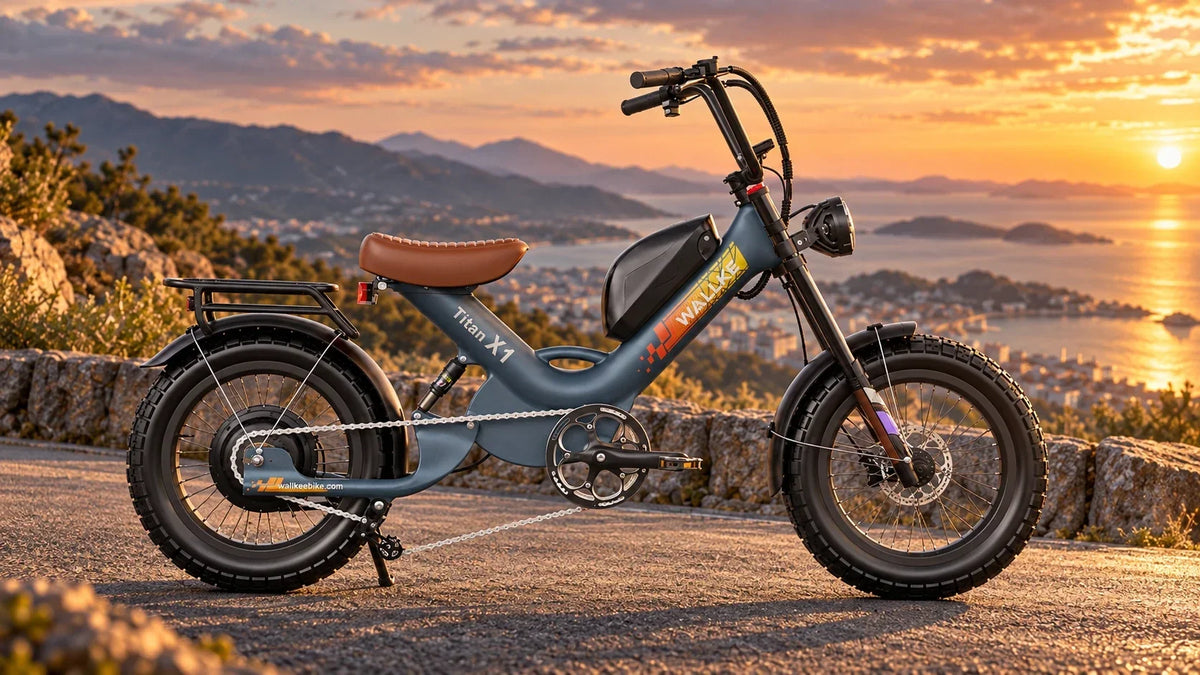
| Sand, rough pavement, and wide-tire stability | Titan X1 | 20 x 5.0 fat tires and a stable cruiser-style platform | Heavy build; not intended as a lightweight technical eMTB |
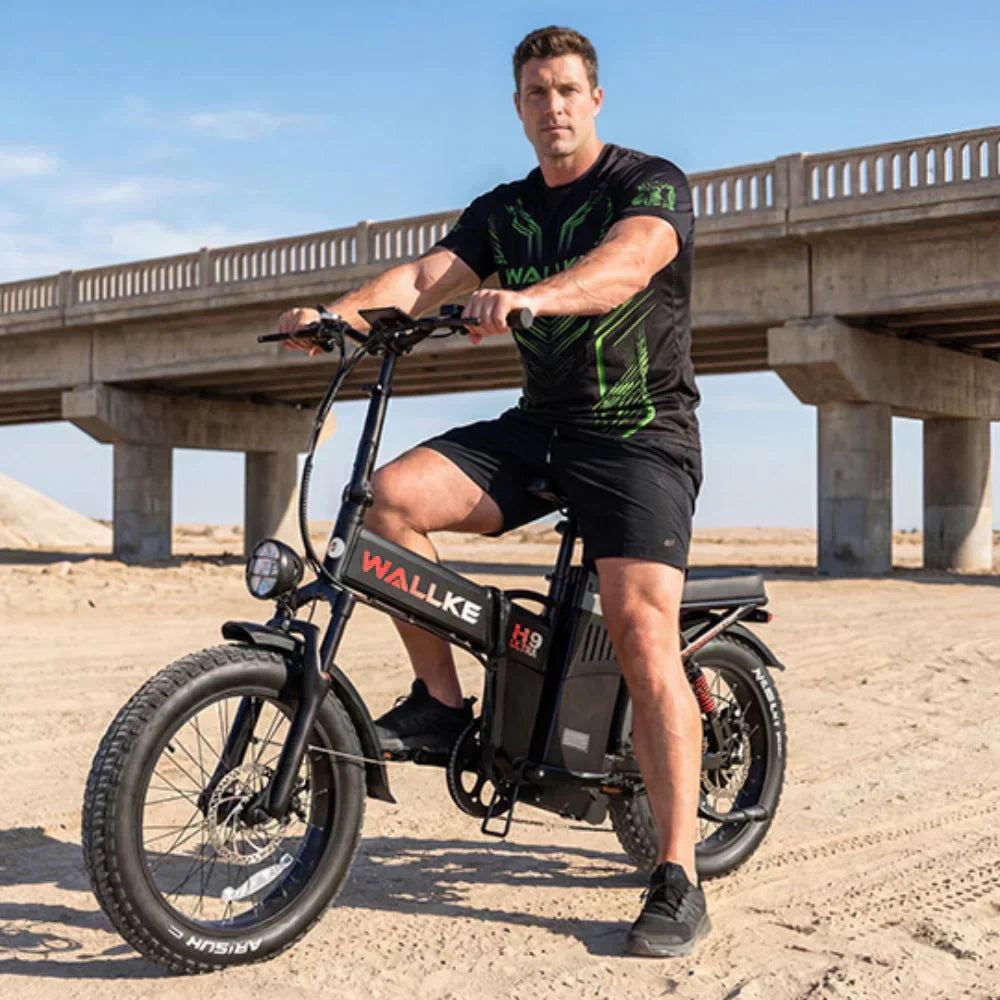
| Steep mixed terrain and loose surfaces | H9 AWD | Dual-motor traction, fat tires, full suspension, folding frame | Weight, battery draw in AWD, transport-rack capacity |
| Easier mounting with heavy-duty capability | H7 AWD | Step-through access, AWD platform, full suspension, high published payload | Still a large, heavy bike despite the easier-access frame |
| Long outdoor utility with a simpler drive system | H7 Ultra | 40Ah standard battery and single-motor configuration | Choose it for utility and range planning, not technical trail agility |
| Camping, long rides, and additional traction | H9 Ultra | 55Ah energy-storage battery and dual-motor configuration | Storage, total weight, trail rules, and realistic charging plans |
What Does “Off-Road” Actually Mean?
A fat tire does not automatically turn an e-bike into a technical mountain bike. Before you compare models, place your riding into one of these categories.
| Use Case | Typical Terrain | What Matters Most | Likely Bike Type |
|---|---|---|---|
| Gravel and mild dirt | Rail trails, park paths, hard-packed roads | Comfort, predictable assist, hydraulic brakes, practical range | Hardtail, fat tire utility bike, or trekking-style ebike |
| Sand, snow, and loose terrain | Beach access, soft gravel, grass, winter paths | Tire flotation, traction, torque, stable geometry | Fat tire ebike; AWD can help in difficult conditions |
| Fire roads and outdoor utility | Forest roads, farm routes, camping, hunting, fishing access | Battery capacity, brakes, payload, lights, racks, serviceability | Heavy-duty all-terrain or utility ebike |
| Technical singletrack | Roots, rocks, drops, tight corners, repeated impacts | Low weight, mountain-bike geometry, suspension quality, precise handling | Purpose-built electric mountain bike |
Reality check: Wallke’s heavy-duty fat tire and AWD models are better framed for mixed terrain, loose surfaces, dirt roads, utility routes, and outdoor adventure than for lightweight race-style or highly technical singletrack riding.
Key Factors to Compare Before You Buy
1. Start With Terrain, Not Horsepower
A bike that works well on a dry gravel road may be the wrong choice for sand, snow, mud, or a root-filled mountain trail. Write down the surface you ride most often, the steepest grade you expect, how far you ride, and whether you carry cargo.
- Hard-packed dirt and gravel: comfort, range, tire durability, and reliable braking usually matter more than maximum power.
- Soft sand or snow: prioritize tire volume, traction, torque, and the ability to manage tire pressure.
- Rocky or rooty terrain: prioritize suspension quality, frame control, brake modulation, and lower total weight.
- Hills and loaded riding: prioritize low-speed control, strong braking, battery margin, and a realistic payload rating.
2. Hub Motor vs. Mid-Drive vs. AWD for Off-Road Ebikes
Peak wattage attracts attention, but off-road performance depends on torque delivery, traction, controller tuning, heat management, gearing, and how controllable the bike feels at low speed.
| Drive Type | Best For | Main Advantages | Trade-Offs |
|---|---|---|---|
| Rear hub motor | Gravel, dirt roads, simpler builds | Direct power, relatively simple system, often lower cost | Rear tire can lose grip on steep loose climbs |
| Mid-drive motor | Technical climbing and a bicycle-like feel | Uses the drivetrain’s gears, balanced weight, natural climbing response | Higher cost and greater chain, cassette, and drivetrain wear |
| Dual hub / AWD | Sand, snow, loose gravel, steep mixed terrain, heavier loads | More traction when both wheels are driven | More weight, complexity, and battery use |
Do not assume that more power automatically means more control. Ask how smoothly assistance begins, whether you can select single- or dual-motor operation, and whether the brakes and frame are appropriate for the bike’s weight and speed.
3. Battery Range: Compare Watt-Hours, Not Just Miles
Advertised off-road ebike battery range is usually measured under favorable conditions. Hills, throttle use, soft ground, low tire pressure, wind, cold weather, rider weight, cargo, and frequent stops can reduce range substantially.
Compare capacity in watt-hours. Multiply nominal voltage by amp-hours: a 48V 30Ah battery is approximately 1,440Wh, while a 48V 40Ah battery is about 1,920Wh. Larger batteries add weight, but they provide more margin for long or remote routes.
- Short recreational dirt rides: a smaller battery may be enough when the route is predictable.
- Mixed commuting and off-road riding: extra capacity provides useful reserve.
- Camping, hunting, fishing, or heavy-load use: plan for hills, cargo, and the ride back, not just the outbound distance.
- AWD riding: running both motors continuously can shorten range, so use AWD when traction is needed rather than by default.
For remote rides, use a turnaround rule. Do not wait until the battery is nearly empty before heading back.
4. Tires: Fat Tire vs. Mountain Bike Tire
Fat tires increase contact patch, flotation, and comfort. A 20 x 4.0 tire can feel stable on dirt roads, gravel, grass, and mild sand. A 20 x 5.0 tire adds more flotation and a planted feel on soft or uneven surfaces.
The trade-off is weight and steering feel. Narrower mountain-bike tires usually feel faster and more precise on technical singletrack. Choose tire width for the surface, not for appearance alone.
Also check tread pattern, sidewall support, tube or tubeless compatibility, puncture protection, and replacement availability. A flat on a heavy e-bike is much harder to manage several miles from the trailhead.
5. Suspension: Front, Full, or Trail-Focused?
Front suspension may be enough for gravel and mild dirt roads. Full suspension is useful on potholes, washboard surfaces, roots, and repeated impacts because it helps the tires stay in contact with the ground.
Suspension quality matters more than the word “full.” Ask:
- Can the fork be adjusted for rider weight or locked out?
- Does the rear suspension remain controlled with cargo?
- Does the bike dive excessively under braking?
- Are replacement seals, shocks, and service parts available?
6. Brakes and Rotors: Do Not Treat Them as an Upgrade Later
Off-road ebikes are heavy. Add a rider, battery, cargo, wet ground, and a downhill grade, and braking becomes a primary safety decision.
Hydraulic disc brakes are preferred for serious mixed-terrain use. Larger 203mm rotors provide more leverage and heat capacity than smaller rotors. Four-piston calipers can be useful on very heavy bikes, but the full system matters: rotor thickness, pad compound, hose routing, lever feel, and replacement-pad availability.
7. Frame Strength, Payload, and Rider Fit
A published payload rating is not permission to ride every rough trail at maximum load. Payload includes the rider, cargo, accessories, and sometimes rack load. Off-road impacts can create forces far above static body weight.
Compare the frame, wheels, suspension, brakes, and rack as a system. Also check standover height, reach, handlebar position, saddle height, and whether you can control the bike during a low-speed turn or an uneven stop.
Step-through frames can make mounting easier when carrying gear or wearing winter clothing. Folding frames can help with storage, but hinge design and total folded weight still matter.
8. Torque Sensor vs. Cadence Sensor for Off-Road Riding
A torque sensor responds to how hard you pedal and can feel more natural on climbs and loose corners. A cadence sensor detects pedal movement and often requires less effort, but assistance may feel more abrupt depending on tuning.
Neither sensor is automatically better for every rider. Focus on predictable starts, smooth low-speed control, and whether assist can be reduced when navigating obstacles.
9. Battery Safety, Certification, and Service Support
Check the complete electrical system rather than looking for a vague “certified” badge. Ask which standard applies, which model or battery configuration was evaluated, and whether the supplied charger is matched to the battery. UL 2849 addresses an e-bike electrical system that includes the drive train, battery, and charger combination.
Serviceability is part of safety. Confirm that replacement chargers, batteries, brake pads, tires, controllers, displays, and other wear or electrical parts are available. A low purchase price is less valuable if one failed component makes the bike unusable.
Off-Road Ebike Budget Segments
Price does not guarantee trail capability, but demanding terrain exposes weak brakes, low-quality batteries, poor suspension, and limited after-sales support quickly.
| Budget | What You May Find | Best For | Check Carefully |
|---|---|---|---|
| Under $2,000 | Basic fat tire or hardtail ebikes, smaller batteries, simpler suspension | Gravel, mild dirt paths, occasional weekend riding | Brake quality, battery information, real support, replacement parts |
| $2,000–$3,000 | Larger batteries, hydraulic brakes, stronger frames, better tires | Mixed terrain, longer rides, heavier riders | Actual payload, rotor size, suspension quality, total weight |
| $3,000–$4,000 | Long-range, full-suspension, AWD, and high-payload configurations | Steep hills, loose terrain, camping, cargo, backcountry roads | Legal settings, trail access, transport, charging time |
| $4,000+ | Premium eMTB systems, high-end suspension, specialty frames | Technical trail riders or premium performance buyers | Whether the added performance matches your actual routes |
Best Off-Road Ebike Under $2,000: What You Give Up
An off-road ebike under $2,000 can work for gravel and mild dirt paths, but the savings often come from a smaller battery, simpler fork, lower-cost brakes, thinner rotors, basic sensors, generic cells, or limited service support. Compare the parts that affect control and ownership before comparing screens, lights, or decorative accessories.
How We Matched Each Wallke Bike to Its Use Case
The recommendations below are based on published product specifications, frame design, motor configuration, tire size, battery capacity, payload information, intended use, and practical ownership factors. They are not presented as independent laboratory test results or as a ranking of every brand on the market.
We also include limitations. That matters because a strong utility bike can be a poor technical trail bike, and a powerful AWD model can be inconvenient for an apartment rider who must carry it upstairs.
Best Wallke Off-Road Ebikes by Use Case
Wallke’s strongest fit is for riders who value fat tires, long range, high published payload capacity, AWD traction, step-through access, or outdoor utility. These are generally heavy-duty adventure and mixed-terrain bikes rather than lightweight race eMTBs.
Best for Loose Terrain and Wide-Tire Stability: Titan X1
Choose Titan X1 when your routes include beach access paths, soft dirt, rough pavement, gravel, or relaxed off-road cruising where a wide tire and planted stance matter. Published specifications include a rear 2000W motor with 3800W peak output, a 48V 30Ah battery, 20 x 5.0 fat tires, four-piston hydraulic braking, and a carbon-fiber frame.
The product page has displayed different payload figures in different sections, so confirm the current size and specification chart before purchase. Titan X1 is best understood as a powerful fat tire cruiser and adventure bike, not as a light technical singletrack platform.

Best for AWD Traction and Steep Mixed Terrain: H9 AWD
Choose H9 AWD when traction is the main concern. Its published platform includes dual 1000W motors, up to 3200W peak output, up to 150 N·m combined torque, 20 x 4.0 all-terrain fat tires, full suspension, and a 400 lb published maximum load.
H9 AWD is a stronger fit for hills, snow, sand, loose gravel, heavier riders, and long mixed-terrain routes than for riders seeking minimum weight. Use AWD when the surface requires it because both motors working hard can increase battery consumption. Confirm the current battery and brake configuration on the product page before ordering.
Best for Easier Mounting With Heavy-Duty Capability: H7 AWD
Choose H7 AWD when you want step-through access without giving up a dual-motor platform, fat tires, full suspension, hydraulic braking, and a high published payload rating. Current published specifications include up to 3200W peak power, up to 150 N·m combined torque, 20 x 4.0 tires, and a 400 lb maximum load.
The step-through frame is useful when stopping frequently, carrying gear, or mounting on uneven ground. It does not make the bike light, so measure your storage space and confirm that your vehicle rack can support the complete bike.

Best for Long Outdoor Utility in a Single-Motor Setup: H7 Ultra
Choose H7 Ultra if you want the Ultra platform in the 40Ah standard-battery, single-motor configuration. It makes more sense for long recreational rides, outdoor utility, and riders who prefer a simpler drive setup than for aggressive technical trail use.
The step-through layout can also help riders mounting with cargo. Before buying, consider total bike weight, charging access, transport, and whether a 40Ah battery matches the length and elevation of your route.

Best for Camping, Energy Storage, and Dual-Motor Utility: H9 Ultra
Choose H9 Ultra when your priority is the 55Ah energy-storage battery and dual-motor configuration. It is the better Ultra match for riders who want additional traction, long outdoor days, camping utility, and a folding frame.
This is not a lightweight eMTB. Plan where you will store it, how you will transport it, how long charging takes, and whether the riding area permits the power mode you intend to use.

Wallke Internal Comparison
| Model | Best For | Key Specs to Notice | Good Buyer Fit |
|---|---|---|---|
| Titan X1 | Loose terrain, beach paths, wide-tire stability | 20 x 5.0 tires, 48V 30Ah battery, four-piston hydraulic brakes | Riders wanting a stable, powerful cruiser-style adventure bike |
| H9 AWD | Steep hills, loose surfaces, AWD traction, folding utility | Dual 1000W motors, up to 150 N·m, full suspension; battery configurations vary | Riders prioritizing traction and long mixed-terrain use |
| H7 AWD | Step-through access, heavier riders, cargo, mixed terrain | Dual-motor platform, up to 150 N·m, 20 x 4.0 tires, 400 lb published load | Riders wanting easier mounting in a heavy-duty platform |
| H7 Ultra | Long-ride utility and step-through convenience | 40Ah standard battery, single-motor version | Riders wanting a simpler Ultra drive setup |
| H9 Ultra | Camping, long outdoor use, energy storage, additional traction | 55Ah energy-storage battery, dual-motor version | Riders prioritizing the larger Ultra battery and dual-motor capability |
Compare the Right Category
Browse the full Wallke off-road ebike collection, compare fat tire ebikes, or review dual motor ebikes. Riders planning hunting or remote utility routes can also read Wallke’s guide to electric hunting bikes.
Transport and Storage Reality Check
Heavy-duty off-road ebikes can be difficult to move even when the frame folds. Before buying, verify:
- Complete bike weight: include the battery and accessories, not only a base-frame number.
- Rack capacity: many standard bicycle racks are not rated for a heavy fat tire ebike.
- Tire and wheel-tray fit: 4- or 5-inch tires may require a fat-tire rack adapter.
- Vehicle access: measure cargo openings and folded dimensions before assuming the bike will fit.
- Stairs and apartments: removing a battery helps, but a large bike may still be impractical to carry.
- Charging location: use a dry, ventilated area and the supplied matched charger.
A folding hinge improves storage dimensions; it does not make a 90- to 120-pound bike easy to lift.
When a Heavy-Duty Fat Tire Ebike Is Not the Best Choice
A powerful fat tire bike may be the wrong tool when:
- You mainly ride flat pavement and want low rolling resistance.
- You must carry the bike upstairs or onto public transit.
- You want precise, lightweight handling on technical singletrack.
- Your vehicle rack cannot support the bike’s total weight.
- Your local trails allow only specific Class 1 eMTBs.
- You do not have secure storage or a safe charging location.
The smartest purchase is not the most powerful bike. It is the bike you can control, store, transport, charge, and legally ride.
Off-Road Ebike vs. Electric Dirt Bike
An off-road ebike retains pedals and is generally built around bicycle-style riding and ownership. An electric dirt bike or e-moto is usually heavier, faster, and more likely to be regulated as a motor vehicle or restricted to motorized-use areas.
Choose an off-road ebike when you want pedal assistance, mixed-use riding, and a bicycle-like ownership experience. Choose an electric dirt bike only when you have suitable legal riding areas, appropriate protective equipment, transport plans, and a clear understanding of local registration and land-use rules.
Legal and Trail Access Notes for U.S. Riders
U.S. e-bike access is determined by a mix of federal product definitions, state class systems, and local or land-manager rules. A bike being sold as an “e-bike” does not guarantee that every power or speed mode is legal on streets, bike paths, or non-motorized trails.
- Class 1: pedal assist only, commonly limited to 20 mph assistance.
- Class 2: throttle-assisted, commonly limited to 20 mph motor assistance.
- Class 3: pedal assist up to 28 mph in many state class systems.
Read Wallke’s guide to Class 1 vs. Class 2 vs. Class 3 e-bikes before choosing a high-power off-road model.
High-power or high-speed modes may fall outside common three-class rules and may be limited to private property or areas where motorized use is permitted. Check the rules for your state, city, park, trail system, and land manager before riding.
This article is a buying guide, not legal advice. Always verify current local rules.
Pre-Purchase Checklist
FAQ: Off-Road Ebike Buying Guide
What should I look for in an off-road ebike?
Start with your terrain, then compare motor torque, battery watt-hours, tire width and tread, suspension, hydraulic brakes, frame strength, payload rating, battery safety information, and service support. A good off-road ebike should feel controlled on loose surfaces, not just fast on pavement.
What is the best ebike for off-road riding?
The best ebike for off-road riding depends on the route. Fat tire or AWD models are useful for sand, snow, loose gravel, and heavy-load utility riding. A lighter electric mountain bike with more precise geometry and suspension is usually a better choice for technical singletrack.
How much motor power do I need for off-road riding?
For light gravel and park paths, a moderate motor can be enough. For steep hills, sand, snow, heavier riders, or loaded camping trips, prioritize torque, controller quality, cooling, low-speed control, and traction. Dual-motor AWD can help on loose ground, while mid-drive systems often feel natural on technical climbs.
What is the best battery range for trail riding?
Compare watt-hours rather than relying only on advertised miles. Real trail range can fall because of hills, throttle use, soft ground, rider weight, cold weather, cargo, and low tire pressure. Long or remote rides usually benefit from a larger battery and a conservative turnaround plan.
Are fat tires necessary for off-road ebiking?
Fat tires are not always necessary, but they are helpful on sand, snow, loose gravel, rutted dirt roads, and mixed terrain. A 20 x 4.0 or 20 x 5.0 tire gives more flotation and stability, while narrower mountain bike tires can feel lighter and more precise on technical singletrack.
Is front suspension enough, or do I need full suspension?
Front suspension is usually enough for gravel, fire roads, and mild dirt trails. Full suspension becomes more useful on potholes, roots, washboard roads, rocky descents, and heavier-load riding because it helps the tires stay controlled over repeated impacts.
Can I use an off-road ebike for camping, fishing, or hunting?
Yes, but choose a bike with strong brakes, sufficient payload capacity, a stable frame, enough battery margin, and suitable rack or trailer options. For backcountry use, check local land rules because some trails allow only certain e-bike classes or prohibit motorized use.
What is the difference between an off-road ebike and an electric dirt bike?
An off-road ebike has pedals and is generally designed around bicycle-style handling, ownership, and access rules. An electric dirt bike or e-moto is usually heavier, faster, more powerful, and more likely to be treated as a motor vehicle. Always check local rules before riding on public land.
Conclusion: Buy for Terrain Fit, Control, and Ownership Reality
The best off-road ebike is the one that makes your actual route safer and more enjoyable. Gravel riders may need comfort and range. Sand and snow riders may benefit from fat tires and AWD traction. Technical trail riders may be better served by a lighter purpose-built eMTB.
Within the Wallke lineup, start with Titan X1 for wide-tire stability, H9 AWD for AWD traction, H7 AWD for step-through access, H7 Ultra for a 40Ah single-motor Ultra configuration, and H9 Ultra for the 55Ah energy-storage dual-motor configuration.
Compare the specifications, verify the current configuration, check the rules, and choose the bike that fits your terrain before it fits the headline.
Source Notes and Safety References
This guide uses Wallke product specifications for model-level details and public U.S. e-bike safety and access resources for general context.


Leave a comment