
An e-bike can make a daily commute easier, but practicality depends on more than motor power or an advertised range number. This guide helps U.S. riders evaluate distance, time, route safety, weather, storage, charging, cost, and the features that matter in everyday use.
Yes—e-bikes are good for commuting when the full routine works. The strongest use cases combine a reasonably safe route, predictable travel time, enough battery reserve, secure parking, and a bike the rider can comfortably handle at low speed.
An e-bike is less practical when the route is unsafe, the bike is too heavy for storage, charging is unreliable, or the rider is buying around a headline specification instead of the actual commute.
Why E-Bikes Can Work So Well for Commuting
Electric assistance changes the part of bicycle commuting that stops many people from trying it: repeated effort. Hills, headwinds, heavy bags, stop-and-go traffic, and the return ride after a long workday can all feel more manageable with pedal assist.
That does not mean every e-bike commute is automatically easy. It means more routes become possible when the bike reduces physical strain without removing the need to pedal, steer, brake, plan, and ride responsibly.
More predictable effort
Assistance can make hills and wind less disruptive, helping riders arrive with a more consistent level of effort.
Useful for mixed daily trips
A commute may include work, groceries, school pickup, or errands. A rack, basket, or panniers can make the bike useful beyond the office trip.
Potentially simpler parking
A bike uses less parking space than a car, but secure locking and permission to park at the destination still matter.
A wider practical radius
Trips that feel too long or too hilly on a regular bike may become realistic, especially when the route has good bicycle infrastructure.
The benefits people often underestimate
- You can reduce effort on the way to work and use less assistance on the way home.
- On routes with reliable bike infrastructure, travel time may be more predictable than a car trip affected by recurring congestion or parking delays.
- You can adjust assistance when carrying a laptop, groceries, child seat, or other cargo within the bike’s limits.
- Electric assistance may make the same route easier to repeat on consecutive workdays, especially when hills, cargo, heat, or headwinds would otherwise require more effort.
The drawbacks people often underestimate
- E-bikes are heavier than regular bicycles and may be difficult to carry upstairs.
- Theft prevention requires more than a thin cable lock.
- Rain, heat, cold, poor road surfaces, and darkness need a real plan.
- Tires, brakes, drivetrain parts, electrical connections, and the battery still require inspection and maintenance.
- Transit agencies, buildings, employers, trails, and local governments may have different rules.
How Far Can You Realistically Commute on an Electric Bike?
Searchers often ask for a single distance limit. In practice, time and route quality matter more than mileage alone. Ten miles on a protected, mostly flat route can be easier than five miles through complex intersections, steep hills, poor pavement, and heavy traffic.
Compare door-to-door time, not only moving time. Include unlocking the bike, loading cargo, changing clothes, parking, elevator access, securing the bike, and any charging setup at the destination.
| One-way distance | Planning focus | What to verify |
|---|---|---|
| Under 5 miles | Route safety, parking, weather, and carrying needs may matter more than maximum battery capacity. | Secure parking, lights, cargo setup, and door-to-door travel time. |
| 5–10 miles | Comfort, hills, and round-trip battery reserve become more important. | Actual travel time, intersections, clothing, weather, and return-trip energy use. |
| 10–15 miles | Reliability and sustained comfort deserve closer attention. | Tire protection, repair plan, riding position, charging options, and service access. |
| 15–20 miles | The commute should be evaluated as a complete daily routine. | Total daily time, weather exposure, maintenance demands, and backup transportation. |
| Over 20 miles | A workable plan may require charging, transit, or another backup option. | Route alternatives, battery reserve, service downtime, comfort, and a reliable way home. |
These are planning categories, not performance promises. Rider ability, traffic, terrain, laws, weather, bike setup, and destination facilities can change the result.
Is a 10-mile commute too long?
Not necessarily. A 10-mile one-way commute may be realistic when it has safe bicycle access, manageable intersections, secure parking, and a bike that remains comfortable for the entire ride. The best test is to ride the real route on a non-workday at the same time of day you would normally commute.
Is a 20-mile commute realistic?
It can be, but it should be evaluated as a transportation system rather than just a bike ride. Consider total daily time, charging access, weather, a flat-tire plan, maintenance, and what happens when the bike is unavailable. Some riders will find it sustainable; others will prefer a mixed approach that combines an e-bike with a train, bus, or occasional car trip.

The Route Test: The Most Important Step Before Buying
A product page cannot tell you whether your route is comfortable or safe. Map the commute, then inspect it in the conditions you will actually face.
Check these route factors
- Bike-lane continuity: Does protection disappear at the most difficult intersections?
- Traffic speed: Are there lower-stress alternatives one or two blocks away?
- Surface quality: Look for potholes, construction debris, drainage grates, gravel shoulders, and railroad crossings.
- Climbing: Identify both the steepest hill and the total amount of climbing.
- Stops: Frequent lights and stop signs affect time, energy use, and rider workload.
- Night conditions: Check lighting, sightlines, and visibility after sunset.
- Parking: Confirm where the bike can be locked and whether the battery can be removed.
- Backup options: Know the nearest transit route, repair shop, or safe pickup point.
Test low-speed control
Commuting involves more than cruising. You will start on hills, turn in tight spaces, pass pedestrians, maneuver around parked cars, and stop with cargo. Before buying, test how smoothly the bike starts, how predictable the assistance feels, and whether you can make slow turns without feeling pulled or rushed.
Class 3 or Throttle: Do You Actually Need Either for Commuting?
A Class 3 configuration may be useful on longer road-based routes where higher assisted speeds are legal, appropriate, and comfortable for the rider. It offers less practical value on crowded paths, short urban blocks, or routes dominated by intersections and low-speed maneuvering.
A throttle may help with starts, brief hill launches, or low-speed positioning where permitted, but it is not required for a practical commute. Test the control response before buying, and verify how the bike’s class, assisted speed, and throttle operation affect access to the roads, paths, and transit services you expect to use.
U.S. e-bike rules vary by state, city, trail system, and roadway. Access can depend on e-bike class, assisted speed, throttle use, rider age, helmet requirements, and the type of path. Verify the rules that apply to the exact roads and trails on your commute.
Can You Combine an E-Bike Commute With a Train or Bus?
A mixed e-bike and transit commute can make a longer route more manageable, but the connection should be verified before buying the bike. Transit policies may limit full-size bikes during crowded periods or impose rules involving dimensions, weight, bike racks, batteries, elevators, and folding models.
Check the exact agency policy, then practice the transfer with the bike—or with its measured weight and dimensions in mind. A folding frame can reduce storage space, but a folded e-bike may still be too heavy or bulky to carry through stairs, platforms, or crowded vehicles.
Battery Range: Plan for Reserve, Not the Maximum Claim
Advertised range is a useful comparison point, but it is not a guaranteed commuting result. Real-world energy use changes with assist level, throttle use, rider and cargo weight, hills, wind, temperature, tire pressure, repeated stops, speed, and battery condition. Riders planning frequent long trips can also review this long-range e-bike battery care guide.
A safer way to plan
- Calculate the normal round-trip distance.
- Add regular errands and realistic detours.
- Account for hills, wind, cold weather, and cargo.
- Keep a meaningful reserve instead of planning to arrive near empty.
- Confirm whether you can charge safely at work using the correct charger.
Should you carry a charger?
Carry a charger only when workplace charging is part of the commute plan or the round trip does not leave adequate reserve. Confirm that charging is permitted and use a dry location away from exits and combustible materials. Use the charger supplied with the bike or a replacement specifically approved by the manufacturer for that battery. Follow the manufacturer’s instructions, remain present while charging, and do not charge while sleeping. Do not continue charging a battery that is damaged, unusually hot, swollen, leaking, exposed to flooding or suspected water intrusion, or behaving abnormally.
What about winter, heat, and heavy rain?
Cold conditions can reduce available battery performance, while snow, ice, road salt, and reduced daylight increase the demands on the rider and bike. Plan additional battery reserve, improve visibility, and avoid riding when traction or sight distance is unsafe. After riding on salted or dirty roads, clean the bike according to the manufacturer’s instructions and avoid directing high-pressure water at the battery, display, connectors, motor, or other electrical components.
After extreme heat, heavy rain, flooding, or suspected water intrusion, inspect the bike before charging. Do not charge a battery that appears damaged, unusually hot, swollen, leaking, or abnormal. Follow the manufacturer’s instructions and contact the manufacturer when the battery’s condition is uncertain.

Is an E-Bike Worth It for Commuting?
The answer depends on which trips it can reliably replace. A low-cost e-bike that is uncomfortable, difficult to service, or unsafe on the route may deliver poor value. A more suitable bike can be worthwhile when it is used frequently and supported with secure storage and routine maintenance.
Include the full ownership cost
- Bike purchase price
- Helmet, lights, lock, mirror, rack, panniers, and weather gear
- Replacement tires, brake pads, drivetrain parts, and shop labor
- Battery replacement planning over long-term ownership
- Insurance or registration where applicable
- Backup transportation on repair or severe-weather days
Compare scenarios, not marketing slogans
| Question | Why it matters |
|---|---|
| How many car, rideshare, or transit trips can the e-bike realistically replace? | Usage frequency matters more than the purchase price alone. |
| Will you ride in your normal weather? | A bike that stays parked for months may not deliver the expected value. |
| Can you lock it securely at home and work? | Theft risk can determine whether daily use is practical. |
| Can local shops service the mechanical and electrical system? | Parts and service access affect downtime and long-term ownership. |
| Can you lift or move it when the battery is empty? | Weight becomes important during stairs, transit, flats, and storage. |
How to Choose an E-Bike for Commuting
Start with the commute. Then choose the bike. Avoid beginning with the largest motor, fastest assisted speed, widest tires, or biggest battery unless the route creates a real need for those features.
1. Fit and riding position
You should be able to reach the controls comfortably, look over your shoulder, put a foot down confidently, and maintain control when starting or stopping. A step-through frame may be useful for frequent stops or riders who prefer easier mounting.
2. Predictable assistance
Pedal assist should build power in a controllable way. A torque-sensing system often responds to how hard the rider pedals, while a cadence-based system typically responds to crank rotation. Neither is automatically best; test both at low speed and on hills.
3. Brakes and tires
Choose brakes and tires for the total bike-and-rider load, traffic, hills, and weather. The rider, cargo, accessories, and bike setup all count toward the permitted load; see the electric bike weight-limit guide for a fuller explanation. Inspect tire condition and brake function regularly. Wider tires may improve comfort and traction on some rough or loose surfaces when the tire type and pressure suit the conditions. They can also add weight, rolling resistance, and storage difficulty.
4. Commuter equipment
- Front and rear lights that support visibility
- Fenders for wet roads
- A rack, basket, or pannier system that keeps cargo off your back
- A stable kickstand
- A mirror when it improves awareness on the route
- A high-quality locking strategy appropriate to the parking location
5. Weight, folding, and storage
Folding can reduce the bike’s storage footprint, but it does not guarantee easy lifting. Check the complete bike weight, folded dimensions, battery removal process, stair access, elevator dimensions, and whether the bike fits in the intended vehicle or storage area.
6. Service and replacement parts
Before buying, ask how to obtain tires, brake components, controllers, displays, chargers, batteries, and other electrical parts. Confirm warranty terms and whether a local shop will work on the bike.
7. Class and legal use
Select a configuration you can legally and comfortably use on the actual commute. A higher assisted speed is not useful if the route, infrastructure, or local rules do not permit it.
Where Wallke may fit
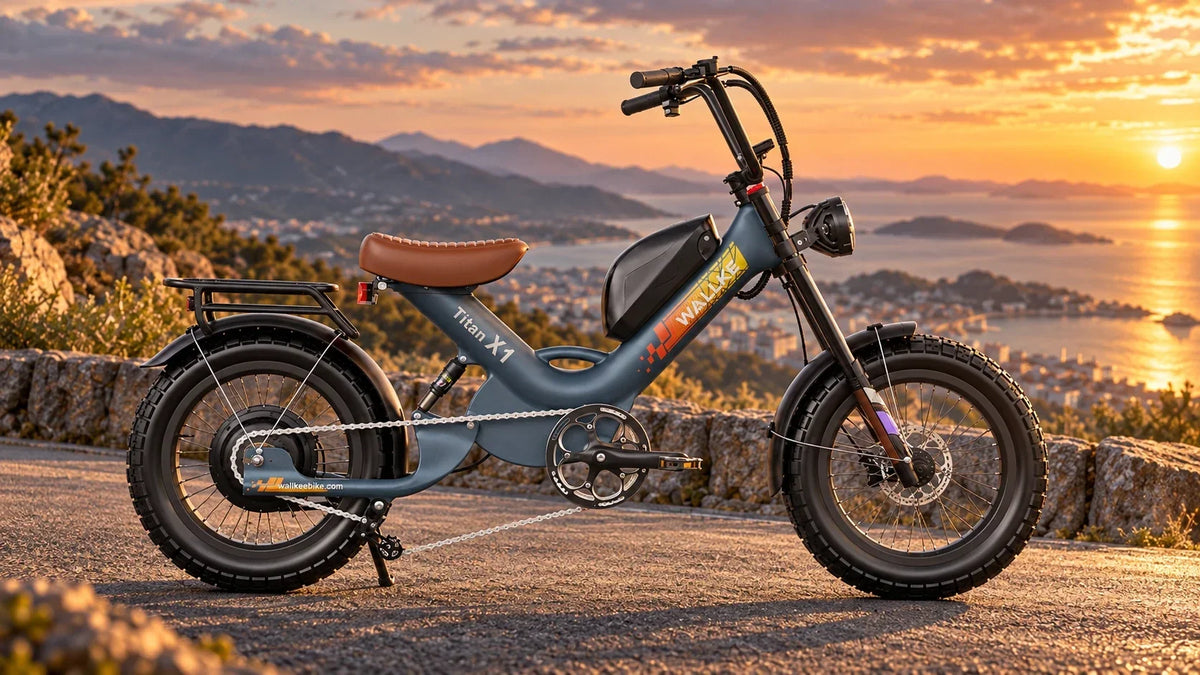
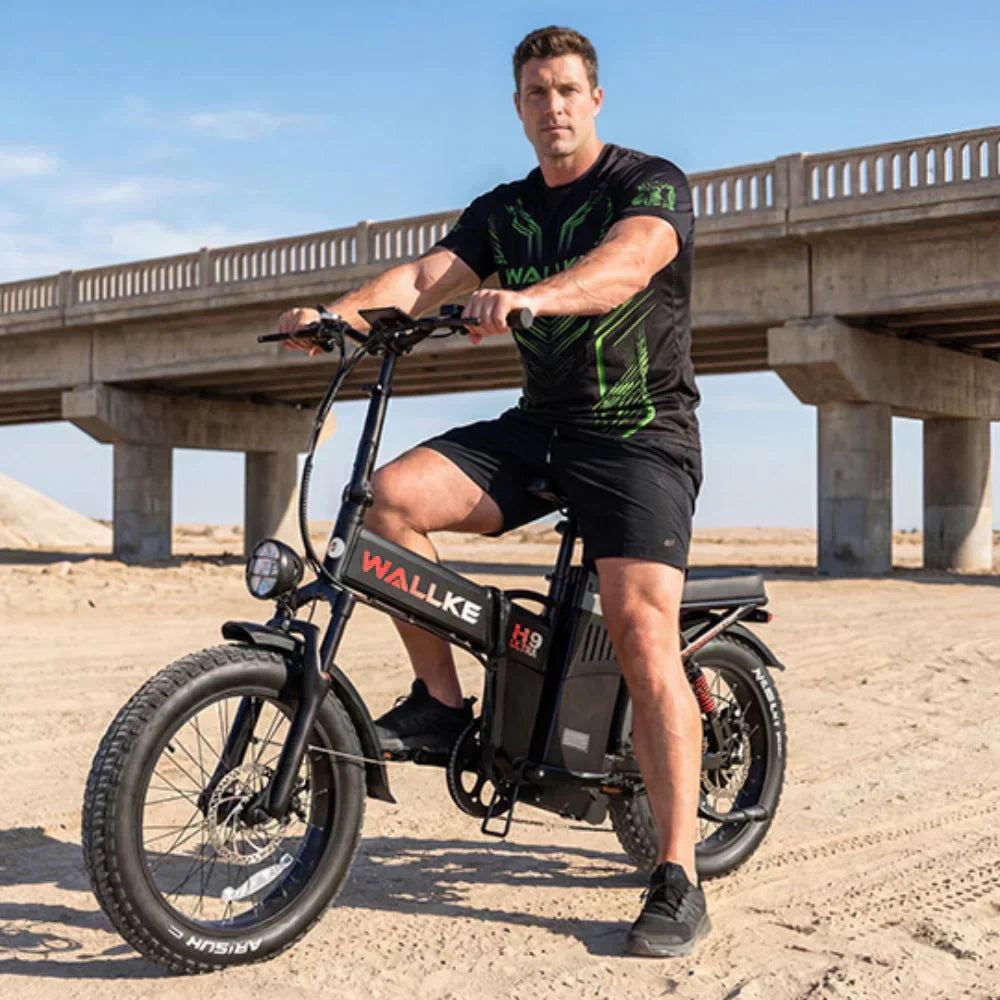
Wallke’s commuter collection includes step-through, folding, larger-battery, and fat-tire configurations for riders evaluating hills, rough pavement, cargo, or longer daily routes. Many of these bikes are heavier and larger than lightweight city bicycles, so buyers should check complete bike weight, dimensions, fit, battery removal, local e-bike rules, storage access, and the exact configuration before purchasing.
Compare Wallke commuter e-bikes by frame style, battery configuration, storage needs, terrain, and low-speed handling. For a broader pre-purchase process, use the commuter e-bike checklist.

A Practical First-Week E-Bike Commuting Plan
Do not make the first ride a high-pressure workday experiment. Build confidence in stages.

- Ride the route on a day off. Use the same departure time when possible.
- Start with a partial commute. Ride to a transit stop or park closer to work.
- Test cargo. Carry the laptop, clothing, lunch, and lock you will actually use.
- Measure energy use. Note battery remaining after the round trip without treating the display as laboratory-precise.
- Practice a flat-tire response. Know whether you will repair, call for pickup, or use transit.
- Test the lock location. Make sure the frame and appropriate wheel can be secured to a fixed object.
- Review comfort. Address hand pressure, saddle discomfort, visibility, and control before repeating the ride daily.
Daily pre-ride check
- Battery is secured and has enough reserve
- Tires are within the pressure range marked on the tire or specified by the bike manufacturer and show no visible damage
- Front and rear brakes operate normally
- Lights and display work
- Axles, folding mechanisms, and quick releases are secure
- Cargo is attached without interfering with steering, wheels, or brakes
What to carry
A basic commuter kit may include a helmet, lock, visibility layer, tire repair supplies, pump or inflator, compact multi-tool, water, weather protection, identification, and a charged phone. Tailor the kit to the route and your ability to make roadside repairs.
Final Verdict: Are Electric Bikes Good for Commuting?
For many people, yes. E-bikes can make commuting more practical by reducing effort, expanding the distance a rider can comfortably cover, and supporting cargo or hills. But the bike is only one part of the system.
The best commuting decision accounts for the route, travel time, weather, parking, battery reserve, service access, local laws, storage, and the rider’s ability to control the bike. Readers comparing the broader tradeoffs can also review the pros and cons of e-bikes. Test the route first. Choose specifications second. That approach is more reliable than buying around speed, power, or maximum-range claims alone.
Frequently Asked Questions
Are e-bikes good for commuting?
Yes, an e-bike can be a practical commuting option when the route is reasonably safe, the bike fits the rider, the battery has adequate reserve, and secure parking is available. Hills, wind, cargo, weather, storage, and local rules can change how practical a specific commute feels.
How far can you realistically commute on an electric bike?
There is no universal mileage limit. A realistic distance depends on total ride time, route safety, hills, weather, battery reserve, rider comfort, and whether charging is available at work. Evaluate the round trip rather than relying only on an advertised maximum range.
Is a 10-mile commute too long for an e-bike?
For many riders, a 10-mile one-way route can be realistic, but the route matters as much as the distance. Test the actual ride at the time you normally travel and account for intersections, hills, traffic, bike-lane quality, parking, and the return trip.
Is a 20-mile commute realistic on an e-bike?
A 20-mile commute may be workable for some riders, especially with a comfortable bike, a safe route, enough battery reserve, and a charging plan. It becomes less practical when the route has poor infrastructure, extreme weather, frequent stops, or no secure storage.
How much battery range should a commuter e-bike have?
Choose a battery plan with meaningful reserve beyond your normal round-trip distance. Real-world range can decrease with higher assist, throttle use, hills, headwinds, cold temperatures, heavier loads, low tire pressure, and frequent starts.
Can I take an electric bike on a train or bus?
Sometimes, but policies vary by transit agency. Check rules for bike dimensions, e-bike weight, battery restrictions, peak-hour access, elevators, and whether folding bikes are treated differently before planning a mixed-mode commute.
What are the main disadvantages of commuting by e-bike?
Common drawbacks include higher purchase cost than a regular bicycle, greater weight, charging needs, theft risk, weather exposure, maintenance, and possible difficulty carrying the bike upstairs or onto public transit.
Do I need a throttle for commuting?
Not necessarily. A throttle may help with starts or brief low-speed maneuvering where permitted. Pedal assist requires the rider to pedal and may feel more natural to some commuters. Battery use depends on assist level, throttle use, speed, terrain, cargo, and riding behavior, so neither control type guarantees better range. Check the rules for the roads and paths on your route before choosing a configuration.
Are fat-tire e-bikes good for commuting?
They may suit rough pavement, gravel shoulders, potholes, snow, or mixed surfaces when the tire type and pressure match the conditions. The tradeoffs can include greater weight, more rolling resistance, and more difficult lifting or storage than a lighter city-oriented bike.
What should I carry on an e-bike commute?
A practical kit may include a properly fitted helmet, high-quality lock, lights, visibility gear, tire repair supplies, pump or inflator, basic tools, weather layer, water, and a secure way to carry work items. Add a charger only when your range plan requires it.
Safety and legal note: E-bike classifications, access rules, equipment requirements, and helmet rules vary by location. Follow the bike manufacturer’s instructions and check current state, city, roadway, trail, workplace, building, and transit policies before riding or charging.


Leave a comment