

Quick answer: are e-bikes worth it?
An e-bike is usually worth it when electric assistance removes a barrier that keeps you from riding. That barrier may be a steep hill, a long commute, joint strain, heavy cargo, strong headwinds, or the need to arrive without excessive fatigue.
It may not be worth it when you need a lightweight bike for stairs, have nowhere safe to charge or store it, ride only short distances on flat ground, or cannot get dependable parts and service for the model you are considering.
What is an e-bike?
An electric bicycle combines a conventional bicycle drivetrain with a battery, motor, controller, and assistance system. Depending on the model and local rules, assistance may be activated by pedaling, a throttle, or both.
The key point is that an e-bike is still a bicycle ownership experience. You still deal with tires, brakes, chains, fit, weather, storage, and traffic. The motor does not erase those responsibilities. It changes how much effort is required and how practical certain trips feel.
Pros and cons of e-bikes at a glance
Main advantages
- Easier starts, hills, and headwinds
- Longer practical riding distance
- More consistent commuting
- Can help replace some car trips
- Useful for cargo and heavier loads
- Adjustable effort through assist levels
- May help more people ride regularly
- Lower operating cost than a car for suitable trips
- Often less parking stress
Main disadvantages
- Higher purchase price
- More weight and bulk
- Battery aging and charging needs
- More complex maintenance
- Theft risk and storage concerns
- Range varies with real conditions
- Transport racks may need higher capacity
- Rules vary by class and location
- Low-quality models can be difficult to service
| Decision factor | E-bike advantage | E-bike drawback | What to verify before buying |
|---|---|---|---|
| Daily effort | Assistance reduces strain on starts and climbs. | A heavy e-bike can feel demanding with assistance off. | Test low-speed handling and unassisted pedaling. |
| Distance | More trips become realistic by bike. | Advertised range may not match your route. | Battery energy, rider weight, terrain, speed, weather, and assist level. |
| Cost | Can reduce fuel, parking, or ride-share spending. | Higher upfront price and eventual battery expense. | Total ownership cost, warranty, parts, and service access. |
| Storage | Requires less space than a car. | Heavier and harder to carry than a normal bike. | Door width, stairs, elevator, indoor charging, and lock points. |
| Maintenance | Most bicycle parts are familiar. | Electrical diagnosis may be model-specific. | Replacement battery, display, controller, charger, and brake availability. |
| Safety | Controlled assistance can make starts easier, but abrupt power delivery may be difficult for an inexperienced rider to manage. | More speed and mass increase braking and handling demands. | Brake quality, tire condition, fit, lights, class settings, and rider training. |
9 advantages of e-bikes in everyday use
1. Hills and headwinds become less intimidating
This is the most immediate benefit for many riders. Pedal assistance helps maintain momentum when terrain or weather would otherwise turn a short trip into a hard workout.
The benefit is not only speed. It is predictability. A rider can choose a lower assist level on easy sections and add more support when a hill, intersection, or headwind appears.
2. More trips fall within a practical riding distance
A regular bike may be physically capable of a long commute, but that does not mean the trip fits your schedule, clothing, or energy level every day. An e-bike can make a longer route feel repeatable rather than occasional.
3. You can control how hard you work
Electric assistance is not an all-or-nothing choice. You can still pedal and raise your effort. The motor simply lets you adjust how much help you receive.
This can be useful for mixed groups, easier-effort days, hot weather, or riders who want to regulate exertion.
4. Commuting can become more consistent
People often stop bicycle commuting because of one difficult section: a hill, a long exposed road, a bridge, or a strong afternoon wind. Assistance can reduce that weak point and make the full route more dependable.
For a commute-focused setup, compare racks, fenders, lights, tire protection, weather exposure, charging access, and local service support—not just motor output.
5. Cargo and everyday gear are easier to move
A backpack, lock, groceries, child seat, or work equipment can change how a bike handles. Motor assistance helps offset some of the added effort, although it does not remove payload limits or braking requirements.
6. An e-bike may replace some car trips
For suitable routes, an e-bike can be simpler than driving. Parking may be easier, short errands may take less time, and operating costs can be lower. The actual savings depend on how often the bike replaces another paid form of transportation.
7. Stop-and-go riding is less tiring
Frequent restarts are one reason city riding can feel harder than the distance suggests. Assistance can make intersections and repeated acceleration more manageable.
8. More people can ride together comfortably
Differences in fitness, age, experience, or route tolerance can split a riding group. Adjustable assistance can narrow that gap without requiring everyone to ride at the strongest rider’s effort level.
9. Specialized designs can solve specific problems
Folding e-bikes address storage length. Fat-tire e-bikes emphasize comfort and traction. Step-through frames can make mounting easier. Dual-motor systems can provide additional traction and acceleration in demanding conditions. Each solution has a cost, weight, or complexity trade-off, so the best design depends on the problem you actually need to solve.
8 disadvantages of e-bikes and the real concerns behind them
1. E-bikes cost more upfront
You are buying a bicycle plus an electrical system. The battery is one of the most expensive components, but price alone does not establish quality. The lowest-priced models may involve trade-offs in brake performance, assembly quality, battery documentation, water-resistance information, replacement-parts availability, or warranty support.
Purchase price is only one part of ownership cost. Also consider a properly rated transport rack, locks, bags or cargo equipment, routine brake and tire wear, possible battery replacement, insurance, and shipping costs for model-specific parts. Compare those expenses with the transportation costs the e-bike is realistically expected to replace—not with an assumed car-saving figure.
How to reduce this downside: compare warranty terms, replacement-part pricing, service access, battery documentation, and included equipment before comparing headline prices.
2. They are heavier and harder to carry
Weight is one of the ownership drawbacks that first-time buyers most often underestimate. A bike that feels stable on the road may be difficult to lift into a truck, onto a rack, up apartment stairs, or over a threshold.

Remove the battery before lifting when the manufacturer allows it. For vehicle transport, confirm the rack’s per-bike limit as well as its total capacity. Check the remaining bike weight after battery removal, the width of each tire tray, and whether fenders or other components interfere with the approved clamping points.
3. Range is variable, not guaranteed
Real range changes with rider and cargo weight, speed, hills, wind, temperature, tire pressure, stop-and-go traffic, motor configuration, and assist level. A high-speed ride in cold weather can use much more energy than a moderate pedal-assist ride on flat ground.

Instead of asking only “How many miles can it go?”, ask: “How far can it go on my route with my load, speed, terrain, and reserve requirement?”
4. Batteries age and require responsible charging
Lithium-ion batteries gradually lose usable capacity. Heat, long storage at extreme charge levels, deep discharge, physical damage, water intrusion, and incompatible chargers can shorten life or create safety concerns.
5. Repairs can be more complicated
A local bike shop may service tires, chains, brakes, and wheels but decline work on an unfamiliar electrical system. Proprietary displays, controllers, connectors, or battery mounts can make diagnosis and replacement harder.
Before buying, ask who will service the bike and whether major electrical parts can be ordered by model number.
6. Theft risk can be higher
E-bikes are valuable and recognizable. A basic cable lock is rarely enough for long unattended stops. Secure indoor storage, a strong lock strategy, removable batteries, and insurance may matter more than buyers expect.
7. Speed and weight demand better judgment
Electric assistance can help a bike reach traffic speed quickly. New riders may enter corners too fast, underestimate stopping distance, or surprise pedestrians on shared paths.
Start with lower assist, practice braking, slow before turns, and learn how the bike behaves with cargo. More available power does not mean more power should be used everywhere.
8. Rules and access are not uniform
U.S. e-bike classes, equipment rules, age limits, helmet requirements, and trail access can vary by state, city, park, and land manager. A model that is legal on one road or trail may be restricted elsewhere or may need its settings configured for local use.
Electric bike vs. regular bike: which is better?

| Category | Electric bike | Regular pedal bike |
|---|---|---|
| Purchase price | Usually higher | Usually lower |
| Weight | Heavier | Lighter |
| Hill climbing | Easier with assistance | Depends fully on rider effort and gearing |
| Long trips | More accessible for many riders | Simpler but more physically demanding |
| Maintenance | Bicycle plus electrical system | Mostly mechanical |
| Storage and transport | More difficult because of mass and battery | Usually easier |
| Exercise control | Effort can be adjusted with assistance | Effort is controlled by pace and gearing |
| Dependence | Requires battery planning for assistance | No charging required |
| Parts dependence | Some electrical parts may be brand- or model-specific. | Most parts are more broadly interchangeable. |
A regular bike is the better answer when simplicity, low weight, easy transport, and minimal maintenance matter most. An e-bike is the better answer when assistance materially increases how often, how far, or how comfortably you will ride.
Pros and cons by e-bike type

Affordable e-bikes
Pros: lower entry cost and a chance to test whether electric riding fits your routine.
Cons: The lowest-priced models may involve trade-offs in brake performance, assembly quality, battery documentation, water-resistance information, replacement-parts availability, or warranty support. Price alone does not establish quality, so verify these items for the specific bike rather than assuming that every affordable model has the same weaknesses.
Do not judge affordability only by purchase price. A slightly more expensive bike with available replacement parts may cost less over several years.
Folding e-bikes
Pros: shorter stored length, easier fit in some vehicles, and more options for apartments, offices, or recreational vehicles.
Cons: many are still too heavy to carry comfortably. Folding reduces dimensions, not mass. Hinges, latches, and adjustable stems add inspection points.
Read more about the practical trade-offs in Are Folding Electric Bikes Worth It?.
Fat-tire e-bikes
Pros: a larger tire footprint can improve comfort, stability, and traction on sand, gravel, broken pavement, or some packed-snow conditions when tread, tire pressure, speed, and surface are appropriate. Fat tires do not provide guaranteed grip on ice or every winter surface.
Cons: fat tires add weight, rolling resistance, width, replacement cost, and storage bulk. They can feel slower and less agile on smooth pavement.
For terrain-specific guidance, see the guide to choosing a fat-tire e-bike for sand.
Rear-hub motor e-bikes
Pros: straightforward power delivery, broad availability, and less drivetrain stress than many mid-drive systems because motor power does not pass through the chain.
Cons: rear-wheel service can be heavier, low-speed control varies by sensor and programming, and weight distribution is concentrated toward the rear.
Mid-drive e-bikes
Pros: the motor can use the bicycle’s gears, which can be efficient on steep terrain when the rider selects an appropriate gear and maintains a suitable pedaling cadence. Mid-drive placement can also support more balanced weight distribution.
Cons: higher drivetrain wear, more shifting discipline, and potentially higher purchase and service costs.
Dual-motor e-bikes
Pros: dual motors can provide additional traction and acceleration on loose surfaces, steep starts, or heavy-duty routes, depending on tire grip, surface conditions, and the bike’s control system.
Cons: more weight, faster energy consumption when both motors are used, added controls and wiring, and more power than many daily riders need.
Use dual drive as a tool rather than a default setting. Before buying, confirm whether the added traction and acceleration justify the extra weight, energy use, controls, wiring, and maintenance complexity for your normal routes.
Who benefits most from an e-bike?
- Commuters whose route is slightly too long or hilly for daily pedal-bike use
- Riders who want to carry groceries, work gear, or recreational equipment
- Couples or groups with different fitness levels
- Riders who want adjustable assistance and can comfortably mount, balance, steer, brake, and manage the bike’s weight
- People who want to ride more often while controlling exertion
- Drivers looking to replace selected short car trips
Who may regret buying one?
- Anyone who must regularly carry the bike up stairs
- Riders without secure storage or a safe charging location
- Buyers who choose by motor wattage while ignoring fit, brakes, weight, and support
- People who expect the maximum advertised range under every condition
- Riders who cannot access parts or service for the selected brand
- Anyone who really wants a lightweight bicycle experience
E-bike battery safety: practical habits that matter

Battery incidents receive attention because the consequences can be serious. It is not responsible to give one universal “odds of explosion” number. Risk depends on product design, damage, charger compatibility, storage, charging behavior, and the quality of the electrical system.
- Use the charger specified for the battery and bike.
- Do not use a so-called universal or replacement charger unless the bike or battery manufacturer confirms that the exact charger is compatible with that system.
- Do not charge a battery that is swollen, cracked, unusually hot, leaking, badly dented, or giving off an unusual odor.
- Charge in a dry, ventilated area away from highly combustible materials, and do not place the bike, battery, or charger where it blocks an exit, stairway, or escape route.
- Do not cover the charger or battery while charging.
- Allow a very cold or hot battery to return to the manufacturer’s permitted charging temperature before charging.
- Keep connectors clean and dry.
- Follow the manufacturer’s instructions for long-term storage and state of charge.
- Stop using the system if the charger, battery, or connectors behave abnormally.
- After severe impact, crushing, or water immersion, do not charge or open the battery. Contact the manufacturer or a qualified service provider for guidance.
Should you charge after every ride?
Charge based on your next trip, not by habit alone. A short ride may not require immediate charging. Avoid leaving the battery deeply discharged for long periods, and avoid storing it at full charge for extended periods unless the manufacturer recommends that practice.
For more ownership guidance, read Long-Range E-Bike Battery Care.
Buying checklist: how to keep the pros and reduce the cons

- Define the job. Commute, errands, recreation, cargo, trail use, camping, or mixed use?
- Confirm fit. Check rider-height guidance, reach, standover, saddle range, and mounting style.
- Check total weight. Include battery and accessories. Measure every lift you will need to perform.
- Estimate realistic range. Plan with a reserve and use your actual terrain, load, and speed.
- Evaluate brakes and tires. They must match bike weight, expected speed, weather, and payload.
- Verify payload. Rider, clothing, locks, racks, bags, child seats, and cargo all count.
- Inspect the battery, charger, and certification information. Confirm charger compatibility, replacement availability, warranty coverage, charging instructions, and any applicable third-party safety certification. Verify that the certification applies to the relevant product or electrical system rather than relying only on vague wording such as “tested” or “compliant.” A battery certification alone should not be assumed to cover the complete drive system, controller, and charger combination.
- Find the service path. Know who handles mechanical work and electrical diagnosis.
- Plan storage, transport, and security. Measure doors and elevators. For a vehicle rack, verify the per-bike limit, total capacity, tire-tray width, and approved clamping points.
- Check local rules. Confirm class, speed, throttle, helmet, age, and trail restrictions. The three-class system is widely used, but it is not applied identically in every state or on every type of land.
- Test low-speed control. Check for abrupt power when starting, smooth assist engagement, accidental walk-mode activation, U-turn control, stable foot placement at stops, and handling with the expected load. These factors matter more than a top-speed number.
- Read the warranty exclusions. Pay attention to water damage, commercial use, modifications, shipping damage, and wear items.
How Wallke models fit into this decision
After you have defined your route, storage limits, lifting requirements, service options, and local rules, you can compare which Wallke configuration—if any—matches those needs. The useful question is not “Which model has the biggest number?” It is “Which configuration solves my actual riding problem with acceptable trade-offs?”
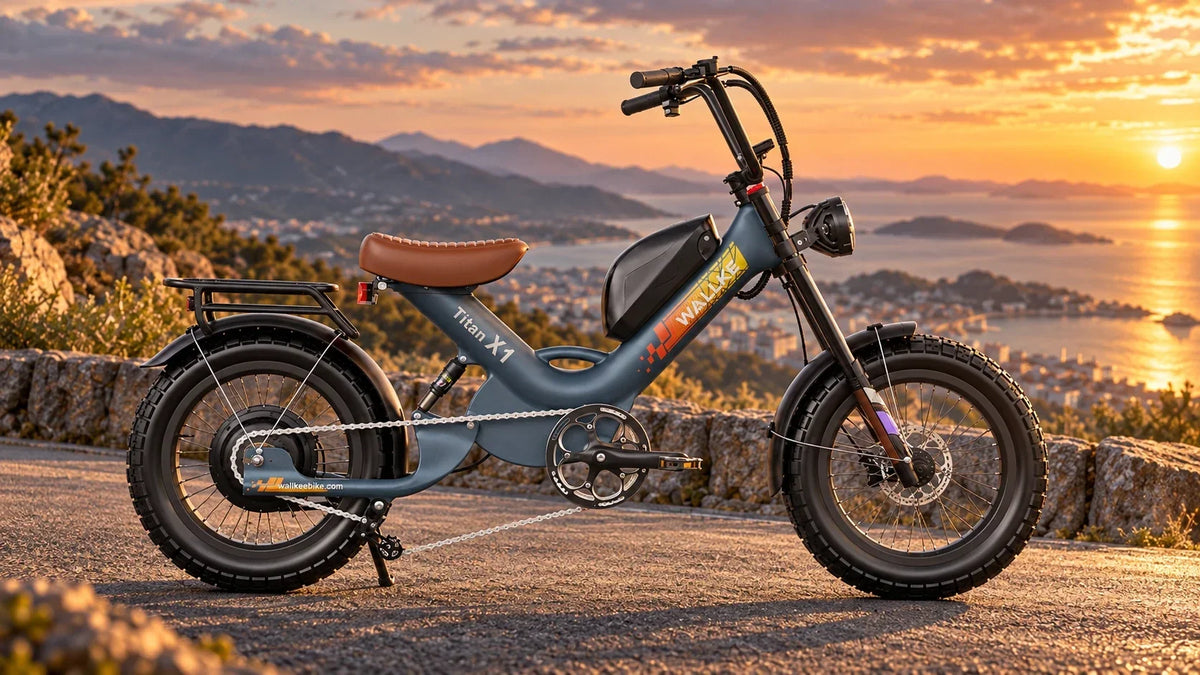
- Step-through designs: easier mounting for riders who prioritize accessibility.
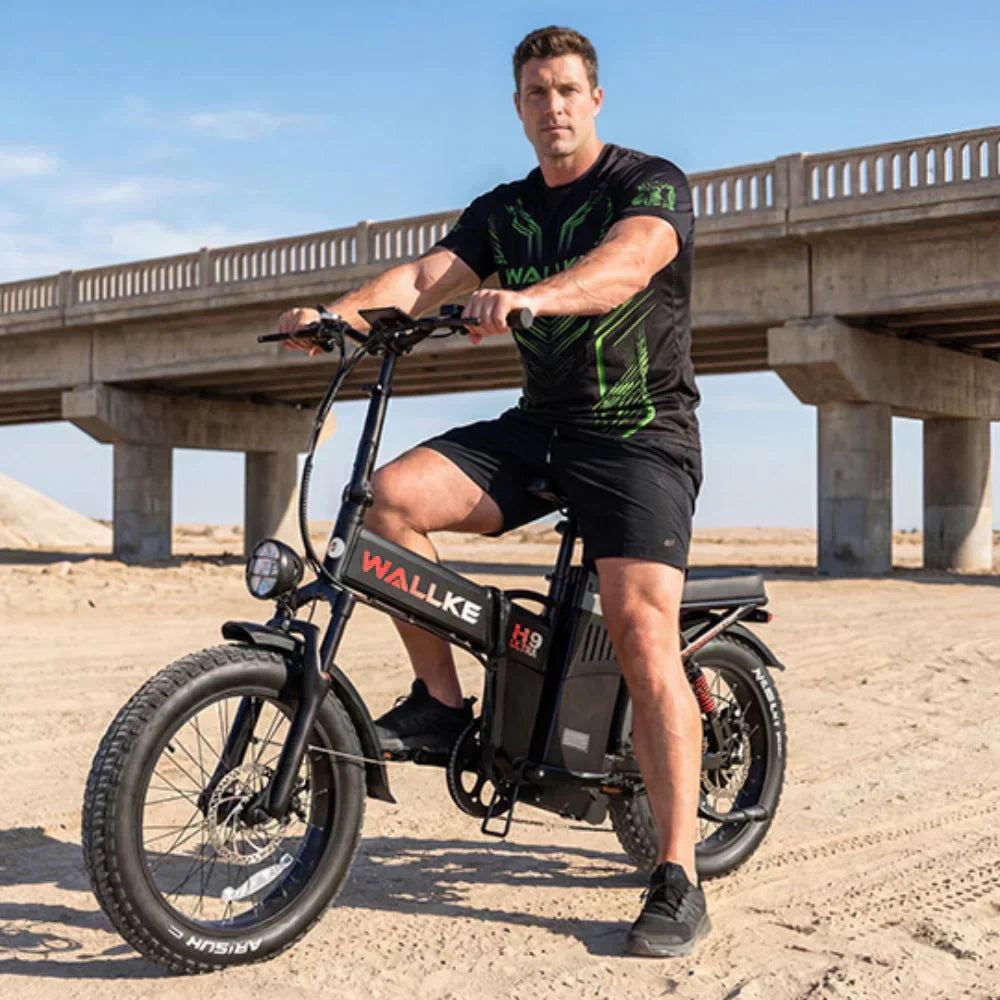
- Folding designs: shorter storage length, but still substantial lifting weight.
- Fat-tire designs: comfort and traction on mixed surfaces, with extra bulk and rolling resistance.
- Dual-motor designs: additional traction and acceleration, with more weight and energy use.
- Higher-capacity battery configurations: potentially fewer charging stops on the same route, with greater battery weight, cost, and charging requirements.
Start with the Wallke e-bike collection, then filter by frame, terrain, storage, payload, motor layout, and battery needs. Product specifications and available variants can change, so confirm the current product page before ordering.
Final verdict
The strongest argument for an e-bike is not that it is faster or easier. It is that assistance can turn trips you avoid into trips you actually ride.
The strongest argument against one is that convenience on the road comes with added complexity off the road: more weight, a battery to manage, a higher purchase price, and a greater need for secure storage and support.
A practical buying threshold is simple: the bike should remove a recurring transportation or riding barrier, and you should already have workable plans for storage, charging, transport, security, and service. If one of those ownership requirements remains unresolved, postpone the purchase until it is solved.
Choose an e-bike when those trade-offs clearly improve your real routine. Choose a regular bike when simplicity and low weight matter more than assistance. The right answer depends on the trips you will repeat, not the most impressive specification.
Frequently asked questions
What is the biggest downside of an e-bike?
For many owners, the biggest downside is weight. The motor and battery make an e-bike harder to lift, carry upstairs, load onto a rack, or pedal after the battery is depleted. Purchase price and battery replacement cost are also important trade-offs.
What is the most common problem with e-bikes?
Common problems include punctures, brake wear, loose fasteners, drivetrain adjustment, connector issues, and battery or charger problems. Many are ordinary bicycle maintenance issues, but electrical faults may require model-specific parts or qualified service.
Are e-bikes worth the money?
They can be worth it when electric assistance helps you replace car trips, ride more often, manage hills, carry cargo, or complete a commute consistently. They may not be worth it for short recreational rides on flat terrain when a lighter regular bike already meets your needs.
What are the disadvantages of electric bikes compared with regular bikes?
E-bikes generally cost more, weigh more, require charging, introduce battery aging and electronic components, and can be harder to transport or repair. A regular bike is usually simpler, lighter, quieter mechanically, and easier to maintain.
What are the odds of an e-bike battery exploding?
A reliable universal probability is not available because available incident data does not cover every battery, charger, modification, storage condition, or e-bike in use. Battery fires can have severe consequences, so reduce preventable risk: use only a manufacturer-approved compatible charger, stop using a damaged or abnormal battery, keep charging equipment away from combustible materials and escape routes, and follow the manufacturer’s charging and storage instructions.
Should you charge an e-bike after every ride?
Not necessarily. Charge when the remaining battery level is not enough for your next planned ride. Avoid routinely leaving a battery fully depleted, and do not leave it connected to the charger indefinitely unless the manufacturer specifically permits that behavior.
Can you ride an e-bike with the battery off?
Usually yes, but it will feel heavier than a regular bike. Motor drag, tire type, gearing, and total bike weight affect how practical unassisted riding feels.
Are cheap e-bikes a bad idea?
Not automatically, but low prices can involve compromises in battery documentation, brakes, component quality, water resistance, parts availability, assembly, warranty support, or service access. Evaluate the complete ownership package rather than motor wattage alone.
Are folding e-bikes worth it?
A folding e-bike can be useful when storage length or vehicle transport matters. The trade-offs are usually more weight than expected, a bulky folded package, additional hinge hardware, and smaller wheels on many models.
Are fat-tire e-bikes better?
Fat tires can improve comfort, stability, and traction on loose or uneven surfaces. They also add rolling resistance, weight, cost, and bulk. They are beneficial for the right terrain, not automatically better for every rider.


Leave a comment